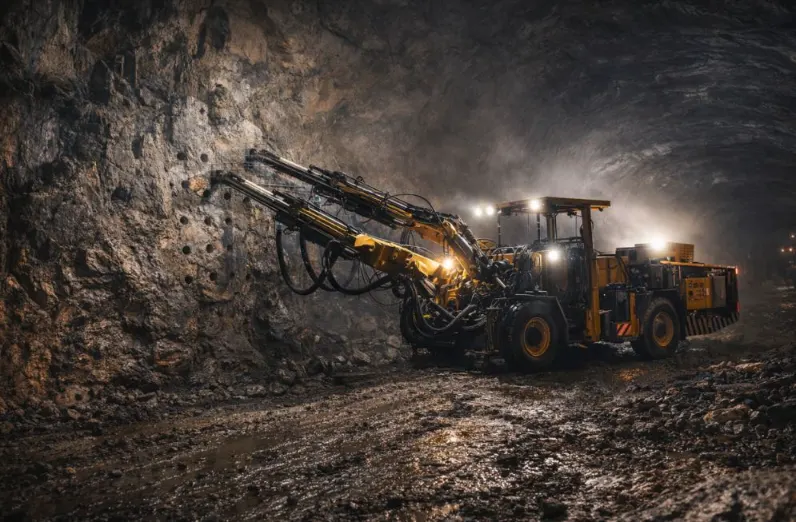
Drill rod jamming is one of those problems that looks “small” until it eats half a shift. You lose time at the face, you burn bits and couplings, and the crew starts making workarounds that usually create the next jam. In underground headings, the rod rarely gets stuck for one single reason. It is more like a chain: rock condition + drilling settings + flushing + rod condition + machine behavior.
This guide breaks down the most common causes you see in real underground mining drilling rig work, then walks through practical fixes that cut jams without turning your drilling team into a lab experiment.
What Drill Rod Jamming Looks Like at the Face
Rod jamming is not just “the rod won’t come out.” In production, drilling slows down, torque climbs, cuttings stop clearing, then the rod binds during drilling or withdrawal. Sometimes it releases after backing off. Sometimes it locks and you spend the next hour doing nothing useful.
This matters because face work is a system. A stuck rod blocks the jumbo, delays charging, pushes blasting later, and then mucking and haulage get squeezed. The cost is not only the rod. It is the whole cycle time.
How Jamming Differs from Simple Rod Failure
A rod can fail by cracking, thread damage, or fatigue. Jamming is different. You can jam a rod that is still “strong,” and you can break a rod that never jammed. Treat them as related problems, not the same one.
Geological Factors That Make Jamming More Likely
Rock is the boss underground. The same operator, same jumbo, same rods can run clean in one stope and jam all day in the next drift. Small geological changes between headings can change your jam rate overnight.
Broken, Fractured, or Layered Rock
Fault zones, sheared bands, and heavily jointed ground shed chips into the hole. Those fragments wedge between rod and wall, especially during withdrawal. Layered rock can also steer the bit off line, which increases contact and rub. Once rub starts, fines pack and the rod feels “sticky.”
Variable Hardness Within One Hole
Hard–soft–hard transitions create unstable drilling behavior. Penetration rate changes, the rod can flex, and side load rises at joints and couplings. If your hole pattern crosses altered zones, expect more jams unless settings change with the ground.
High Stress and Hole Closure in Deep Mines
At depth, rock can squeeze. Hole closure is real in high-stress headings, especially if drilling pauses. A hole that was fine 10 minutes ago can tighten enough to bind the rod when you try to retract.
Drilling Parameters That Trigger Jamming
A lot of jamming is self-inflicted. It happens when settings are kept constant while conditions change. This is also where you win back uptime, because you control these levers.
Excessive Feed Force
Overfeeding is a classic. In hard rock, too much feed can drive the bit off-center and increase wall contact. Penetration may look good for a moment, then torque spikes and the hole starts to polish and pack. If the machine starts “talking back,” back off early.
Incorrect Rotation Speed
Too fast: more fines and more packing. Too slow: chips build up and the bit starts rubbing instead of cutting. If penetration drops and torque climbs together, rotation speed (and the feed/rotation match) is often part of the story.
Poor Flushing Efficiency
If water flow is low, passages are partly blocked, or pressure is inconsistent, cuttings settle and build around the rod. Fine material can behave like wet cement underground. If you cannot clear cuttings, you cannot keep the hole open.
Rod, Coupling, and Thread Issues People Overlook
Even good mines sometimes treat rods like they are all the same until one gets stuck. That is expensive thinking. A simple inspection routine pays back fast.
Rod Wear and Diameter Reduction
Worn rods do not behave like new ones. Diameter loss changes the fit, and wear can create uneven surfaces that trap fines. Slight bends also matter. A rod that looks “fine” on the rack can bind when it is a few meters in and loaded to one side.
Damaged Threads and Couplings
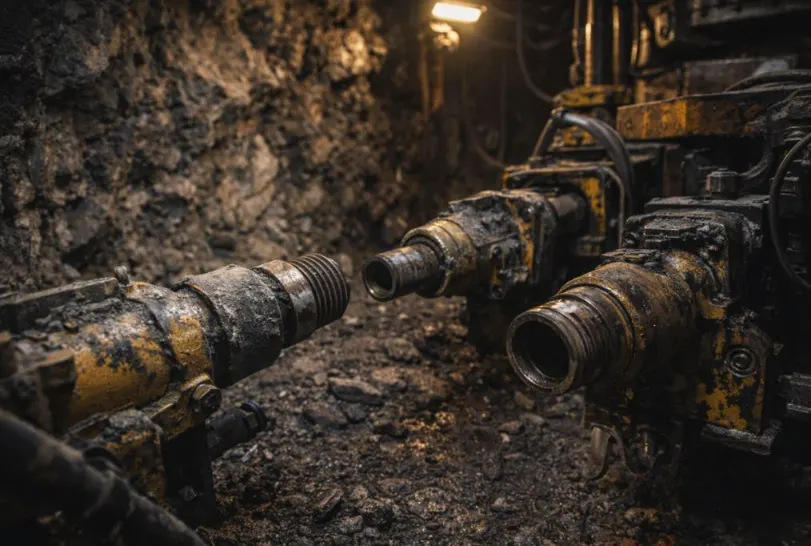
Thread damage is sneaky. A small burr can create high friction during rotation or withdrawal. Couplings can also act like anchors if they catch debris. If jams happen more during withdrawal than drilling, couplings and thread condition should be checked first.
Misalignment During Set-up
A small alignment error at the start becomes a bigger problem at depth. If the feed beam is not square to the face, the hole can wander early, then side friction climbs. When you pull back, the rod drags against the wall instead of sliding.
Equipment and System-Level Causes
This is the part many “generic” articles skip. In real headings, machine behavior decides whether you recover from early jam signs or drive straight into a stuck rod.
You can see these issues across almost any underground mining drilling rig category, but they show up the most in face work where positioning changes hole to hole.
Boom Stability and Feed Accuracy
Boom vibration transfers to the rod. Feed beam rigidity and alignment decide whether the bit tracks clean or wanders. If the boom will not hold position under load, the hole “walks,” then the rod starts rubbing.
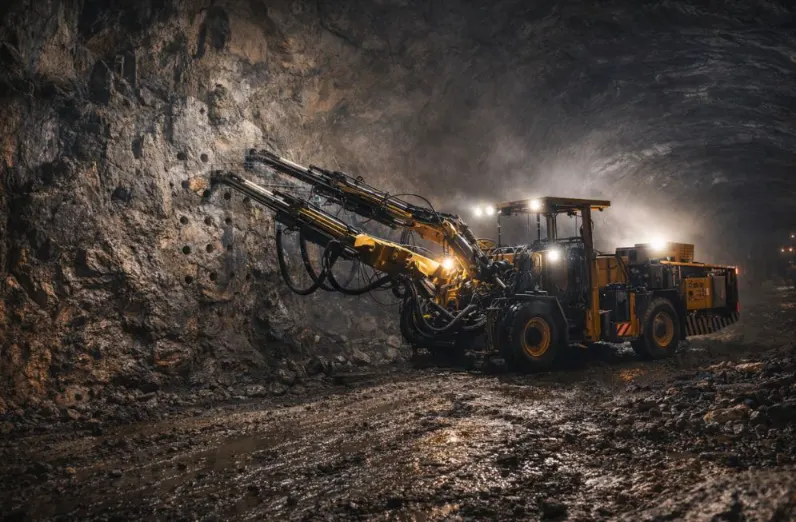
On twin-boom face drilling jumbo work, stable jacks and a solid carrier help. Better stability usually means straighter holes and fewer ugly surprises on withdrawal.
Inconsistent Feed and Rotation Control
A drill can have plenty of impact power and still jam rods if output is unstable. Jamming often follows sudden torque spikes, inconsistent feed response, or lag between control input and hydraulic output. Smooth, predictable control keeps the bit cutting and the hole clearing.
Separate control loops help. Systems that run impact, rotation, and feed through independent circuits can hold steadier power delivery when the rock changes mid-hole.
Anti-Jamming Features and RPCF
Anti-jamming is not fluff when it is done right. A useful system reacts to torque or rotation pressure changes faster than an operator can. One proven approach is Rotation Pressure Controlled Feed (RPCF), where feed adjusts based on rotation pressure. When the hole starts to tighten or cuttings start to pack, the system backs off feed and protects the rod and threads.
Operational Habits That Increase Jamming Frequency
Even with good equipment, habits can quietly drive jams. Most jam stories start late in the shift, when people get tired and start pushing.
Rushing the Hole Near Target Depth
Many jams happen near target depth. Operators push harder to finish the hole, especially when the round is behind schedule. That is exactly when cuttings clearance gets weaker and hole stability can drop.
Poor Hole Cleaning Between Passes
If multi-pass drilling is used, holes need to be clean. Leaving residual cuttings in the hole sets you up for packing. It is not exciting work, but it is cheaper than replacing rods and couplings.
Operator Fatigue and Consistency
Early warning signs are usually clear: pitch change, vibration change, penetration drop, torque rise, and cuttings quality shift. The best crews react early. Back off, clear, reset.
Practical Ways to Reduce Drill Rod Jamming Underground
You want fewer stuck rods, lower tooling cost, and less downtime. Here is what helps in day-to-day production. Across underground mining drill rigs fleet, the biggest gains usually come from steady basics done every shift.
Match Drilling Parameters to Rock Conditions
Avoid “one setting fits all.” Adjust feed and rotation when rock changes. Use torque and penetration as feedback. If a zone feels different, treat it differently.
Improve Flushing and Cuttings Removal
Adequate flow and pressure matter. Inspect flushing channels, water lines, and nozzles. Watch for gradual decline. Weak flushing often looks “good enough” until it suddenly is not.
Maintain Rods and Couplings Proactively
Retire rods before visible failure. Inspect threads, not just the rod body. Keep couplings clean. If a rod feels rough during make-up, do not send it back into the face.
Use Equipment with Stable Feed and Anti-Jamming Logic
Systems that react faster than the operator help. Designs that protect rods during torque spikes cut tool damage. If your mine runs remote, simpler troubleshooting also matters for uptime. For many sites, the sweet spot is a stable hydraulic drilling system with clear service access and a dependable anti-jamming function.
Train Operators to Read Early Warning Signs
Sound, vibration, penetration changes. Teach crews to back off early instead of pushing through. Most jams give warnings, but they are easy to ignore when the shift is long.
Why Reducing Jamming Helps More Than Drilling Time
Reducing jamming is not only about drill time. Better hole quality improves blasting results. Cleaner rounds reduce oversize, reduce rework, and make mucking smoother. That feeds into loaders, trucks, and ventilation scheduling.
Consumables also become predictable. That helps planning and budgeting.
ZONGDA: Practical Manufacturer Focused on Hard Rock Underground Mining
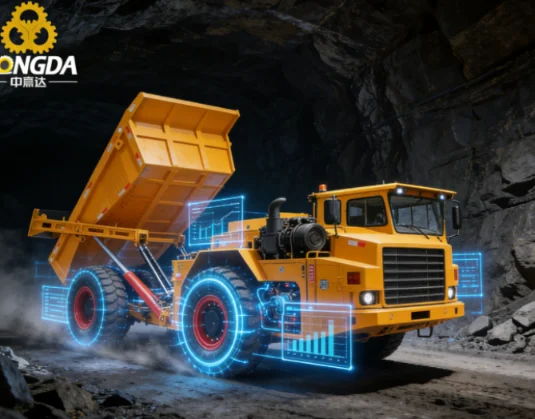
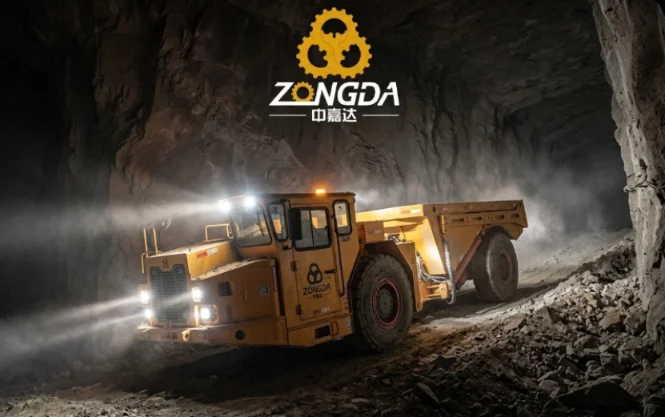
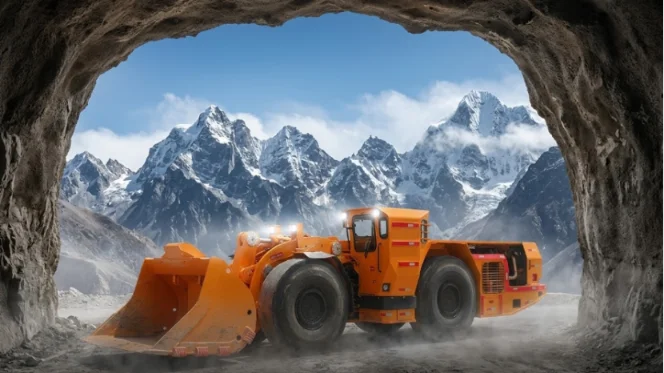
QINGDAO ZONGDA MACHINERY CO., LTD is a focused manufacturer of underground metal-ore mining equipment for hard rock operations such as gold, copper, iron, and lead-zinc. The product line is not aimed at coal mines. Based in Qingdao, ZONGDA builds low-profile machines for real headings, where heat, dust, water, and tight service windows are normal. The lineup covers underground mining trucks (8–35 tons) and LHD loaders (0.6–6 m³), plus face drilling jumbos for development and production work. In drilling, ZONGDA emphasizes stable hydraulic control and practical anti-jamming measures (including RPCF-style feed control) to protect rods and cut downtime. Service access and contamination resistance are treated as design priorities, because many sites need equipment that local teams can maintain without waiting on specialized OEM support.
FAQ
Q1: What is the most common cause of drill rod jamming underground?
A: Most jams start with poor cuttings removal plus side load. Fractured rock, weak flushing, and aggressive feed force often show up together, then the rod binds during drilling or withdrawal.
Q2: Does harder rock always mean more jamming?
A: Not always. Very hard rock can drill clean if flushing is strong and settings match the bit. Mixed ground, fractured zones, and hard-soft transitions tend to jam rods more often.
Q3: Can an anti-jamming system really reduce stuck rods?
A: Yes, if it reacts to torque or rotation pressure changes and backs off feed fast. That quick reaction can protect rods and threads before the jam becomes a full stop.
Q4: What should be checked first when jams happen during withdrawal?
A: Start with couplings and thread condition, then check hole cleaning and flushing. Withdrawal jams often point to debris packing, damaged threads, or hole wall collapse.
Q5: How do you reduce rod jamming without slowing production too much?
A: Focus on early intervention. Adjust feed and rotation when the rock changes, keep flushing strong, retire worn rods early, and stick to stable set-up habits. That usually saves more time than it costs.