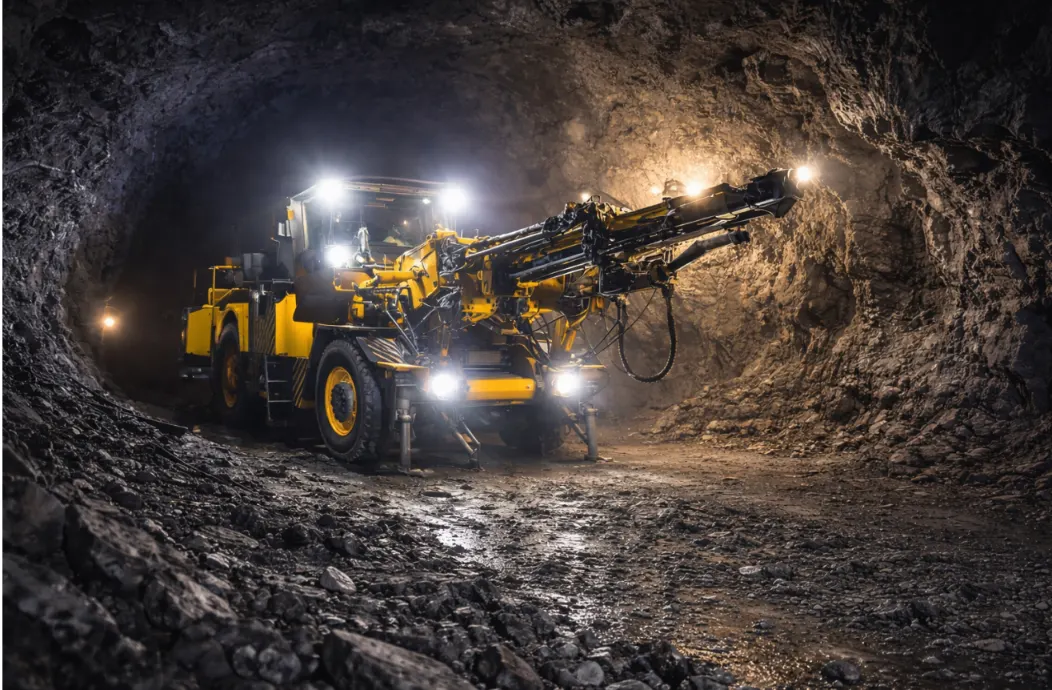
Underground drilling jumbo maintenance challenges are rarely caused by one “bad part.” In most mines and tunnel headings, problems build up through a mix of dust and moisture exposure, heat cycles, vibration, and limited service windows. A drilling jumbo may still hit the face every shift, but small leaks, misalignment, or sensor instability can quietly degrade drilling quality until the site starts paying in rework and downtime. This guide explains the most common challenge areas, why they repeat in a confined underground space, and what that means for reliability and productivity—without turning into a step-by-step repair manual.
When equipment is chosen without considering these constraints, maintenance risks increase quickly, often pointing back to gaps in underground drilling jumbo selection.
Why maintenance is harder for drilling jumbos underground
Maintenance risk increases underground because the environment compresses your options. You have less room to inspect, less time to stop production, and more contamination pathways than surface operations. That combination shifts many tasks from “scheduled and controlled” to “done fast, when possible,” which is where problems compound—especially for jumbo drilling underground where access and ventilation are structurally limited.
Across many types of underground drilling equipment, the same underground stressors repeatedly amplify wear and shorten the time between “minor issue” and “downtime event.”
Limited inspection windows and service access limitations
Even well-run sites struggle to create consistent inspection time at the face. When service access is tight, early indicators (minor seepage, heat trends, small alignment drift) are easier to miss. Over time, short deferrals turn into larger failures that require longer stops and more parts. This is why drilling jumbo serviceability is not a nice-to-have; it determines whether preventive actions remain routine or become emergency work.
Contamination pathways and accelerated wear
Dust, moisture, and vibration attack multiple systems at once. Seals age faster, connectors loosen, and cooling packs load up. The result is a predictable pattern: contamination increases friction, friction increases heat, heat accelerates fluid degradation, and degraded fluid speeds up wear in valves, pumps, and moving interfaces.
Hydraulic system-related maintenance challenges
Hydraulics sit at the center of jumbo performance. When the system is stable, the boom feels predictable and drilling remains consistent. When contamination and heat enter the loop, performance becomes “fine until it isn’t,” and corrective repairs often happen at the worst time.
Hose, seal, and connector degradation
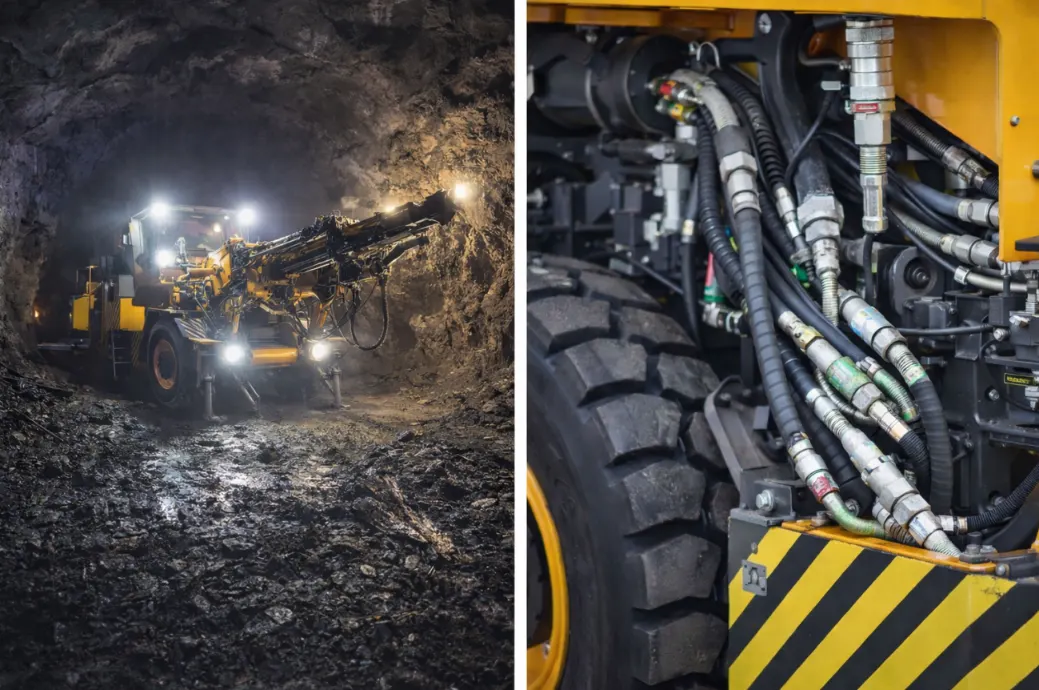
Hydraulic hose and seal wear is one of the first visible problems underground because routing is exposed to abrasion, vibration, and repeated motion. Small weeps may not look urgent, but they create slippery surfaces, attract dust, and invite contamination into the system. Over time, a leak that was easy to manage becomes a reliability issue that affects stability and controllability.
Heat buildup and oil condition decline
Hydraulic drilling jumbo maintenance is heavily influenced by temperature control. Poor ventilation and continuous cycles raise oil temperature and reduce viscosity stability. Once oil condition drops, component clearances and valve response become less predictable. Many drilling jumbo hydraulic issues that appear “random” are actually temperature and contamination problems that were developing for weeks.
Hydraulic stability and protection are critical in dusty underground environments, especially for a full hydraulic underground drilling jumbo operating in confined headings.
Drilling and rotation system wear issues
If the hydraulic system is the heart, the drilling unit is the workload. Rotation components, feed systems, and structural guidance take repeated shock loads that can gradually erode accuracy and consistency.
Rock drill fatigue and rotation component wear
Hard rock bands, variable ground, and long shifts create cyclic stress that wears interfaces faster than expected. Early symptoms are often subtle: slower penetration, inconsistent torque behavior, or higher vibration. These are not just performance annoyances; they can signal that wear is approaching the point where reliability drops quickly.
Feed beam wear and alignment drift
Feed beam wear directly affects how straight and consistent holes stay at depth. When guides and sliding interfaces loosen, drilling accuracy degradation shows up as pattern inconsistency and uneven fragmentation after blasting. The downstream cost is real: more scaling time, more overbreak management, and less predictable advance rates.
Table: Common maintenance challenge signals and what they usually indicate
| Signal observed underground | Likely challenge area | Why underground amplifies it | What to monitor |
|---|---|---|---|
| Small hydraulic seepage and dust buildup | Seals, hose interfaces | Dust turns minor leaks into contamination | Leak progression, cleanliness, heat trend |
| Boom feels less predictable | Hydraulic stability | Heat and contamination change valve response | Oil temperature, filtration, response consistency |
| Hole deviation increases over time | Feed / guidance wear | Limited time for precision checks | Pattern consistency, guide wear indicators |
| Nuisance alarms or intermittent faults | Sensors/connectors | Moisture + vibration loosens interfaces | Connector condition, harness protection |
| Repeated micro-damage at joints | Structural wear points | Rough ground + tight maneuvers | Pin/bushing play, grease discipline |
Electrical and control system challenges
Electrical problems underground often start as connection problems, not “failed electronics.” Dust, moisture, and vibration create intermittent behavior that is hard to reproduce, which is why these issues become chronic if protection and inspection discipline are weak.
Sensor stability and control reliability
Control system reliability matters because drilling performance depends on consistent signals and predictable actuation. Sensors exposed to dust and moisture can drift or misread, triggering nuisance faults or causing parameter instability. Over time, operators compensate with habits, which may keep production moving but can also hide a worsening issue until it becomes a stop.
Cable routing and connector protection
Drilling jumbo electrical issues frequently come from cable routing damage, loose connectors, or compromised protective sleeves. Tight headings increase the chance of snagging or abrasion. The fix is not “more troubleshooting,” but better protection, clearer inspection points, and routing that assumes the equipment will be bumped and vibrated every shift.
Structural and chassis-related maintenance challenges
Structural issues are rarely sudden failures. They are cumulative results of repeated stress, rough ground, and tight maneuvering that concentrates loads into pivots, frames, and interfaces.
Frame stress and fatigue accumulation
Minor deformation, fastener loosening, and micro-cracking risk increases when the machine repeatedly works outside ideal positioning. That does not mean misuse; it means underground reality. When frame stress accumulates, secondary problems appear: misalignment, uneven wear, and vibration patterns that accelerate wear elsewhere.
Articulation points and wear interfaces
Drilling jumbo structural wear often shows up at pivot points, pin/bushing interfaces, and articulation areas where grease discipline and contamination control matter most. Once play develops, alignment becomes harder, vibrations increase, and accuracy and component life both suffer.
Maintenance access limitations and downtime impact
Many mines underestimate how much “access time” determines reliability. Underground work punishes deferred tasks, because one missed inspection can turn into a multi-day outage when access, parts, and manpower need to align.
Preventive vs corrective maintenance in underground reality
Preventive vs corrective maintenance is not an abstract debate underground. Preventive tasks keep small issues small, but they only work if the machine design and site routines make them realistic. When preventive work is repeatedly postponed, corrective repairs arrive with higher parts cost, longer downtime, and more operational disruption.
How downtime multiplies underground
Unplanned downtime underground is rarely isolated. When a jumbo stops, the face sequence shifts: drilling, charging, ventilation, mucking, and support installation all feel the delay. That is why maintenance planning should treat jumbos as workflow-critical assets, not just another unit in the fleet. Improving underground equipment reliability often starts by protecting the inspection windows that prevent repeated failures.
Conclusion
Underground drilling jumbo maintenance challenges are predictable because the same underground stressors hit the same systems shift after shift: hydraulics, drilling/rotation, electrical controls, and structural wear points. Sites that reduce downtime do not chase perfection; they focus on serviceability, contamination control, heat management, and early indicators of alignment drift. If you treat maintenance access limitations as a real engineering constraint and manage wear before it becomes instability, you protect drilling accuracy and keep production rhythms consistent across long duty cycles.
ZONGDA perspective on drilling jumbo maintenance realities
ZONGDA designs underground equipment around the constraints that shape real mine uptime, including tight headings, frequent stop-start cycles, and high contamination risk. For underground drilling jumbo maintenance, that means emphasizing practical access, protected routing, and layouts that help site teams keep inspections and preventive tasks realistic in confined underground conditions. This engineering perspective supports stable performance over long shifts by reducing avoidable wear exposure and making common service work simpler to execute on schedule.
FAQ
Q1: What are the most common underground drilling jumbo maintenance challenges?
A: The most common underground drilling jumbo maintenance challenges involve hydraulic contamination and leakage progression, drilling/rotation wear that reduces hole consistency, electrical connection instability from dust and moisture, and structural wear at pivots and interfaces that increases vibration and misalignment.
Q2: Why does drilling jumbo maintenance become harder underground than on surface sites?
A: Underground conditions compress service time and increase contamination. Confined underground space, limited ventilation, and restricted access make inspections shorter and less frequent, so small issues are more likely to be deferred until they become downtime events.
Q3: What causes drilling jumbo hydraulic issues to repeat even after repairs?
A: Many drilling jumbo hydraulic issues repeat because the root cause is not fully removed—typically heat stress, filtration limits, or contamination pathways that continue after a seal or hose is replaced. Controlling oil temperature, cleanliness, and routing protection is often more important than the single repair.
Q4: What should teams look for to prevent drilling accuracy degradation?
A: Track alignment and guidance condition over time, especially feed beam wear and any increase in play at interfaces. If hole patterns start drifting or penetration becomes less consistent, treat it as an early warning before fragmentation quality and advance rates decline.
Q5: How do maintenance access limitations affect underground equipment reliability?
A: When access is limited, preventive tasks are easier to postpone, and corrective work becomes longer and more disruptive. Improving drilling jumbo serviceability and protecting inspection windows reduces the chance that minor wear turns into unplanned downtime underground.