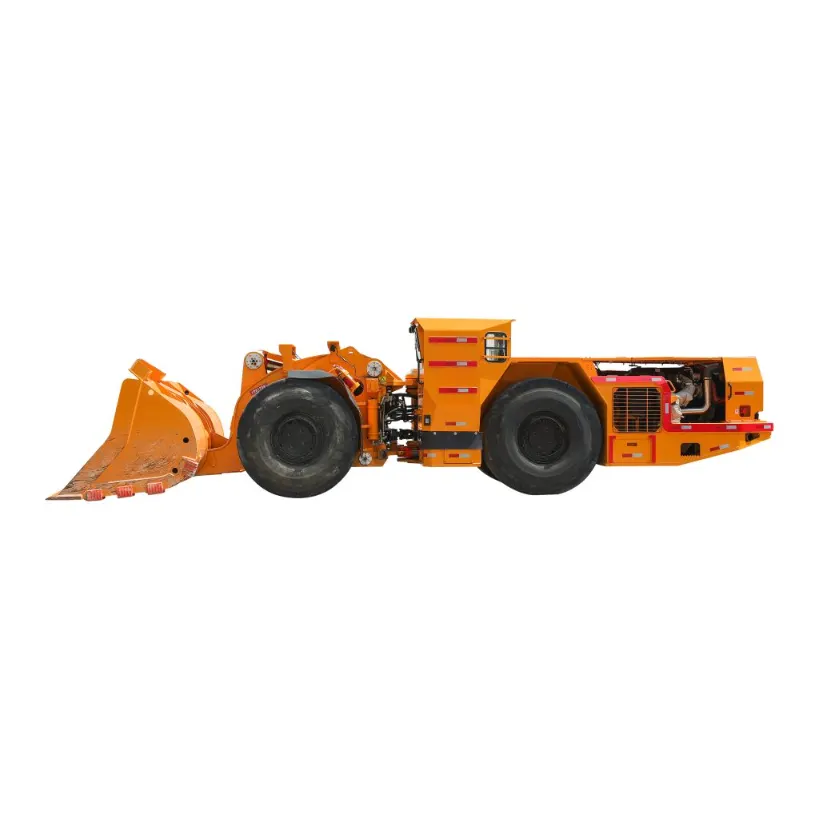
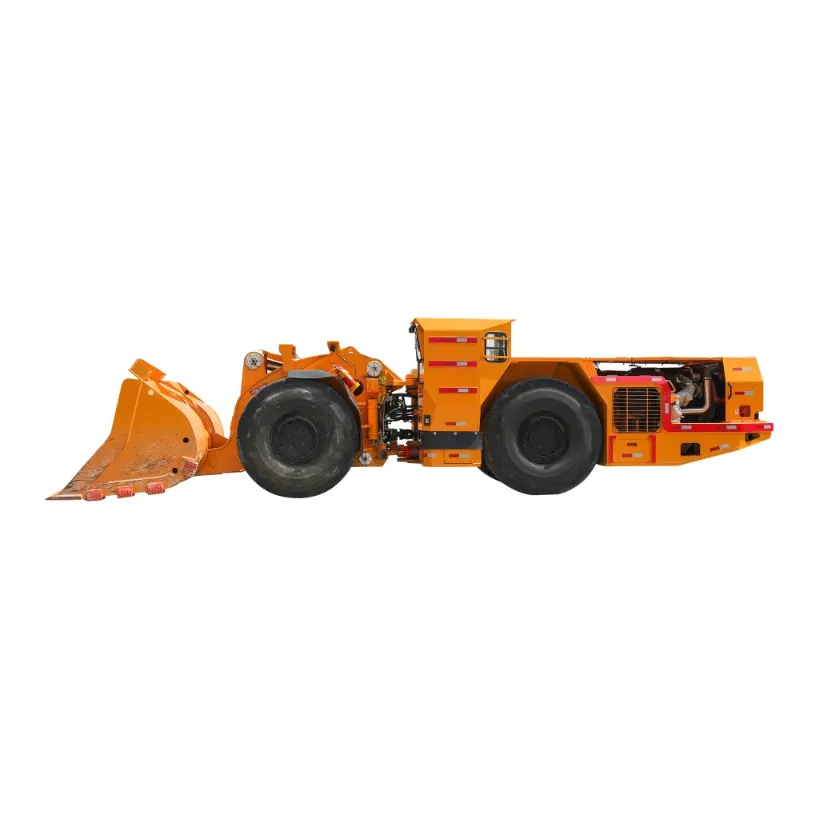
When you run both gold and copper operations, equipment choices rarely stay simple. Narrow-vein gold stopes need small, agile loaders. Large copper orebodies demand high-capacity machines that run long cycles without complaint. You probably don’t want two completely different fleets if you can avoid it. Modern LHDs are built to bridge that gap, giving you one platform that can work in tight headings and big production drifts with only minor changes to how you run them. Used correctly, they support safer work, better ore control, and more steady tons out of the portal every shift.
The Growing Need for Versatile LHDs in Underground Mining
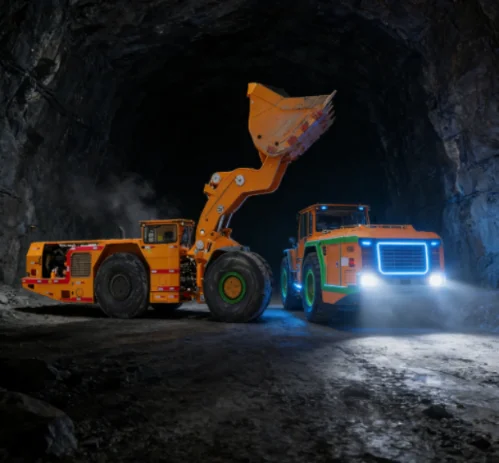
Ore bodies are changing, and mine plans follow. Many sites now combine smaller satellite gold veins with larger copper zones or extensions. It is common to see one contractor or one owner managing several types of deposits within the same portfolio. That pushes your fleet to do more than one job. A modern underground LHD is designed exactly for this kind of hard rock work. It is a rugged articulated loader that can load, haul, and dump ore over short distances, then feed trucks or ore passes.
Key Features That Make Today’s LHDs More Adaptable
Over the last decade, designers have focused on strength, maneuverability, and operator comfort. LHDs use powerful drivetrains, articulated steering, and heavy-duty axles to cope with hard rock and steep grades. At the same time, frames are kept low and narrow so the machine can pass through limited-height tunnels. Cab layouts are more ergonomic than older designs, with better visibility and simpler controls. This mix of compact size and high breakout force helps one loader type work both in cramped headings and wide production areas.
How Modern LHDs Improve Productivity in Narrow-Vein Gold Mines
Narrow-vein gold mining lives on selectivity. You want to pull ore, not waste, and you often work in headings where every extra centimeter of width eats into grade. Equipment that is too large increases dilution and makes ground control harder. A low-profile underground loader gives you a better fit for these places, especially where backs are low and access drives are tight.
Maneuvering Through Tight Drifts and Low-Back Operations
In narrow gold drifts, turning radius matters as much as horsepower. A compact LHD with articulated steering and a short wheelbase can reverse, turn, and line up with the face in fewer moves. That saves cycle time and reduces the risk of hitting walls or brow. Machines built for narrow-vein work often have buckets sized to the drift, so you get a full bucket without over-breaking the sidewalls. That supports better grade control and less scaling effort later.
Reducing Ore Dilution With Precise Bucket Control
Gold mines often fight dilution more than anything else. A loader that can approach the face cleanly and control the bucket carefully helps you take ore and leave as much waste as possible. Smooth hydraulics, strong breakout force, and good visibility make it easier for operators to skim the pile accurately instead of ripping into the walls or floor. Over many rounds, that small advantage shows up in mill feed quality.
Why Large Copper Mines Benefit From High-Capacity LHDs
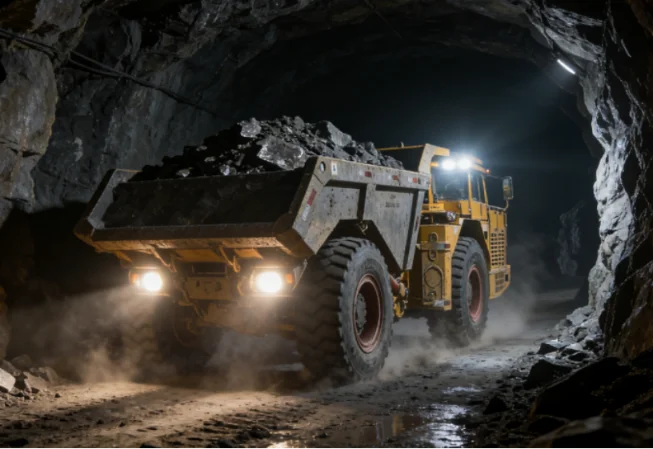
Copper mines usually chase tonnage. Stopes are larger, ramps are wider, and your goal is to move as much rock as possible per hour. Here, the same family of LHDs can work at a different scale. High-capacity units with bigger buckets and stronger drivetrains handle long tramming distances and heavier loads. Many operations run them in combination with underground mining trucks, turning the loader into the first step of a fast load–haul–dump chain.
Handling Long Haul Distances and Heavy Payloads
In a big copper operation, every extra tonne per bucket counts. Modern loaders offer bucket capacities from under 1 m³ up to around 10 m³, with tramming capacities that can reach over 20 tonnes. The higher end suits wide copper stopes and ramp systems. With the right match between bucket size and truck box, you reduce the number of passes needed to fill a truck, which cuts idle time and fuel burn on both pieces of equipment.
Reliability in Harsh, High-Duty Cycles
Copper mines tend to run equipment hard: long shifts, hot conditions, abrasive rock. That is where cooling capacity, filtration, and robust braking systems become critical. Many LHDs in this segment use heavy-duty cooling packages and wet-disc brakes designed for steep grades and repeated stops. If you maintain them properly, you get more stable uptime and fewer surprises halfway through the shift.
Comparing Gold vs Copper Mines: What One LHD Must Handle
If you operate across gold and copper, one loader might dig in a narrow drive on Monday and work a wide stope on Tuesday. The ore looks different, the headings look different, but the machine is the same. That reality should guide your selection.
Vein Geometry and Productivity Requirements
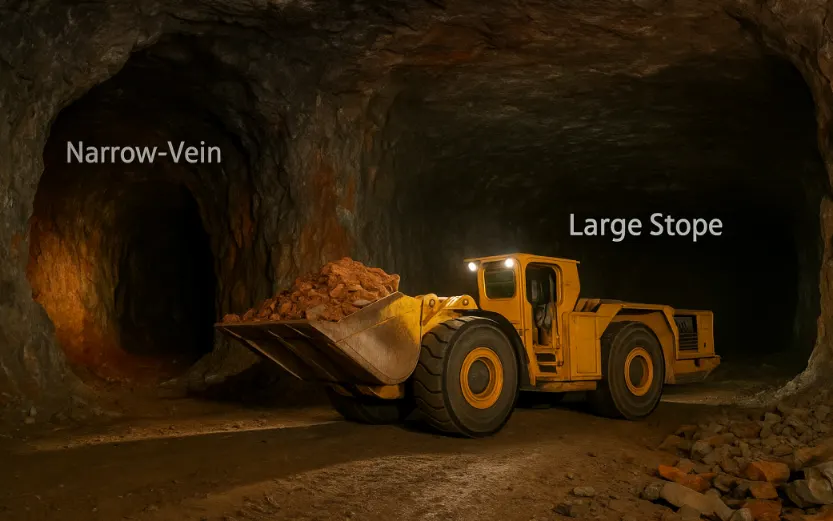
Gold veins are often thin and irregular. Here you want precision, agility, and low dilution. Copper orebodies are usually thicker and more continuous, so output per hour takes the lead. The LHD you pick has to do both: handle careful scooping in tight headings, yet still move enough tonnes when the layout opens up. Balanced bucket capacity, frame size, and engine power can give you that middle ground.
Ground Conditions, Ventilation, and Emissions
Hard-rock mines work with varying ground quality. In some gold stopes the rock may be fragile, while copper zones can be very hard. Loader frames and buckets must cope with both. At the same time, diesel emissions and heat put pressure on your ventilation system. Modern engines and exhaust treatment help keep gases lower, which is vital in deep, hot mines. Choosing a machine that runs efficiently in both shallow and deep sections can ease your ventilation planning.
Technology Upgrades That Improve LHD Flexibility
Electronics have changed how LHDs are used. Telemetry, remote control, and better operator aids have moved from premium options to common tools. In multi-mine portfolios, these tools help you standardize how loaders work.
Remote Operation, Data, and Safer Work
Remote and semi-autonomous modes let you tram in higher-risk areas with nobody in the cab. That is useful in stopes with poor ground or after blasting. Telematics send production and health data back to your team, giving you a clear picture of tonnage, cycle times, and machine condition. Over time, you can adjust routes and loading habits to cut wasted motion.
Selecting the Right LHD for Mixed Mine Portfolios
Choosing an LHD for both narrow-vein gold and large copper mines means looking past a single spec sheet. You need a loader that fits your smallest headings but still offers serious capacity.
Matching Capacity and Equipment Role
Think about haul distances, ramp gradients, and the rest of your fleet. A compact underground mining equipment unit may cover development and narrow stopes, while larger variants in the same family can handle production stopes and truck loading. The closer those machines are in layout and controls, the easier it is for your operators to move between sites.
Introduction to ZONGDA
QINGDAO ZONGDA MACHINERY CO., LTD, abbreviated as ZONGDA, is a specialist supplier in the field of hard-rock underground mining, with a strong focus on metal ore operations. The company develops and manufactures trackless equipment such as LHDs, underground trucks, jumbos, and support machines for complete ore handling systems. Backed by more than 30 mining experts and engineers and a larger technical team, ZONGDA provides not only machines but full project support from design to after-sales service. Its product line targets customers who want reliable underground mining loader solutions that can work in gold, copper, and other metal mines, helping reduce cost per tonne while keeping operations safer and more predictable.
FAQ
Q1: What is the main job of an LHD in metal mines?
A: It loads broken ore, hauls it a short distance, and dumps it into trucks, ore passes, or crushers as part of the production cycle.
Q2: Can one LHD really work in both narrow gold veins and large copper stopes?
A: Yes. A low-profile design with the right bucket size and power can handle tight drifts and still move good tonnes in wider areas.
Q3: Why do many mines prefer low-profile LHDs?
A: They fit under low backs, turn in tight headings, and help reduce dilution, which is especially valuable in high-grade narrow-vein deposits.
Q4: How do modern LHDs help with safety underground?
A: Better visibility, stronger brakes, cleaner engines, and options like remote operation and monitoring all help lower risk during daily work.
Q5: What should you look at first when choosing an LHD model?
A: Start with drift size, ore type, and haul distance, then match bucket capacity, power, and size to the real layout and production targets of your mines.