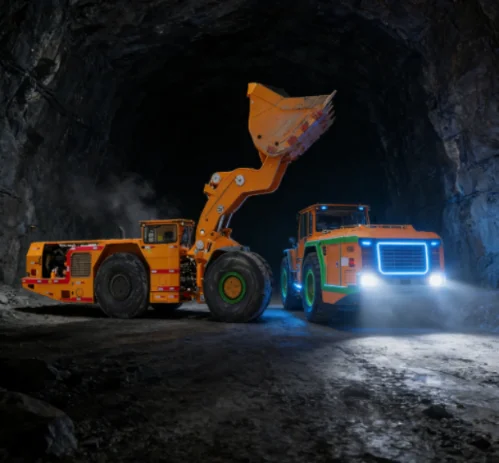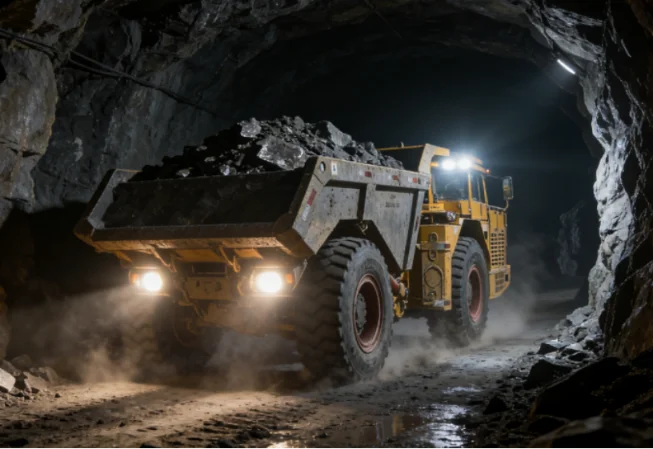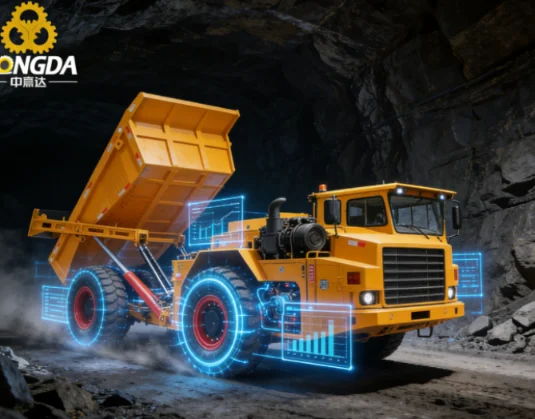
Ore hauling quietly eats a big slice of your mining budget. Fuel, unplanned downtime, slow cycles, and rough ground all add up, shift after shift. The machine that sits in the middle of this whole chain is the loader in the stope and in the crosscut. If that machine wastes seconds or fuel, you feel it directly in cost per ton.
This article walks through the main cost drivers, how modern loaders change that picture, and what to look at when you pick the next unit for your metal ore operation. It stays close to day-to-day problems: cost per ton, uptime, and keeping trucks busy instead of parked in a queue.
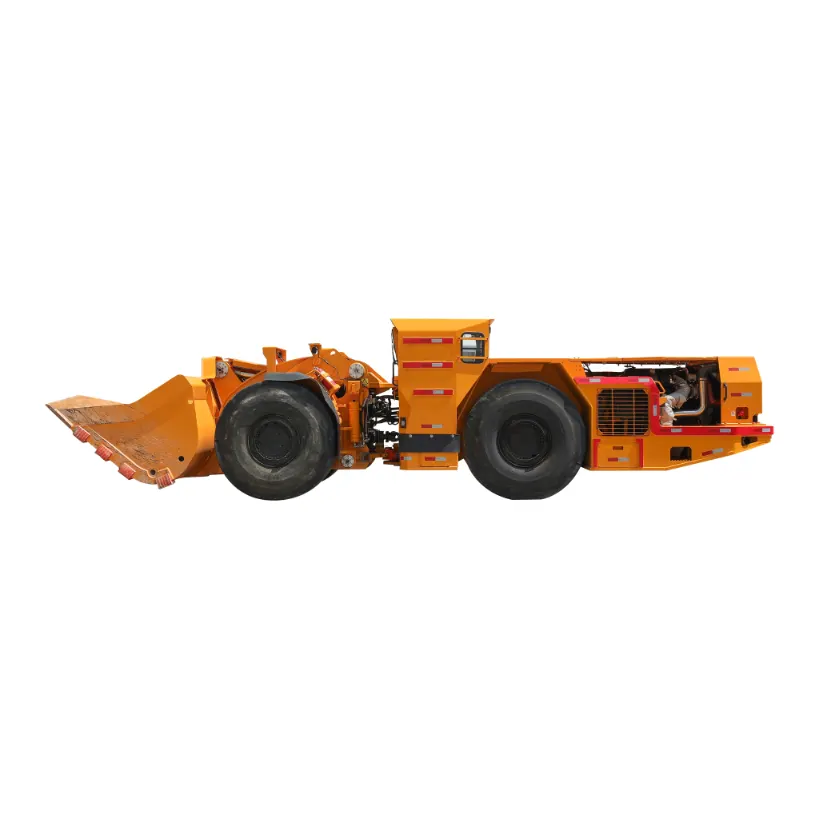
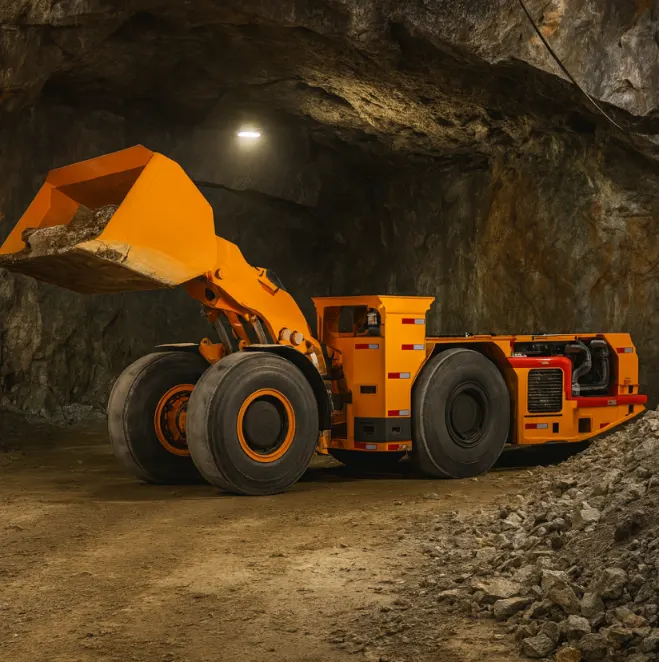
When the term underground loader appears here, it refers to hard-rock LHDs working in underground metal mines.
Why Ore Hauling Costs Matter in Underground Mining
Haulage is often one of the biggest operating cost items in an underground metal mine. A lot of energy goes into moving rock from drawpoint to ore pass or to the truck, and then out to the plant. If your loader is slow or fragile, every weak point shows up in lower output and higher unit cost. Major OEMs treat loaders as core productivity machines for good reason.
Haulage Share in Total Mining Cost
You carry fixed costs for labor, ventilation, power, and fleet. If the loader limits tons per shift, those fixed costs get spread over fewer tons. Even a small gain in cycle time or bucket fill level often cuts cost per ton more than a discount on diesel.
Impact on Production Targets
No one in a control room likes staring at a screen where trucks sit idle at the ore pass. When the loader keeps up with drilling and hauling, you hit monthly tonnage with fewer overtime hours and less pressure on crews. That is where the real saving lies: steady, predictable output.
What Drives Ore Hauling Operating Costs?
Before you try to cut cost, it helps to see where the money actually goes. In underground ore hauling, most of the spending clusters around energy, time, and maintenance. Global suppliers of LHDs frame their product ranges exactly around these points.
Energy and Fuel Use
High-power engines and repeated acceleration in ramps burn fuel fast. If the loader’s powertrain is poorly matched to the bucket load or to the ramp profile, fuel use climbs for no gain in tonnage. On the other side, a loader with a strong low-speed torque curve can trample grades at lower throttle, which cuts fuel and heat in the headings.
Cycle Time and Downtime
Every second in the loading, tramming, and dumping cycle matters. Long approach distances, weak breakout force, or constant gear hunting all extend the cycle. Then there is the harder hit: downtime. When a critical loader sits for parts or slow repairs, the whole mine feels it in lost tons and extra truck hours.
How Underground Loaders Reduce Ore Hauling Costs
Modern LHDs are built around one simple target: move more rock per shift with less energy and fewer breakdowns. Tight frames, stronger articulation, and better powertrains are not just nice features; they are direct tools to push cost per ton down. Leading brands talk about gains in breakout force and tramming speed for exactly this reason.
Higher Loading Efficiency
Good bucket design and strong hydraulics shorten filling time and cut the number of passes at the face. A compact loader that can crowd tight drawpoints without back-and-forth corrections keeps trucks turning faster. Over a month, those saved seconds turn into additional thousands of tons without extra labor.
Reliability, Safety and ZDL717 Highlights
You also care about whether the machine survives hard rock, abrasive ore, and tight corners. Heavy-duty frames, wet multi-disc brakes, and proven engines are now standard across serious hard-rock fleets.
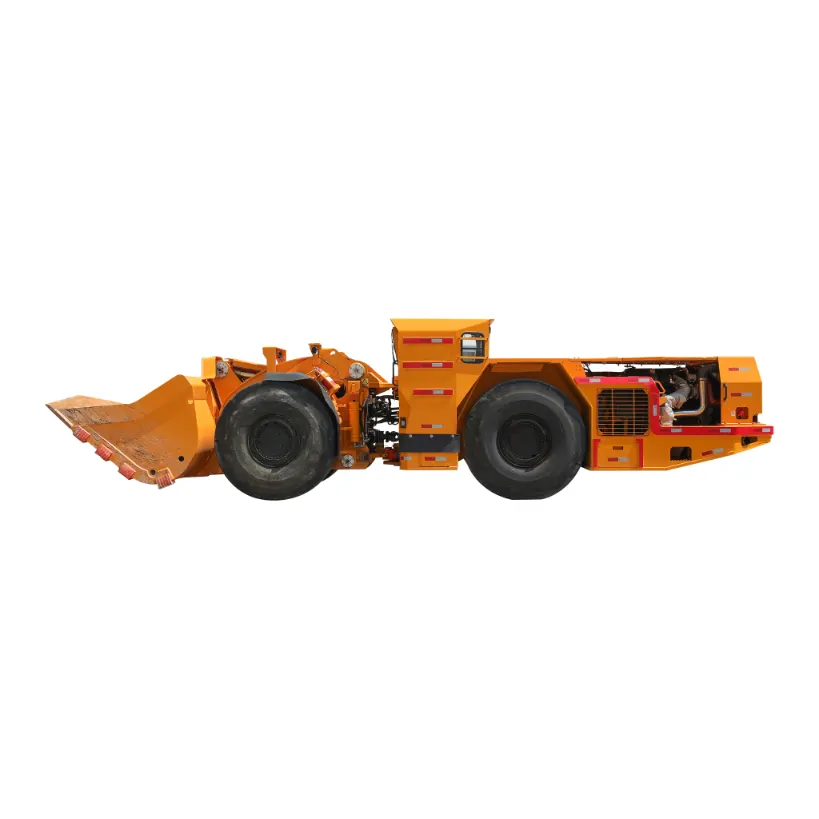
A model such as ZDL717 from ZONGDA is designed for underground metal ore loading, with a focus on stable structure, strong braking, and service access that keeps planned maintenance short. It sits in the same working class as well-known 7-tonne LHDs from global brands, but is tailored to trackless metal mines and cost control. When you match that type of loader with the right truck size and ramp layout, you get safer operation and fewer surprise stoppages.
How Do You Choose the Right Underground Loader for Cost Efficiency?
Buying on headline price alone often leads to higher lifetime cost. The better approach is to start from your ore body and layout: heading size, ramp gradient, ore density, and truck fleet. Then you match machine size and features to those conditions.
Match Capacity to Ore Flow
If the bucket is too small, you work more cycles than needed. If it is too big, you fight crowding, tyre slip, and extra wear. Competitor machines in the 6–7-tonne range often pair about a 3 m³ bucket with that payload class, giving a good balance between digging and tramming speed. A loader in that bracket fits most metal mines using 3.5–4 m headings and standard underground trucks.
Look at Support, Comfort and Control
Simple access to filters, central greasing, and clear fault codes shorten every service job. A cab with low vibration, good seat position, and smooth controls lets operators run longer without fatigue, which quietly improves safety and cycle consistency. When you choose an LHD underground loader, these details matter just as much as raw power on the spec sheet.
What Does Cost per Ton Look Like in Practice?
Cost per ton is where finance and operations meet. You balance purchase price, fuel, maintenance, and staffing against tons moved. To help with that, it is useful to compare machines in the same payload class rather than looking at loaders in isolation.
Simple Cost per Ton View
A quick way to think about it:
Cost per ton ≈ (Fuel + Maintenance + Labor + Capital Charge) ÷ Tons Moved
Your goal is not just to lower one element, like fuel, but to move more tons through the same system with fewer stops and fewer repairs.
Example Comparison of Loader Choices
The table below shows a simple, qualitative comparison in the 7-tonne class, based on published information from major OEMs and typical supplier positioning.
| Item | ZDL307 (ZONGDA) – Metal Ore Focus | Komatsu WX07 | Sandvik LH307 |
|---|---|---|---|
| Target ore type | Underground metal ore stopes and development headings in trackless mines (4 m × 4 m tunnels and above) | Hard-rock, narrow vein mines | Hard-rock mining and tunnelling |
| Payload class | 7-tonne class, 3 m³ bucket, 19.5 t operating weight | 7-tonne class | About 6.7-tonne payload |
| Design focus | Trackless loading and short-distance haulage; Deutz BF6M1013EC engine with DANA R32000 transmission and C270 torque converter; central articulated hydraulic steering with small turning radius for tight headings | High breakout force, fast tramming | High productivity with proven global fleet |
| Typical cost position | Competitive purchase cost from Chinese OEM using Deutz engine and DANA drivetrain, with localized configuration for China and overseas projects | Premium brand pricing | Premium brand pricing |
| Best fit scenario | Metal mines needing a 7 t underground loader for 4 m × 4 m roadways (≤14° ramp) with reliable Deutz+DANA components, simple hydraulics, and close local technical support | Narrow vein operations needing branded global support | Operations needing integration with Sandvik fleets and digital tools |
This sort of side-by-side view helps you pick a loader that fits your ore flow and budget, not just a famous name.
When you evaluate underground mining equipment, it usually pays to ask for real cost-per-ton case data and parts lead times, not only glossy brochures.
ZONGDA as Your Partner in Underground Ore Hauling
QINGDAO ZONGDA MACHINERY CO., LTD (ZONGDA) is a specialist supplier focused on underground metal mining solutions. The company concentrates on trackless machines such as loaders, underground trucks, locomotives, and related systems for hard-rock mines.
ZONGDA brings more than a decade of experience in exploration and underground mining projects, with a team of over 30 mining experts and engineers supported by dedicated production, quality, and after-sales staff. The product line is aimed at collecting underground metal ores, so the designs match the demands of abrasive rock, steep ramps, and tight headings. For you, that means loaders like ZDL717 are built as part of a complete ore-haulage system, not as generic construction machines. In short, ZONGDA tries to give you practical machines that cut cost per ton while fitting the real conditions in your mine.
If you are comparing options for an LHD loader, putting ZDL717 next to well-known imported brands on cost, uptime, and service depth can be a useful exercise.
FAQ
Q1: How much can a modern underground loader really cut ore hauling cost?
A: There is no fixed percentage, but mines that move from older units to well-matched modern loaders often see faster cycles, fewer breakdowns, and a noticeable drop in cost per ton over a year or two.
Q2: Is a bigger loader always better for cost per ton?
A: Not always. If the loader is too big for the headings or for the truck fleet, you lose time on manoeuvres and wear parts faster. A machine that truly fits your mine layout usually gives better long-term cost.
Q3: What should you check first when choosing a loader for a new level?
A: Start with basic fit: heading size, turning room, ramp gradient, and the tonnage target per shift. If a loader struggles to pass corners or keeps hitting grade limits, every other spec becomes less useful. Once those basics match, you can look closer at bucket size, power, and service support.
Q4: How should you compare ZDL717 with an imported 7-tonne LHD?
A: Look at payload class, ramp gradients, service support, and cost per ton over five to seven years. Purchase price is only one part; parts availability and downtime often weigh more in real operations.
Q5: What is the simplest first step to lower ore hauling costs?
A: Start by timing real loader cycles for a week: load, tram, and dump. Once you see where time leaks away, you can decide whether to adjust procedures, change loading points, or move to a more suitable loader model such as a well-matched LHD in the 7-tonne range.