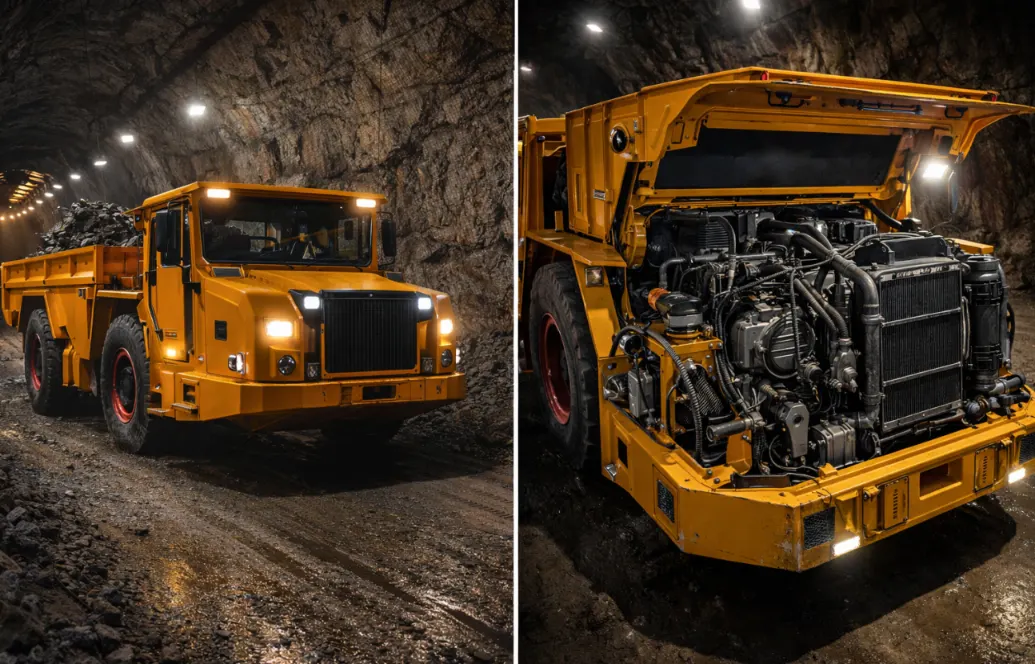
Underground mining trucks work in harsh underground mining conditions that surface fleets rarely face for long: tight headings, abrasive dust, high humidity, and heat that has nowhere to go. In that environment, underground mining truck maintenance challenges tend to show up as repeatable patterns, not random bad luck. Many breakdowns start as off-highway powertrain issues or contamination problems that were visible early, but were hard to catch or hard to act on underground. If you treat these challenges as predictable and design your maintenance response around underground reality, you reduce unplanned downtime and protect component life without turning the site into a maintenance-only operation.
Why Underground Mining Trucks Face Unique Maintenance Challenges
Underground transport is not just “trucking in a different place.” The mine layout, service access, and ventilation constraints change what fails, how fast it fails, and what “good maintenance” looks like day to day.
Confined Operating Space and Limited Service Access
Confined headings and narrow bays change the basics of inspection and repair. Even when you know where a problem is forming, you may not have the clearance to safely access covers, lines, or drivetrain interfaces at the time you notice it. That delay is one reason underground drivetrain issues can snowball: small leaks, mounting looseness, or protective boot damage keeps running until the next workable access window. In practice, your service plan has to assume that some tasks will be done in shorter, more frequent touchpoints, while heavier work is staged for the times you can actually position the truck where tools and people can work safely.
Dust, Moisture, and Poor Ventilation
Underground dust is fine, persistent, and aggressive. It gets into connectors, breathers, seals, and cooling packs. Add humidity and temperature swings, and you get corrosion at interfaces and faster seal aging. This is where invisible problems start: worn seals allow ingress, and then you begin to see debris in transmission fluid or other fluids that should stay clean. When you find contaminated transmission fluid, treat it as an operating condition signal, not just a fluid issue. It usually points to upstream filtration, breathers, heat stress, or sealing weaknesses that will repeat if the root cause stays in place.
Continuous Load Cycles and Frequent Stop-Start Operation
Underground haul cycles are rarely smooth. You see constant torque changes, short accelerations, frequent braking, and repeated direction changes. That duty cycle loads the powertrain in ways that can shorten transmission lifespan even when the truck’s rated capacity is respected. It also raises the likelihood of heat-related stress, because stop-start operation creates repeated peaks instead of stable operating bands.
Common Mechanical and System-Level Maintenance Issues
Most underground mining truck failures concentrate in a few systems. The challenge is that underground conditions tend to hide early indicators until the system is already degraded.
Transmission Overheating and Premature Wear
Transmission overheating is one of the most common transmission overheating problems in underground mining operations because heat rejection is limited and the duty cycle is demanding. Overheating rarely announces itself with a single dramatic event. It often starts as small shifts in behavior: longer response, rougher engagement, or rising operating temperatures on similar routes.
Track transmission operating temperature trends instead of relying on occasional spot checks. When the transmission operating temperature rises earlier in the shift or stays high after comparable cycles, treat it as a maintenance trigger. Also look for contaminated transmission fluid or debris in transmission fluid, because heat accelerates oxidation and can worsen wear, while debris can indicate clutch or gear wear that is already underway.
Brake System Degradation in Underground Conditions
Brakes in underground work are punished by dust, moisture, and repeated high-load stops. Even well-maintained systems degrade faster than in surface operations. Brake performance also affects drivetrain loading, because inconsistent braking changes how operators control speed and torque on ramps and tight turns.
Hydraulic System Contamination and Seal Failure
Hydraulics suffer underground because contamination routes multiply. Once contamination starts, it spreads quickly through valves and actuators. Repeated leakage or slow response usually points to worn seals combined with dust ingress, not isolated component defects.
Electrical and Control System Reliability Issues
Electrical problems underground are usually connection problems before they are component problems. Vibration, moisture, and dust affect connectors and sensors first. Many off-highway powertrain issues show up as control instability, intermittent faults, or nuisance shutdowns long before a hard failure occurs.
Operational Factors That Amplify Maintenance Risks
Two sites with the same truck can see very different reliability results. The difference is often operational behavior: what gets checked, what gets deferred, and what becomes “normal.”
Inconsistent Daily Inspection Practices
Daily checks can become superficial underground. Minor seepage, early heat patterns, or subtle driveline noise is easy to miss when access is limited. Focused checks that target known underground failure modes are more effective than long, generic inspection lists.
Delayed Preventive Maintenance Due to Production Pressure
Production pressure often pushes preventive work out of the schedule. The result is that manageable servicing turns into emergency repair. Gearbox preventive maintenance protects interfaces and sealing systems, but only if it is treated as a priority rather than a convenience.
Spare Parts Availability in Underground Sites
Spare parts strategy directly affects downtime. Without critical off-highway powertrain components on site, small failures become long outages. The goal is not large inventory, but the right inventory that supports predictable underground failure patterns.
Engineering-Oriented Approaches to Reduce Maintenance Failures
You do not need a perfect system to improve reliability. You need one designed for underground constraints.
Designing Maintenance Routines Around Underground Reality
Underground routines should combine frequent short checks with planned deeper service when access allows, following a preventive maintenance schedule designed for underground operations. Monitoring temperatures, contamination trends, and connector integrity helps catch problems before they escalate.
Prioritizing High-Risk Systems in Preventive Maintenance
Powertrain, braking, hydraulics, and contamination pathways deserve disproportionate attention. Many underground operations reduce downtime simply by prioritizing transmission overheating risks and contamination control instead of spreading effort evenly across all systems. For fleets operating heavy-duty underground mining dump trucks, these priorities are usually defined within a structured servicing plan for underground mining trucks.
Aligning Equipment Design with Serviceability
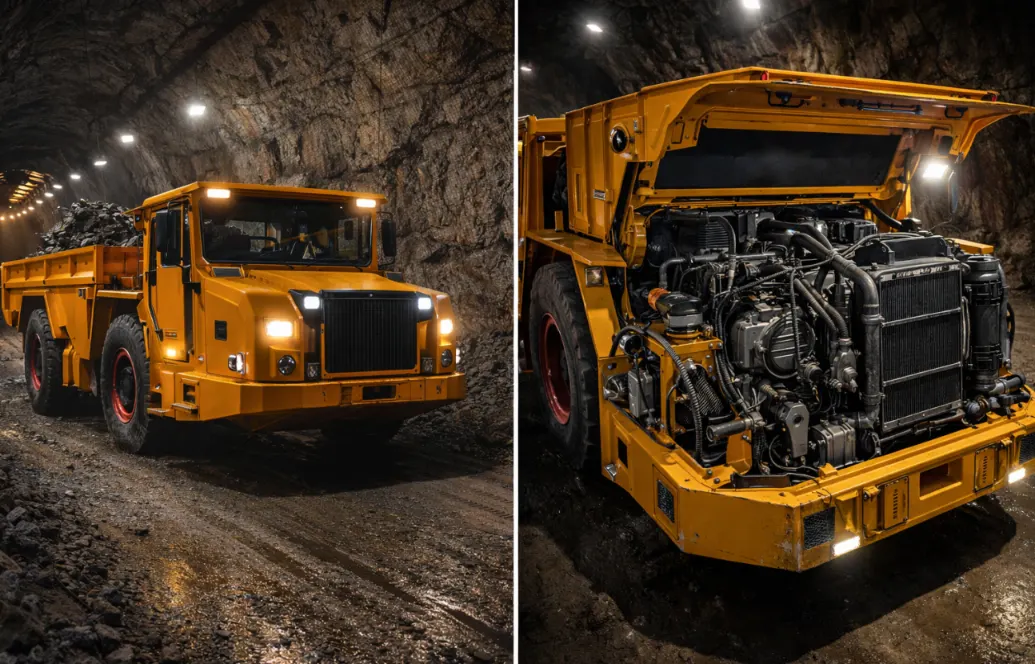
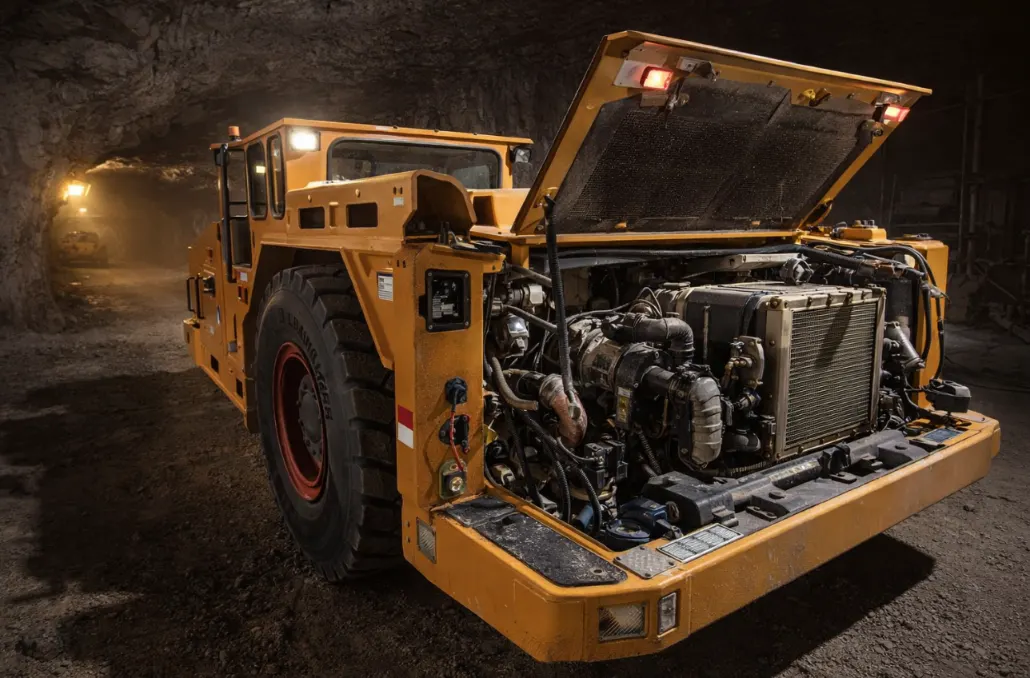
Serviceability affects reliability as much as component quality. Better access, protected routing, and modular design shorten intervention time and reduce the chance that underground drivetrain issues are left unaddressed due to access limitations.
What Mining Operators Should Consider When Selecting Underground Trucks
Equipment selection shapes maintenance performance for years.
Ease of Maintenance and Access Design
Access points should reflect real underground service positions. Designs that support routine inspection and gearbox preventive maintenance without complex disassembly reduce downtime.
Component Durability in Harsh Underground Conditions
Durability depends on sealing strategy, filtration, and thermal stability. Off-highway powertrain durability is closely tied to how well a truck manages heat and contamination underground. When evaluating available underground mining equipment solutions, these factors matter as much as rated payload.
Availability of Technical Support and Service Guidance
Practical service guidance aligned with underground conditions helps sites adjust maintenance strategies to real duty cycles and layouts. This support often has a greater impact on uptime than isolated component upgrades.
Conclusion
Underground mining truck maintenance challenges are largely predictable because the underground environment repeatedly stresses the same systems. When transmission lifespan, contamination signals, and gearbox preventive maintenance are treated as engineering controls rather than paperwork, failures shift from emergency events to managed risks. Addressing these challenges starts with maintenance strategies designed specifically for underground operations and supported by equipment that is built for serviceability in confined environments.
ZONGDA and Underground Equipment Engineering Perspective
ZONGDA specializes in the design and manufacturing of underground mining equipment for demanding tunnel and mine environments. Its product range includes underground mining dump trucks and related transport solutions engineered for durability, serviceability, and stable performance under harsh underground conditions. By focusing on practical engineering, component selection, and maintainability, ZONGDA supports mining operations seeking to reduce downtime and extend equipment service life across real-world underground applications.
FAQ
Q1: Why do underground mining trucks experience more frequent maintenance issues than surface trucks?
A: Underground trucks run in slim areas. They face big dust, wet air, and limited air movement. These factors increase heat buildup, dirt accumulation, and breakdowns, especially in the powertrain, braking systems, and fluid-moving parts.
Q2: What are the earliest signs of transmission problems in underground operations?
A: Early signs often include higher operating temperatures, slower gear shifts, and signs of fluid contamination. These issues usually appear before a complete failure.
Q3: How does dust affect underground truck reliability?
A: Small dust particles slip through seals, plugs, and cooling parts. Once inside, they dirty fluids, damage seals, and hinder heat dissipation, leading to more frequent repairs if not addressed.
Q4: Which maintenance tasks should be prioritized underground when time is limited?
A: Focus on high-risk parts like the powertrain, braking system, fluid transfer, and wiring connections. Monitor heat levels, dust accumulation, and seal integrity. This prioritization ensures the most critical systems are maintained effectively.
Q5: How does equipment design influence maintenance outcomes underground?
A: A well-designed repair system improves accessibility, protects vital components, and reduces time needed for routine checks. This helps maintenance teams address issues promptly rather than delaying repairs due to accessibility problems.