Choosing the right equipment for mucking out a drift isn’t just about moving rock; it is about keeping the operation running when conditions get tough. In the narrow, often wet confines of underground tunnels, the loader is your lifeline. If it stops, everything stops. You likely face a common decision: sticking with the traditional pneumatic rock loader or switching to an electric version. Both have their place, but the specific hazards of your mine—gas, water, and space—should dictate your choice.
Why Is Safety the Top Priority in Underground Mining?
Underground mining environments are unforgiving, and the margin for error is razor-thin. When you are dealing with confined spaces and the potential for explosive gases, the equipment you choose acts as the first line of defense against catastrophic accidents.
The Threat of Firedamp and Dust
If your mine has even a trace of methane (firedamp) or high concentrations of coal dust, an electric motor becomes a liability. Electric loaders rely on continuous current. Even with explosion-proof casings, seals degrade over time. A single damaged cable or a spark from a worn switchgear can ignite gas pockets.
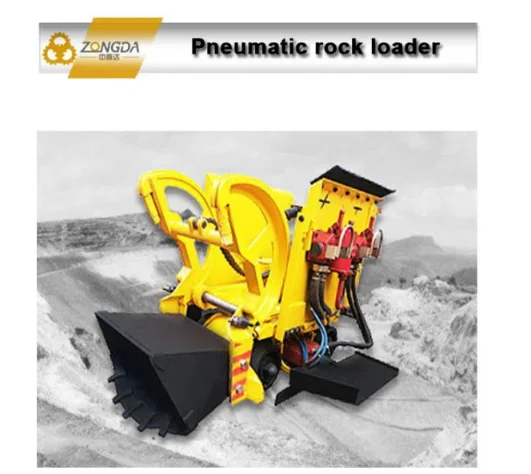
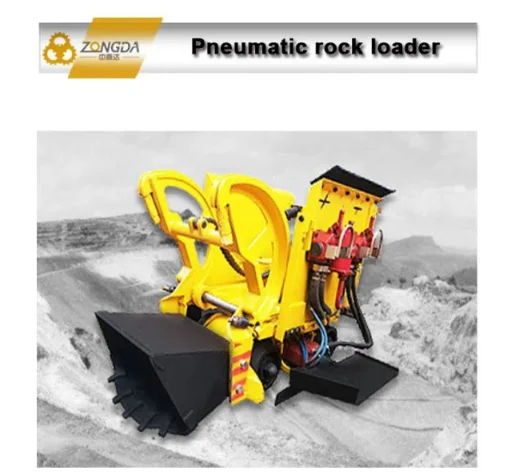
Pneumatic loaders, like the Z-20W underground mining tunnel pneumatic rock loader, operate on a completely different principle. They are powered by compressed air. There is no electricity flowing through the machine itself. This means no sparks. You could run a pneumatic loader in a high-gas environment without the constant anxiety that comes with monitoring electrical seals. It is inherently safe, not just protected.
Water and Humidity Challenges
Mines are rarely dry. You are often mucking out wet, heavy ore in tunnels dripping with groundwater. Electric components and water do not mix. High humidity can cause shorts in control panels, and standing water poses a severe electrocution risk to operators if a cable insulation fails.
A pneumatic system loves the wet. The air motor is sealed against debris, and moisture in the external environment does not affect the internal mechanics. In fact, you can operate a pneumatic rocker shovel in standing water without risking the machine or the operator. The simplicity of air power removes the fear of water damage that plagues complex electric hydraulic systems.
How Do Pneumatic Loaders Work Compared to Electric Ones?
It helps to look at the mechanics to see why one might outlast the other in a rough drift. The fundamental difference lies in how they generate force and how they handle the brutal, repetitive shock of loading rock.
The Simplicity of Compressed Air
A pneumatic loader is essentially a mechanical arm powered by an air motor. You connect it to your mine’s air line (requiring about 0.5 to 0.7 Mpa pressure), and it goes to work. The operator uses simple levers to control the bucket.
The mechanism is straightforward: the bucket scoops the rock, the rocker arm swings back, and the inertia throws the material into the mine car behind it. Because the system is mechanical, it is incredibly robust. If the bucket hits an immovable rock face, the air motor simply stalls. It does not burn out. There are no expensive frequency converters or printed circuit boards to fry. It is brute force applied intelligently.
Electrical Complexity and Maintenance
Electric loaders often promise higher efficiency on paper, but they bring complexity underground. They require heavy cables that must be dragged along the tunnel floor. These cables are prone to being run over, cut by falling rock, or damaged by the loader itself during retraction.
Repairing an electric loader underground is a nightmare. You often need a certified electrician to troubleshoot control faults or sensor errors. In contrast, a pneumatic loader can usually be fixed by a mechanic with a standard set of wrenches. When you are three kilometers underground, the ability to fix a machine with basic tools translates directly to uptime.
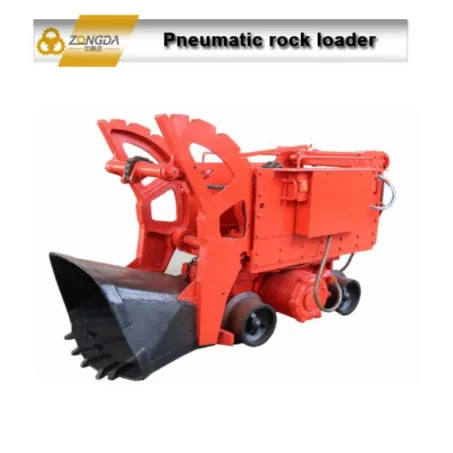
ZONGDA Z-20W: A Reliable Partner for Hazardous Environments?
When you look for a machine that balances raw durability with the precision needed for narrow tunnels, ZONGDA stands out as a manufacturer that gets the reality of small-scale mining. They do not just build machines; they engineer solutions for the specific constraints of 2m to 2.5m tunnels. The Z-20W is their flagship pneumatic rock loader, designed specifically to tackle the headaches of maintenance and safety we just discussed.
ZONGDA has configured the Z-20W with a 0.20 cubic meter bucket capacity, which is the sweet spot for efficiency in confined drifts. It is built to load rock into mine cars with a loading height of roughly 1.2 meters, making it compatible with standard tramming setups. What makes this unit particularly valuable is its adaptability to track gauges. Whether your mine runs on a 600mm, 762mm, or 900mm gauge, the Z-20W can be adjusted to fit without major modifications.
The engineering focus here is on “full protection.” ZONGDA builds these units to withstand the corrosive, abrasive, and explosive nature of underground work. They use high-grade steel for the rocker arm and bucket lips, knowing these parts take the most abuse. By choosing a ZONGDA loader, you are not just buying a tool; you are investing in a system that removes the fire risk of electrics while maintaining the high output needed to clear a round quickly. It is a workhorse that asks for very little in return—just clean air and grease.
What Are the Economic Implications for Small-Scale Mines?
Money dictates most mining decisions. While electric loaders might have lower energy costs per ton in a perfect laboratory setting, the real-world economics of a small mine drift paint a different picture.
Total Cost of Ownership
Electric loaders are expensive to buy. The explosion-proof certification alone adds a massive premium to the price tag. Then you have the cost of copper cabling, transformers, and switchgear.
Pneumatic loaders are significantly cheaper upfront. If your mine already has a compressed air network for jackleg drills, the infrastructure cost is zero. The maintenance parts—seals, bearings, control valves—are cheap and widely available. You do not need to keep expensive proprietary electronic modules in stock.
Ventilation Bonuses
This is an often-overlooked benefit. Electric motors generate heat, adding to the thermal load of the tunnel. In deep mines, heat is an enemy.
Pneumatic loaders do the opposite. As the compressed air expands in the motor and exhausts, it cools down. The exhaust air is fresh and cold. Using a Z-20W rock loader actually helps ventilate the dead end of a tunnel, blowing away dust and fumes. You get mucking power and auxiliary ventilation in one package, potentially lowering the demands on your main fans.
Which Loader Fits Your Specific Tunnel Conditions?
You need to match the machine to the rock and the tunnel dimensions. A mismatch here leads to frustration and lost shifts.
Assessing Your Space
If your drift is small—around 2.5 meters by 2.5 meters—a large electric LHD (Load Haul Dump) simply won’t fit or will have no room to maneuver. The rail-mounted bucket loader is king here.
The Z-20W requires a minimum tunnel width of about 2.5 meters and a height of 2.2 meters to operate its bucket swing effectively. It is compact. It cleans up the track and the sides effectively. If you are developing a long, straight drift with rail haulage, the pneumatic rocker shovel is faster than practically any other method for this specific profile.
The Verdict on Power Availability
If you have consistent air pressure (above 0.5 Mpa), go pneumatic. The performance is snappy, and the bucket fills fast. If your air supply is weak or your compressor is undersized, the loader will feel sluggish. In that rare case where you have massive electrical capacity but no air lines, an electric model might be the only option, but you must be prepared for the safety protocols that come with it.
For the vast majority of narrow-vein or development headings, especially where gas is a concern, the simple, air-powered loader remains the champion. It is safer, cheaper to fix, and gets the rock out.
FAQ
Q1: What is the minimum air pressure required for the Z-20W loader?
A: You need a minimum working pressure of 0.5 Mpa to get good performance, though it operates best between 0.5 and 0.7 Mpa.
Q2: Can the Z-20W operate in a tunnel with a slope?
A: Yes, but the slope should be limited. It works best on horizontal drifts or slopes less than 8 degrees; anything steeper requires special winching assistance.
Q3: How does the loading capacity compare to manual loading?
A: It is incomparable; a single pneumatic rock loader like the Z-20W can move 40 to 50 cubic meters of rock per hour, replacing dozens of workers.
Q4: Is the bucket size adjustable?
A: The standard bucket is 0.20 cubic meters, which is engineered to balance the weight of the machine and the throwing force required for standard mine cars.
Q5: Does the machine come with the rail wheels installed?
A: Yes, it is shipped with the wheel sets compatible with your specified gauge, usually 600mm, but you must confirm your track width before ordering.