Shallow ore deposits are practically gone. To get to the high-grade rock today, you have to dig much deeper. But deep-level mining brings a massive headache. How do you actually get the ore out without blowing your entire budget on fixed infrastructure? For decades, traditional rail systems were the only real choice. You laid the track, and you ran the carts.
Now, the industry is waking up to trackless mining equipment advantages. It is just not practical to lay kilometers of steel in complex, tight underground drifts anymore. The modern approach focuses entirely on mobility, letting you chase the ore body instead of forcing the mine plan to fit a rigid railway.
The Bottleneck of Deep-Level Mining: Why are Rail Systems Falling Behind?
The deeper you go underground, the more the rock behaves unpredictably. You deal with immense ground pressure, sudden fault lines, and extreme heat. Trying to force a rigid, permanent transport system into a dynamic, constantly changing environment creates daily bottlenecks that kill your tonnage output.
The Soaring Costs of Infrastructure Installation
Laying rails underground is painfully slow and incredibly expensive. Your development crews have to grade the drift floor perfectly flat. If the floor heaves from natural ground pressure, which happens a lot at 2,000 meters down, the tracks warp. Then your train derails, and production stops cold for hours. You end up spending a massive chunk of your capital expenditure on steel, wooden sleepers, and the specialized labor required to just keep those tracks straight enough to use.
Lack of Flexibility in Narrow and Complex Veins
Ore bodies rarely run in perfectly straight lines. They dip. They curve. Sometimes they pinch out completely. Rail systems simply cannot turn sharply or handle steep inclines. When your geologists find a rich, high-grade pocket of ore just off the main drift, a train cannot take a quick detour to get it. You often have to leave good rock behind because extending the rail system to reach a small pocket costs far more than the ore is actually worth.
Core Trackless Mining Equipment Advantages Over Traditional Rail
This is exactly why the shift is happening so fast across the industry. When evaluating trackless mining equipment advantages, the main takeaway is total mobility. You stop fighting the rock and start working with it. Moving away from fixed infrastructure lets you adapt your daily production schedule on the fly.
Unmatched Operational Flexibility
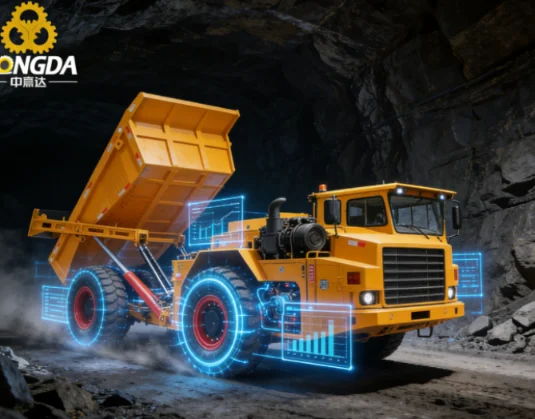
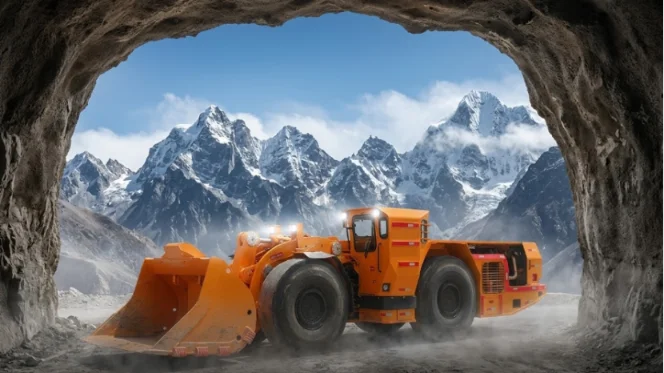
Think about a standard drill and blast cycle. With LHD mining equipment, your machines can move instantly from one stope to another. A wheel loader clears out a muck pile, reverses, and drives up a ramp to a completely different level of the mine. There is no waiting around for construction crews to install track extensions. You follow the vein directly and keep the rock moving.
Lower Upfront Capital Expenditure
You save money right from the start. Buying underground mobile machinery is a big investment, but you are buying a vehicle that goes to work on day one. You do not need to build large electrical substations every few hundred meters or lay miles of expensive copper cable just to power a locomotive. The floor of your drift just needs to be reasonably flat, not laser-leveled by surveyors.
Faster Cycle Times and Increased Productivity
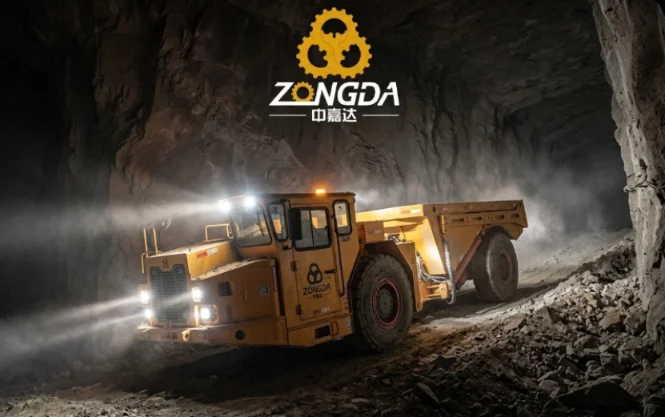
Underground haulage solutions have evolved rapidly over the last ten years. Modern machines carry heavy payloads at higher speeds than older rail carts. If an underground truck breaks down, a secondary vehicle tows it to the workshop, and you send another truck down the ramp. If a train breaks down, it blocks the entire tunnel. No one gets past. Trackless machines simply steer around each other, keeping your ore flowing to the crusher without catastrophic delays.
Market Insights: The Rapid Growth of Trackless Mobile Machinery
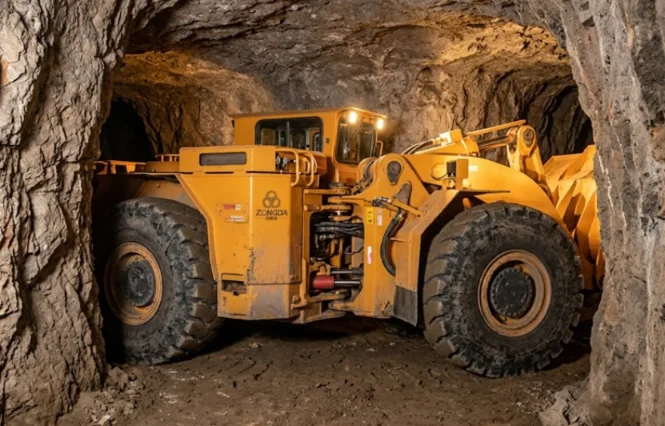
The production numbers back up what mine managers see underground every day. Global demand for trackless mobile machinery is climbing fast. Operations realize that tying their daily output to a fixed, vulnerable rail line is way too risky. Today’s market heavily favors equipment that can adapt to changing mine plans instantly. High-maneuverability machines are now the baseline for any serious underground operation, mostly because they directly lower the operating cost per ton.
How is ZONGDA Powering the Shift to Trackless Mining?
Finding the right gear for deep, hot, and harsh environments is tough. Many machines look great on a specification sheet but constantly break down when they hit real underground dust and mud. Professionals in heavy industrial applications notice a clear difference in how ya ZONGDA approaches this specific problem. They engineer machinery for the brutal realities of underground extraction.
Their lineup of ZONGDA trackless mining equipment cuts out the unnecessary complexity that usually leads to maintenance nightmares. Instead of delicate electronics that fail in high humidity, they focus on rugged chassis design, high horsepower-to-weight ratios, and straightforward mechanics. Whether you need compact scooptrams to navigate tight veins or heavy-duty malori ya madini ya chini ya ardhi to haul massive payloads up steep ramps, their gear is built to take a beating. You get the raw pushing power needed to clear a face quickly, paired with an incredibly tight turning radius. This means your operators can maneuver through narrow drifts without constantly scraping the walls, turning theoretical equipment advantages into actual profit on your daily production report.
Maswali ya kawaida
Q1: What are the main trackless mining equipment advantages over rail systems?
A: The biggest advantage is flexibility. Trackless machines can drive anywhere in the mine without waiting for tracks to be laid. This lowers upfront costs and allows you to mine irregular ore bodies much easier.
Q2: Does trackless mobile machinery cost more to maintain?
A: While diesel engines and tires require regular servicing, you completely eliminate the cost of maintaining kilometers of underground railway tracks. Overall, the maintenance is more predictable and less disruptive to the whole mine.
Q3: Can underground mining trucks handle steep inclines?
A: Yes. Modern trackless trucks are built with high-torque engines specifically designed to haul heavy payloads up steep ramps, something traditional trains simply cannot do.
Q4: Are LHD mining equipment units suitable for narrow vein mining?
A: Absolutely. Many manufacturers design ultra-compact LHDs that fit into very tight drifts, letting you extract ore from narrow veins that would be impossible to reach with a rail system.
Q5: How does a trackless system improve mine safety?
A: Trackless systems reduce the risk of major derailments. Operators also sit in reinforced, climate-controlled cabins, keeping them safer from falling rocks and poor air quality at the mining face.