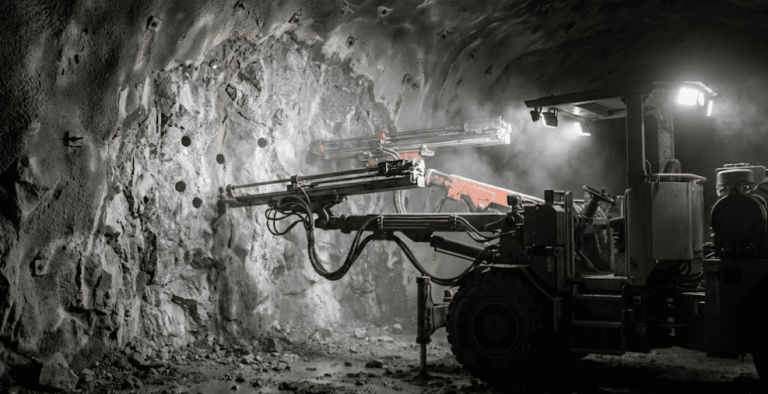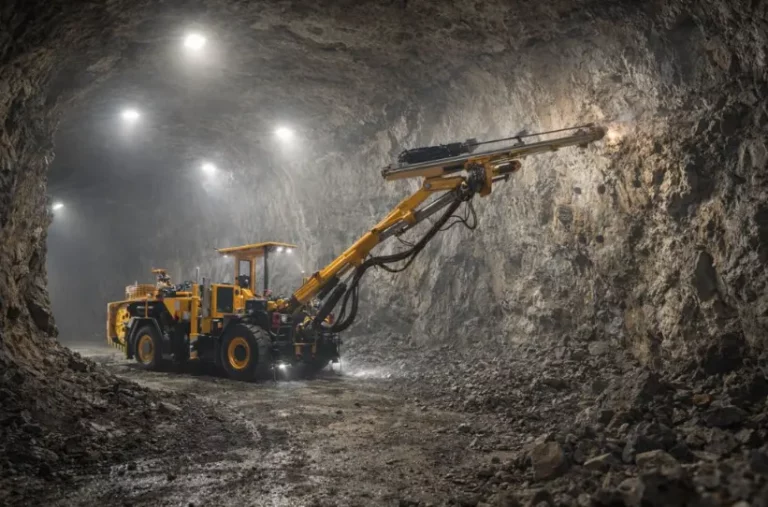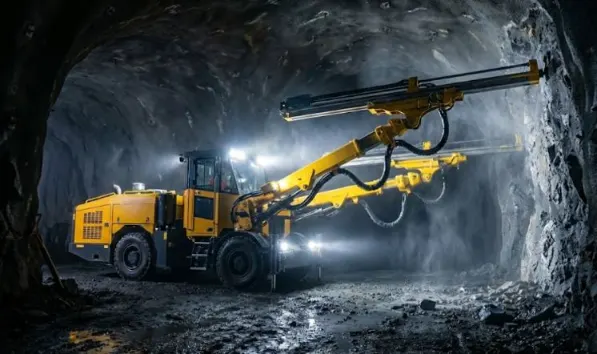
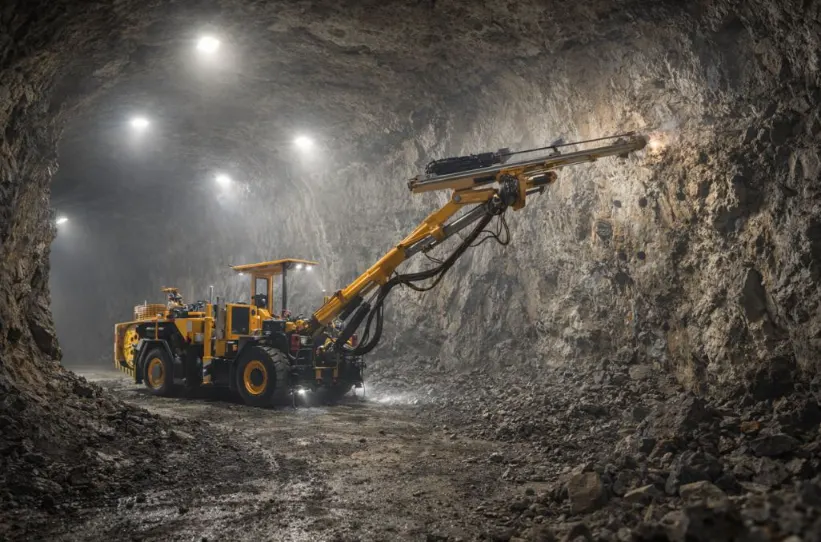
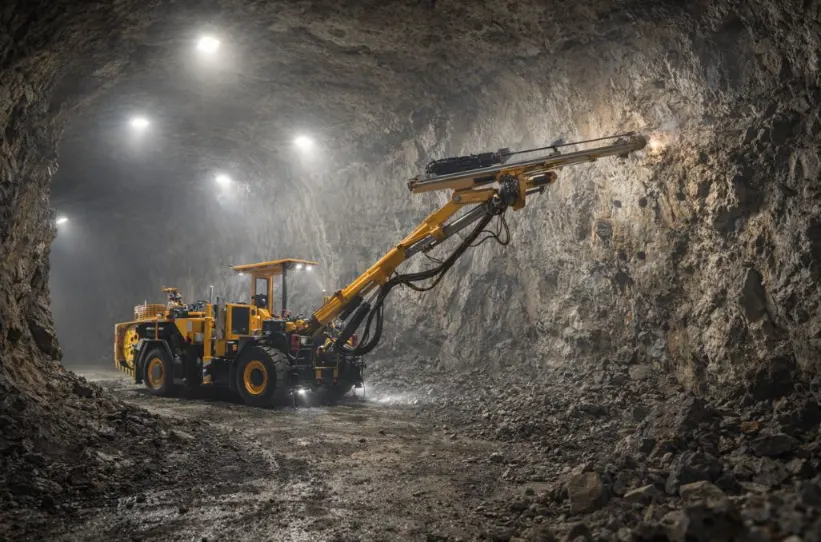
You can drill fast and still fall behind. It happens all the time in underground development headings. The face looks ready, the jumbo is on the mark, yet the round drags. The reason is simple: advance rate is a cycle result. Small delays stack up across the shift, then you spend the last hour “catching up” and it never really works.
This guide breaks the drilling jumbo work into a 7-step drilling cycle, from first positioning to a face that is truly blast ready. The goal is practical: help you spot where time leaks, why rework starts, and what to watch when you compare crews, headings, or jumbo setups.
Why Underground Drilling Is a Cycle, Not a Single Operation
In development, drilling is not just “making holes.” It is a repeatable loop that has to fit real constraints: heading size, face condition, crew habits, ventilation windows, and the next team’s schedule. When you treat it as one task, you only see penetration rate. When you treat it as a cycle, you see the real drivers: positioning time, rod-change rhythm, corrections, and the handoff to charging.
The cycle view also helps with equipment decisions. A faster drill may not help if most of your lost time sits in setup, alignment, and clean handover. And yes, sometimes the “slow” crew is slow because they keep fixing the same avoidable problem.
Where Advance Rate Is Really Lost
Most delays are boring.Sometimes the collar is just off. Sometimes the cut holes are not deep enough. Sometimes the boom order forces a pointless reposition. And then the rod change happens at the worst possible moment. None of these look dramatic, but each can cost minutes, and minutes become meters over a week.
If your reports show decent drilling speed but weak advance, the gap is usually in non-drilling time: moving, setting, verifying, and correcting. That is the cycle.
Step 1 – Jumbo Positioning and Face Alignment
Positioning sets the tone for the whole round. If the carrier is a bit off, you can still drill, but you pay later through awkward boom angles, poor collar control, and extra corrections. In tight headings, you feel it immediately. In wider headings, the penalty hides until you check the pattern.
This step is also where headings differ. A 4×4 m profile punishes bad alignment fast. An 8×6 m face gives room, but it also invites sloppy habits because “it still reaches.”
Machine Position vs. Face Geometry
Start with the face you actually have, not the face you wanted. Overbreak, uneven toes, and a tilted face plane change where collars should sit. If you line up to a centerline only, you may drift your perimeter and lose contour control.
Good crews do a quick visual check, then set reference points that match today’s face. Nothing fancy. Just enough to avoid drilling a nice pattern on the wrong plane.
How Poor Positioning Cascades Through the Cycle
Misalignment creates knock-on issues. The boom works near its limits, feed angles get ugly, and hole deviation risk climbs. Then you add “small fixes” during drilling: shifting the carrier, re-collaring, or drilling a corrective hole. That is hidden cycle time.
Step 2 – Boom Setup and Coverage Planning
Before steel touches rock, the crew makes choices that decide the rest of the round: boom sequence, coverage zones, and how to move across the face. If you get this wrong, you either waste motion or you force rushed drilling later to catch up.
This is also the step where system differences show up. Single-boom and twin-boom setups do not just change “speed.” They change how you manage overlap, blind zones, and coordination.
Coverage Area and Blind Zones
Coverage is not only reach. It is reach at stable angles that keep collar control. If a boom must stretch or twist to hit a corner, you risk wandering collars and more rework. In wider headings, blind zones often sit in the corners and near the floor line, where hoses, muck, and uneven ground make life harder.
A simple habit helps: plan the face into zones that match comfortable boom angles, then keep the sequence consistent. Consistency reduces “where were we?” pauses. Those little pauses are real.
Hole Pattern Planning in Real Headings
Pattern quality is not about perfect symmetry. It is about function: cut holes that open cleanly, perimeter holes that hold the profile, and spacing that matches rock and explosive plan. If the face is fractured, you may need tighter control at the perimeter. If the face is tough and blocky, you may need more attention on cut execution to avoid bootlegs.
Step 3 – Drilling Execution and Penetration Control
This is the step everyone watches, because it is the loud part. But drilling execution is more than raw penetration. What matters is steady progress with predictable hole quality. When you chase speed, you often buy deviation, bit wear, and later corrections.
The customer concern here is simple: “Why does a high penetration rate not translate into a clean blast?” The answer is usually stability and control.
Penetration Rate vs. Consistency
Rock changes across a face. A cut hole may hit a hard band while a lifter hole hits broken ground. If the operator reacts with big swings in feed and rotation, the hole wanders. You may not notice until charging or blasting shows the result.
Steady settings and calm collar control beat aggressive drilling in most headings. Fast holes that miss the plan are not fast.
Why Faster Is Not Always Better
Overdriving bits increases wear. Worn tools drift more, then you correct more, then your cycle stretches. It is a loop nobody wants. If you want speed, chase fewer stops and fewer fixes, not just higher feed pressure.

Step 4 – Rod Handling and Extension Rhythm
Rod work is a classic hidden delay. The hole looks “almost done,” then you lose flow during extension. If the crew treats rod changes as interruptions, the cycle breaks. If the crew treats them as a planned rhythm, the cycle stays smooth.
This step matters more in deeper holes and in patterns with many similar depths. You do not want your best operator losing time in repeated micro-stops.
Rod Length Strategy in Development Drilling
Rod strategy is not one-size-fits-all. Some headings benefit from fewer changes with longer rods. Others benefit from faster handling with standard lengths. The “right” choice is the one that keeps your crew calm and consistent without creating awkward boom positions.
If rod handling is manual-heavy, fatigue also matters. That is not a soft topic. Fatigue shows up as slow resets and sloppy collars.
How Rod Changes Disrupt Cycle Flow
A bad rod-change moment often triggers a chain reaction: the boom drifts, the collar point shifts, and the operator spends time re-centering. Multiply that across dozens of holes, and you feel it at the end of the round.
Step 5 – Hole Accuracy, Depth Verification, and Corrections
Accuracy is where drilling turns into blasting performance. You can hit the meter count and still fail the round if depth, angle, and collar position drift. That leads to bootlegs, poor pull, or damaged contour. Then the next cycle starts with cleanup work, not fresh advance.
This step answers a common worry: “Why do two crews on the same jumbo get different pull?” Hole quality is usually the reason.
Common Accuracy Issues in Underground Headings
Three issues show up often: shallow holes, angle drift, and collar creep. Shallow cut holes reduce relief. Angle drift can throw the cut off line. Collar creep ruins your perimeter and makes scaling worse.
These are not rare edge cases. They are daily stuff, especially when ground conditions change mid-face.
Why Corrections Kill Advance Rate
Corrections cost time twice. First, you lose minutes fixing the hole. Then you lose minutes because the crew loses rhythm. The round becomes stop-start. That is when mistakes multiply.
Step 6 – Face Inspection and Blast Readiness Check
A drilled face is not automatically blast ready. Blast readiness means the pattern can be charged as planned, safely, with confidence that the blast will pull. If the crew hands off a “mostly done” face, the charging team either delays or improvises. Both outcomes hurt the cycle.
This step is where professional sites reduce downstream surprises. It is also where you catch problems before they become a bad blast.
What “Blast Ready” Actually Means
Blast ready usually means: collars are clean enough to load, holes are at required depth, and the pattern is intact. It also means the face condition is noted. If a corner is broken out or wet, the charging plan may change. Better to flag it early than pretend it is fine.
The Handoff to Charging and Support
The drilling crew is part of a chain. If support work cannot keep pace, you lose the benefit of good drilling. That is why system thinking matters. Many sites connect drilling performance to what happens next—haulage, cleanup, and access.
Step 7 – Data Feedback Into the Next Cycle
The best improvements are small and repeatable. A tighter boom order helps. Clearer positioning marks help too. And when rod changes follow a set rhythm, the whole round feels less jumpy.Feedback does not need fancy software to work. It needs attention and a simple way to capture what slowed the round.
This step is also where equipment and site logistics become visible. Once drilling reaches blast readiness, the cycle does not reset automatically. The time it takes to clear the face, remove blasted rock, and prepare for the next round determines how quickly positioning for the following cycle can begin. In this phase, the coordination between drilling and haulage becomes critical. Equipment such as underground mining locomotives used in development cycles plays a direct role in whether drilling gains are preserved or lost before the next face is set.
What Crews Actually Adjust
Crews usually adjust what they can control quickly: positioning habits, the order of holes, and how they verify depth. Engineers often adjust pattern rules and the handoff checklist. When both sides talk, the cycle tightens. When they do not, each round repeats the same delays.
Why Experienced Crews Look Faster With the Same Jumbo
Experience often looks like speed, but it is really fewer interruptions. The crew anticipates where the boom will struggle, where deviation tends to start, and where corrections will cost the most. It is not magic. It is repetition plus discipline.
Conclusion
If you want higher advance rates, look at the whole cycle, not just drilling speed. Positioning, coverage planning, rod rhythm, and accuracy checks often decide your meters more than a small gain in penetration rate. The cycle is also the cleanest way to compare different headings and different jumbo setups, because it shows where time truly goes.
Underground development is a system, not a single machine problem. Drilling jumbos are one critical element within a wider set of underground mining equipment used across the development cycle, and sustained advance rates depend on how consistently these systems work together from one round to the next.
ZONGDA From an Operator’s View
ZONGDA (QINGDAO ZONGDA MACHINERY CO., LTD) focuses on equipment for underground mining operations tied to metal-ore mines, not coal-only applications. The company presents itself as a manufacturer and solution supplier covering multiple underground systems, including trackless mining equipment, locomotives, ventilation, hoisting, and exploration-related machines. It also highlights an engineering-heavy team structure, noting “more than 30” mining experts and engineers supporting R&D, production, QC, and after-sales technical support. For sites that care about cycle continuity, this breadth matters, since drilling performance only turns into real advance when support equipment—such as mine locomotives supporting underground development—keeps pace with the round-by-round rhythm.
FAQ
Q1: Why does the round feel slow even when drilling speed looks good?
A: Because drilling speed is only one slice of the cycle. Positioning, rod changes, checks, and fixes often eat more time than the drilling itself.
Q2: Which step usually causes the biggest hidden delays?
A: Step 1 and Step 5, in a lot of headings. Bad alignment forces awkward drilling, and small accuracy problems trigger rework that breaks the crew’s rhythm.
Q3: Does a larger jumbo always shorten the drilling cycle?
A: Not always. If your delays come from planning, rod handling, or corrections, a bigger machine may not help much. It can even add coordination time.
Q4: What’s a simple way to improve blast readiness without adding paperwork?
A: Use a short handoff checklist: collar condition, depth spot-checks, and any weird face features. Keep it quick. The charging team will thank you.
Q5: How do you compare two crews fairly on the same heading?
A: Compare cycle time by steps. If one crew drills faster but spends more time correcting, the “fast” crew may still lose the shift in total meters.