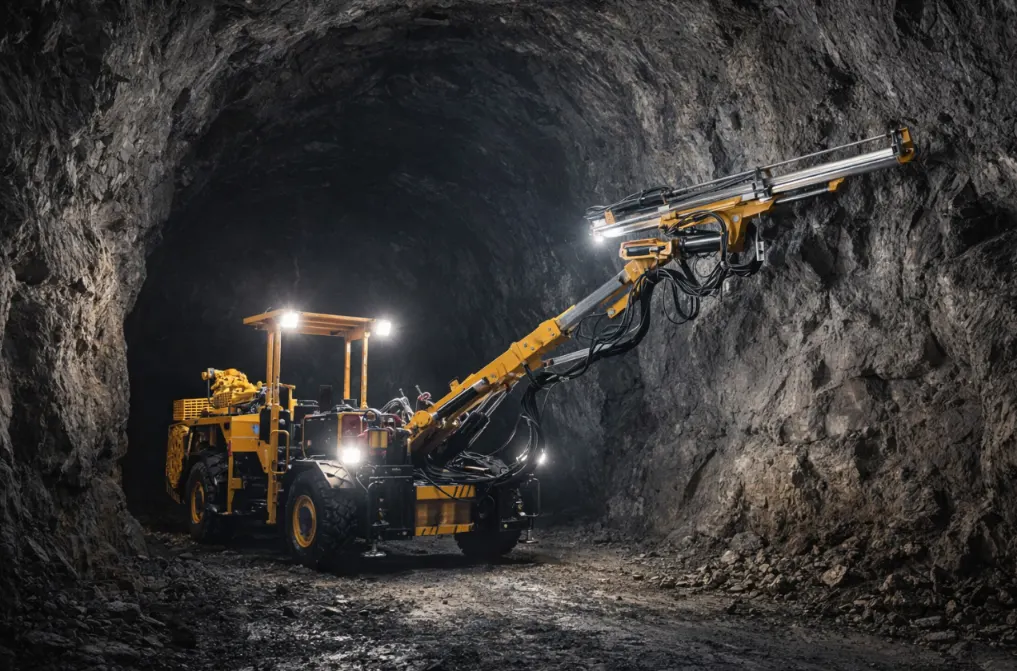
Underground drilling productivity rarely comes down to one headline spec. In real headings, your results depend on how well the machine matches the mine profile, the tunnel face geometry, the rock behavior, and the constraints that come with confined underground space. That is why underground drilling equipment selection should start with operating reality, not brochure symmetry. When you approach underground drilling jumbo selection as a fit-to-conditions exercise, you reduce rework, improve rock drilling accuracy, and keep underground drilling efficiency stable across shifts instead of only looking good on day one.
This article focuses on choosing underground drilling jumbo setups that align with mining development and tunneling advance, with the same logic applying whether you run an underground drilling jumbo for mining or an underground drilling jumbo for tunneling.
Underground conditions that define drilling jumbo selection
Your underground environment sets the boundaries for what a jumbo can do safely and consistently. Before you compare configurations, get clear on the constraints that will govern daily performance.
Tunnel size, profile, and working face geometry
The tunnel size and profile decide whether a machine can position correctly, swing the boom without collisions, and maintain drilling angles across the full face. A jumbo that looks perfect on a wide, straight demonstration drift may become awkward in tight corners, low backs, or irregular headings. Map your minimum clearances, turning needs, and the working envelope at the face. Then evaluate whether the boom reach and drill coverage match that face geometry without forcing risky positioning or repeated repositioning.
Rock hardness, abrasiveness, and drilling depth requirements
“Hard rock” is not one condition. Rock hardness, abrasiveness, and jointing change penetration rate, consumable wear, and how stable the hole stays at depth. Your drilling depth target matters too: deeper holes demand more feed stability and straighter guidance to protect pattern quality. If your project depends on consistent pull and predictable fragmentation, your selection should prioritize stable feed behavior and predictable energy delivery under load rather than peak power claims.
Ventilation, dust, and water conditions underground
Ventilation limits heat rejection, dust loads everything that moves, and water introduces corrosion and sensor reliability challenges. These conditions influence whether a hydraulic drilling jumbo system runs smoothly over time or becomes sensitive to contamination and overheating. If you expect heavy dust and intermittent water exposure, focus on sealing, filtration, cooling capacity, and protected routing—because reliability in harsh conditions is usually an engineering choice, not a maintenance miracle.
Table: Key factors to consider when selecting an underground drilling jumbo
| Underground Condition / Requirement | Why It Matters | Selection Focus |
|---|---|---|
| Tunnel size and profile | Defines access, positioning, and boom movement limits | Compact layout, suitable boom coverage |
| Rock hardness and consistency | Drives penetration rate, consumable wear, and vibration load | Rock drill capability, feed stability |
| Required drilling depth and accuracy | Affects blast quality and advance rate | Feed beam length, control precision |
| Ventilation and dust conditions | Impacts heat control and component life | Cooling performance, sealing and filtration |
| Available maintenance space | Determines downtime and service practicality | Drilling jumbo maintenance access, modularity |
This table is a practical way to frame drilling jumbo selection factors before you go into technical detail.
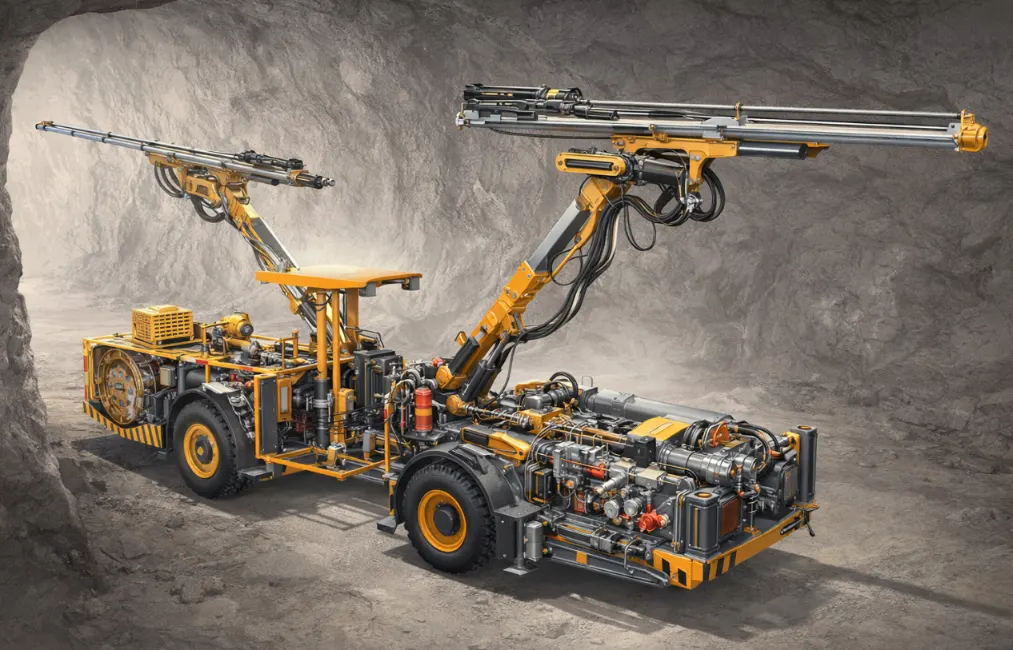
Key technical factors in underground drilling jumbo design
Once underground constraints are clear, you can evaluate underground drilling jumbo design choices that determine coverage, accuracy, and long-term stability.
Boom configuration and drilling coverage
Boom design decides whether you can reach the full face quickly and repeatably. Drilling jumbo boom configuration is not only about reach, but also about stability at extension, angle control, and how easily you can hit the planned pattern without awkward machine repositioning. In many mines, a configuration that drills the face with fewer setups improves cycle time and reduces alignment drift that harms hole quality. Match boom kinematics to your headings and expected patterns, especially if your faces vary in shape across the mine.
Hydraulic stability and control precision
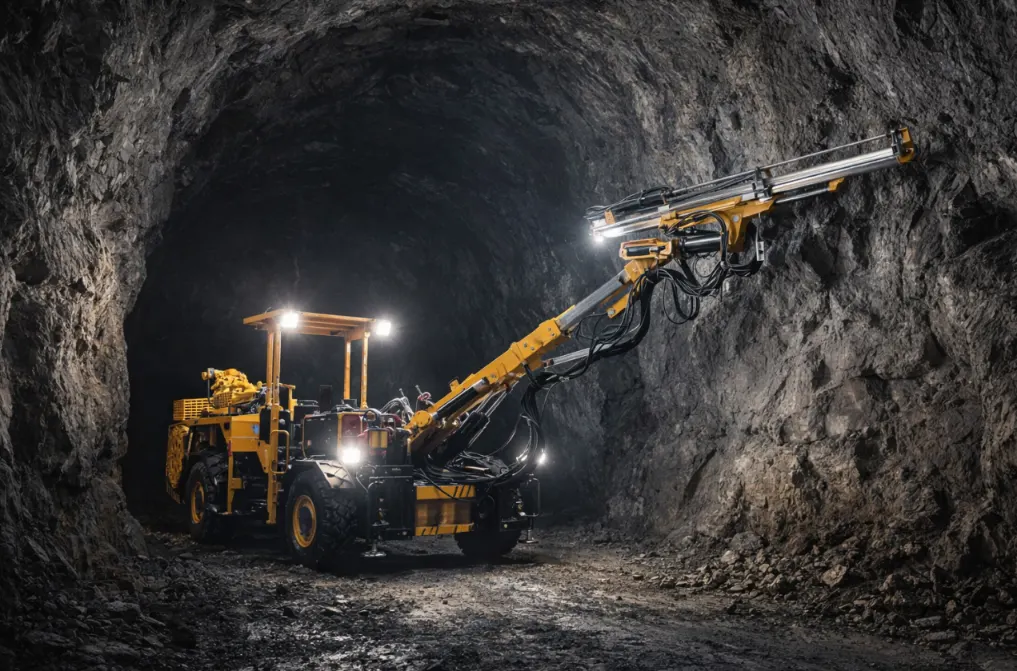
In underground drilling, control consistency matters as much as raw force. A stable hydraulic drilling jumbo system supports smoother feed behavior, predictable rotation, and better control of drilling parameters across different rock bands. If control feels inconsistent, hole quality suffers, consumables wear faster, and pattern accuracy becomes harder to maintain across operators. Selection should favor stable hydraulic response, reliable cooling performance, and component protection that holds up under dust and heat, as seen in a full hydraulic underground drilling jumbo designed for confined underground environments.
Feed beam length, guidance, and hole accuracy
Feed beam length influences the range of drilling depths you can execute efficiently. More important than the number itself is how well the feed remains rigid and guided under load. Rock drilling accuracy depends on alignment stability, predictable feed pressure, and control that avoids “walking” at the collar. If your blasting results are sensitive to hole deviation, treat feed stability and control precision as primary selection points, not secondary features.
Operational considerations often overlooked during selection
A jumbo can be technically capable and still perform poorly if it is hard to service, hard to operate safely, or difficult to keep stable under real shift routines. These operational realities often decide uptime.
Maintenance access in confined underground spaces
Most downtime is not caused by dramatic failures; it is caused by small interventions that take too long. Drilling jumbo maintenance access becomes a selection factor when service tasks must be done in tight bays with limited tools, poor lighting, and rushed schedules. Look for layouts that enable inspection without excessive disassembly, protected routing that reduces accidental damage, and modular components that can be swapped quickly. These details are part of drilling jumbo serviceability, and they determine whether preventive tasks stay routine or get deferred until they become outages.
Operator visibility, ergonomics, and long-shift consistency
Underground productivity depends on repeatability across operators and shifts. Good visibility and workable ergonomics reduce positioning mistakes and fatigue, which directly influences pattern quality and safety. If an operator struggles to align or maintain consistent drilling posture, the machine’s theoretical capability will not show up in your advance rate. Selection should treat operator interface and visibility as production variables, not comfort add-ons.
Spares, support, and predictable uptime
Selection is not finished when the unit is delivered. If critical wear parts, seals, filters, and protected connectors are not available when needed, small issues become long stops. A practical selection process checks whether the machine’s common service points and critical components are supported by predictable supply and whether the design helps reduce routine wear exposure in dusty, wet conditions.
Drilling jumbos vs generic drilling rigs in practice
Many buyers compare a drilling jumbo to more generic underground drilling rigs on paper. The difference shows up in workflow integration and face-level productivity.
Face coverage and cycle time
A drilling jumbo is typically optimized for face drilling patterns and coverage efficiency. If your project depends on consistent rounds, fast setup, and stable pattern execution, coverage and repositioning effort matter more than isolated penetration numbers. Better coverage reduces the time spent re-aligning, which stabilizes cycle time.
Safety and workflow integration
Underground workflow is a system: scaling, drilling, charging, ventilation, and mucking interact. Equipment that fits poorly into the face routine increases congestion, delays, and exposure risk. The right choice supports smoother coordination at the face, especially where space is limited and tasks overlap.
Suitability for continuous development
Continuous development work rewards equipment that can run consistently rather than peak occasionally. Selection should favor stable thermal behavior, protected systems, and practical serviceability so the machine remains predictable after weeks of dust, moisture, and heat exposure.
Matching the drilling jumbo to project scale and development stage
The “right” selection changes with your stage of work and how standardized your headings are.
Early development and variable headings
In early development, headings can vary and access may be less controlled. Flexibility, compact positioning, and practical service access often matter more than maximum output. You benefit from configurations that tolerate variation without forcing risky positioning or constant re-setup.
Production-level mining operations
In production development, consistency and throughput dominate. Pattern repeatability, stable hydraulic response, and fast face coverage become the biggest drivers of advance. Here, selection should emphasize reliability under high utilization and the serviceability features that keep downtime predictable.
Tunnel construction vs mining drifts
Tunneling often prioritizes consistent profile control and predictable cycle integration with support installation. Mining drifts may prioritize adaptability across variable faces and changing ground. Either way, choosing underground drilling jumbo configurations should reflect the workflow constraints you actually run, not the ideal workflow shown in demonstrations.
Conclusion
Underground drilling jumbo selection works best when it starts with underground constraints and ends with practical uptime, not when it starts with a spec list. By aligning boom coverage with tunnel face geometry, prioritizing hydraulic stability for consistent control, and treating drilling jumbo maintenance access as a core requirement in confined underground space, you improve both reliability and drilling results. The most successful underground drilling equipment selection processes focus on the factors that keep hole quality and cycle time stable across shifts—because that stability is what turns a capable machine into a productive one.
ZONGDA and Underground Drilling Jumbo Engineering Perspective
ZONGDA develops underground mining equipment with a focus on real working constraints found in mines and tunnels, including limited service space, high dust exposure, and long-duty operational cycles. For underground drilling jumbo projects, this engineering perspective prioritizes practical boom coverage, stable hydraulic performance, and protection measures that support predictable drilling results under harsh underground conditions.
Instead of treating uptime as a downstream service problem, ZONGDA emphasizes drilling jumbo serviceability at the design level—maintenance access points, protected routing, and component layouts that help site teams keep inspections and preventive work realistic in confined underground space. This approach supports operators and maintenance teams who need consistent face productivity rather than occasional peak performance.
FAQ
Q1: What is the biggest mistake people make during underground drilling jumbo selection?
A: Starting with brochure specs instead of underground constraints. Tunnel size, tunnel face geometry, ventilation, and dust/water exposure usually decide whether performance stays stable. If you map those constraints first, choosing underground drilling jumbo configurations becomes much more predictable.
Q2: How do you choose between boom configurations for different faces?
A: Use face coverage and repositioning frequency as your decision lens. The best drilling jumbo boom configuration is the one that reaches the full pattern with fewer setups while keeping alignment stable. That directly supports rock drilling accuracy and cycle time.
Q3: Why does hydraulic stability matter so much underground?
A: Underground conditions amplify heat and contamination risk. A stable hydraulic drilling jumbo system supports consistent feed behavior and control precision across shifts, which helps maintain hole quality and reduces parameter drift when the rock changes.
Q4: What should you check for drilling jumbo maintenance access before purchase?
A: Ask how routine service tasks are done in tight bays: filters, hoses, protected connectors, and common wear points. Good drilling jumbo maintenance access and modular design keep short interventions short, which is a major driver of predictable uptime underground.
Q5: Are drilling jumbo selection factors different for mining vs tunneling?
A: The core logic is the same, but priorities shift. An underground drilling jumbo for mining often needs flexibility across variable headings, while an underground drilling jumbo for tunneling may emphasize profile control and workflow integration. In both cases, underground drilling equipment selection should match the site’s real constraints and development stage.