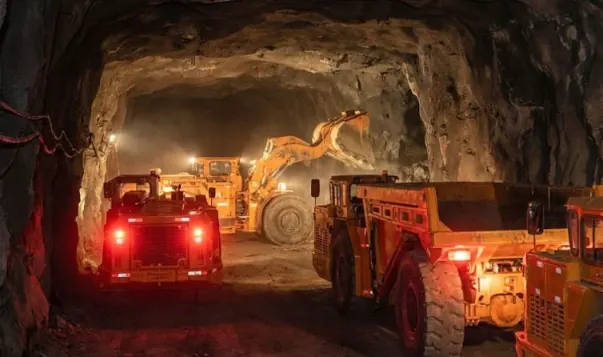
The “Hidden” Bottleneck in Your Haulage System
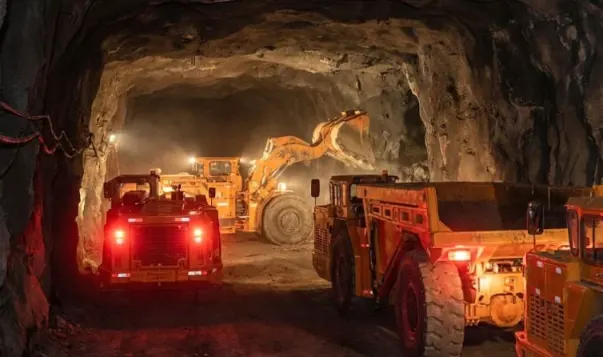
In the quest for higher tonnage, the instinct of many mine managers is simply to buy more iron. The logic seems sound enough: adding more underground mining transport vehicles to the fleet should result in more ore moving up the decline, right?
Not necessarily. In fact, adding capacity without calculating the Match Factor is often the fastest way to burn capital without seeing a return. You might notice the queue at the loading point getting longer, while the crusher sits empty.
According to recent simulation studies on underground mine haulage, incorrectly scaling a fleet can lead to a “utilization cliff.” The data reveals that simply throwing trucks at a haulage system in underground mining without balancing the loader capacity causes vehicle utilization to drop significantly. The culprit is queuing.
Optimization isn’t about buying the biggest machines; it is about creating a balanced flow. This article explains the science behind the “3-Pass Rule” and how to apply it to your fleet to stop wasting fuel on idling engines.
The Science Behind the Match: What the Data Says
Before getting to the rule of thumb, it is crucial to look at the engineering reality. The efficiency of a load-haul-dump (LHD) cycle is dictated entirely by the interaction between the loader’s bucket and the truck’s box. It is a relationship that does not forgive bad math.
Recent research modeled the impact of increasing truck numbers in a single-loader stope operation, and the results were stark.
The Utilization Drop
When the number of trucks increased from two to three in the simulation, the average truck utilization rate plummeted from 97% to 75%. That is a massive hit. You are paying for 100% of a machine but only using three-quarters of it.
The Queue Trap
The study identified “Queuing Time” as the primary efficiency killer. With too many trucks serving one loader, the expensive haulage units spent significant time idling. This is the “Queue Trap.” In certain scenarios, adding a fourth truck reduced the total task completion time by a negligible amount—from 769 minutes down to just 762 minutes. You effectively pay for a whole new machine just to save seven minutes per shift.
The “3-Pass Rule”: The Golden Ratio
To avoid this trap, veteran mining engineers rely on the 3-Pass Rule. It is a simple, field-proven metric to size underground mining transport vehicles correctly.
Why 3 to 4 Passes?
This rule states that, ideally, the LHD loader should fill the mining truck in 3 to 4 passes (buckets).
If the cycle is under 3 passes (say, 2 buckets), the loader is too big for the truck. You risk “shock loading,” which destroys the truck’s suspension and tires over time, and spillage over the sides becomes highly likely.
If the cycle is over 5 passes, the truck sits idle for too long while the loader scrambles back and forth. The truck driver is just sitting there burning diesel, and the truck’s tons-per-hour (TPH) potential is destroyed. Achieving a 3-4 pass match synchronizes the loader cycle with the truck cycle, ensuring a continuous flow of rock.
Applying the Rule: Real-World Configurations
To see how this theory applies to actual operations, the following examples demonstrate the math using standard equipment specifications. These configurations show how matching the right ZDL series loader with the correct truck capacity creates an efficient loop.
Scenario A: Narrow Vein Precision (2.5m Tunnels)
For tight operations where clearance is king, a common mistake is pairing a tiny scooptram with a truck that is just slightly too big, killing cycle times. Let’s calculate the match for a compact fleet:
- The Loader: ZDL203 Underground Loader (3-ton capacity).
- The Truck: ZDT10 Mining Truck (10-ton capacity).
- The Calculation: 10 tons ÷ 3 tons = 3.3 passes.
This results in a textbook match. The 3.3 pass ratio ensures the truck is loaded quickly and sent on its way. It keeps the haulage system in underground mining moving rather than parking.
Scenario B: High-Volume Production (Standard Tunnels)
For larger headings (3.5m x 3.5m and up), volume is the priority. Here is how the math looks when scaling up:
- The Loader: ZDL614 Underground Loader (6-ton capacity).
- The Truck: ZDT20 Mining Truck (20-ton capacity).
- The Calculation: 20 tons ÷ 6 tons = 3.3 passes.
This configuration hits the “Golden Ratio.” Using this specific pair eliminates the guesswork and prevents the diminishing returns effect highlighted in the 2023 study.
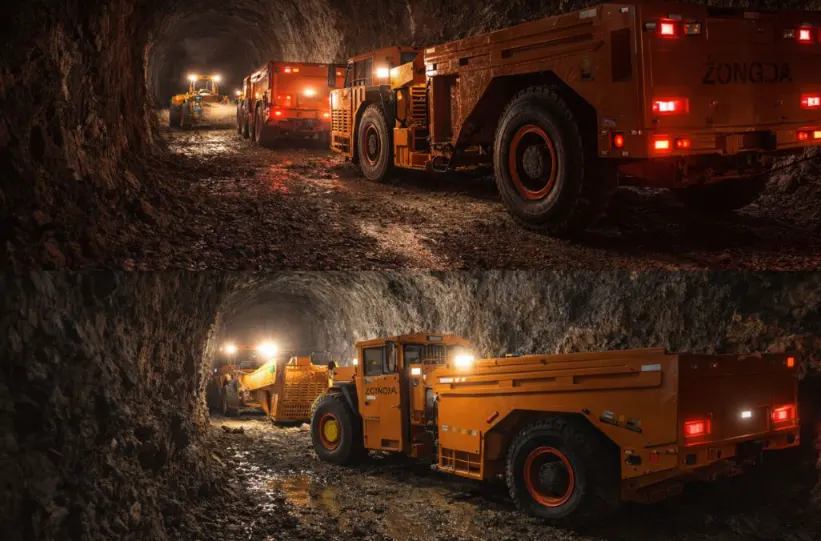
Beyond the Bucket: Distance Factors
While the 3-Pass Rule is critical, the layout of the mine also dictates the math. The distance to the ore pass or remuck bay changes how many trucks can run efficiently.
Short vs. Long Hauls
If the haul is short (under 500m), the truck returns to the loader very quickly. In this scenario, strict adherence to the 3-Pass Rule and a smaller fleet (fewer trucks) is vital. If three trucks are placed on a short loop, two of them will always be waiting.
Conversely, on long hauls (over 2km), the truck cycle time lengthens. The loader spends more time waiting for an empty truck to return. In these cases, adding an extra truck to the fleet might be justified to keep the loading unit busy, even if it slightly lowers individual truck utilization. It is a balancing act.
Conclusion: Buy a System, Not Just Machines
Optimizing underground mining transport vehicles is a science, not a shopping spree. As the data shows, throwing more metal at the problem often yields diminishing returns. The key to profitability lies in the mathematical balance between the loader’s bucket and the truck’s box.
Don’t let mismatched equipment eat margins. Whether mining narrow veins or large stopes, calculating the cycle time before signing the purchase order is essential.
Manufacturer Spotlight: Qingdao ZONGDA Machinery
Qingdao ZONGDA Machinery Co., Ltd. is a dedicated manufacturer bridging the gap between high-cost Western engineering and the need for cost-effective mining solutions. Unlike generalist trading houses that sell everything from excavators to forklifts, ZONGDA focuses exclusively on underground metal mining—specifically for Gold, Copper, Iron, and Lead-Zinc operations (avoiding the coal sector entirely).
Based in Qingdao, the company specializes in low-profile solutions, offering a lineup that includes Underground Mining Trucks ranging from 8 to 35 tons and LHD Loaders from 0.6 m³ to 4 m³. The engineering philosophy is “Simple & Robust.” By integrating world-class components—such as Deutz engines and DANA powertrains—into sturdy, uncomplicated chassis designs, ZONGDA provides a pragmatic fleet option. This approach allows mines in remote locations to balance upfront CapEx savings with the operational uptime required in hard-rock environments.
FAQ
Q1: Does the 3-pass rule apply if using different brands of trucks and loaders?
A: Yes, the brand does not matter; only the bucket capacity and truck box volume matter. Physics is the same whether the paint is yellow, orange, or green.
Q2: What happens if using a 4-pass match instead of 3?
A: That is still acceptable. Anything between 3 and 4 passes is considered the “sweet spot” for efficiency. Once the count reaches 5 or 6 passes, significant money is lost on truck idling time.
Q3: Can ZONGDA help calculate the match factor for a specific mine?
A: Absolutely. If tunnel dimensions and production targets are provided, the engineering team can simulate the cycle and recommend the exact loader and truck pairing.
Q4: Is it better to have a slightly larger loader or a slightly larger truck?
A: Generally, it is safer to have a truck that is slightly larger than necessary rather than a loader that is too big. A loader that is too big for the truck causes spillage and damages the truck body during loading.
Q5: Do these calculations change for high-altitude mines?
A: The math for the “pass match” stays the same, but engine power might drop at altitude, slowing down the cycle time. A high-altitude engine kit might be needed to keep the speed up.