A utility vehicle supports underground mining operations by moving people, tools, consumables, and service crews through trackless roadways. Its value depends on the assigned task and the match between the vehicle, roadway geometry, ventilation, mine type, and maintenance plan. A personnel carrier, service vehicle, and support truck each solve a different movement requirement. None should be selected from the label alone.
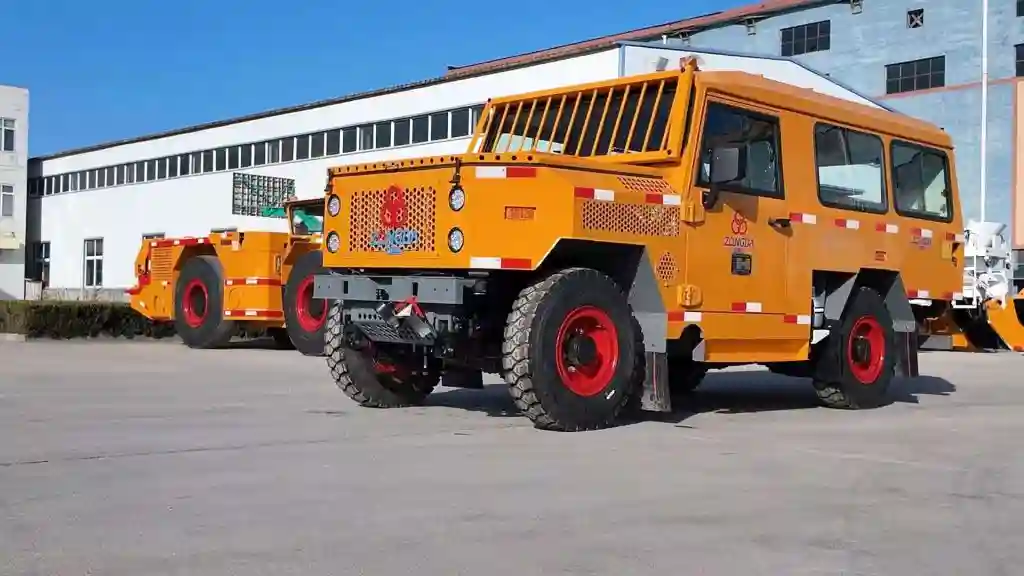
In underground mining, “utility vehicle” is a fleet role. It commonly describes a vehicle assigned to personnel transport, maintenance access, light material movement, inspection, or another support task. The role sits beside production machines such as loaders and haul trucks. For metal mines, these vehicles are part of a broader безрелсово подземно минно оборудване system in which rubber-tyred machines travel through prepared roadways.
Personnel Carriers, Service Vehicles, and Support Units
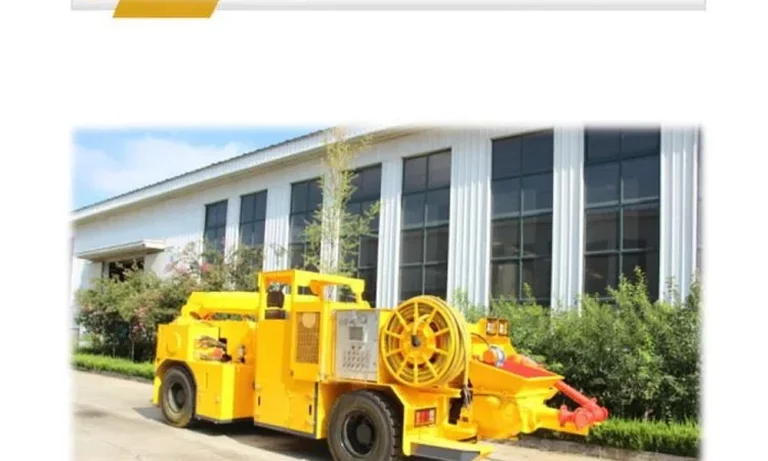
A personnel carrier is configured around seats, access, visibility, and safe movement of crews. A service vehicle is configured around tools, fluids, inspection equipment, or a maintenance body. Other support units may be designed for a defined task, such as lubrication, concrete work, or material delivery. The correct choice starts with the work package that the vehicle must complete during a shift.
How Utility Vehicles Fit an Underground Fleet
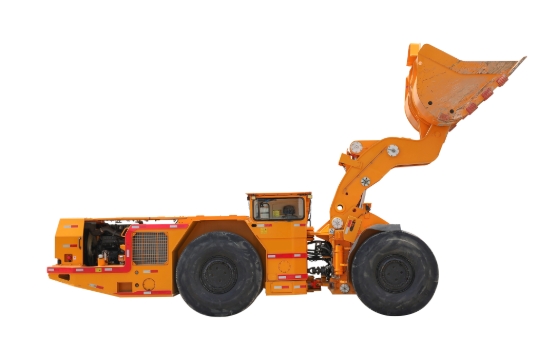
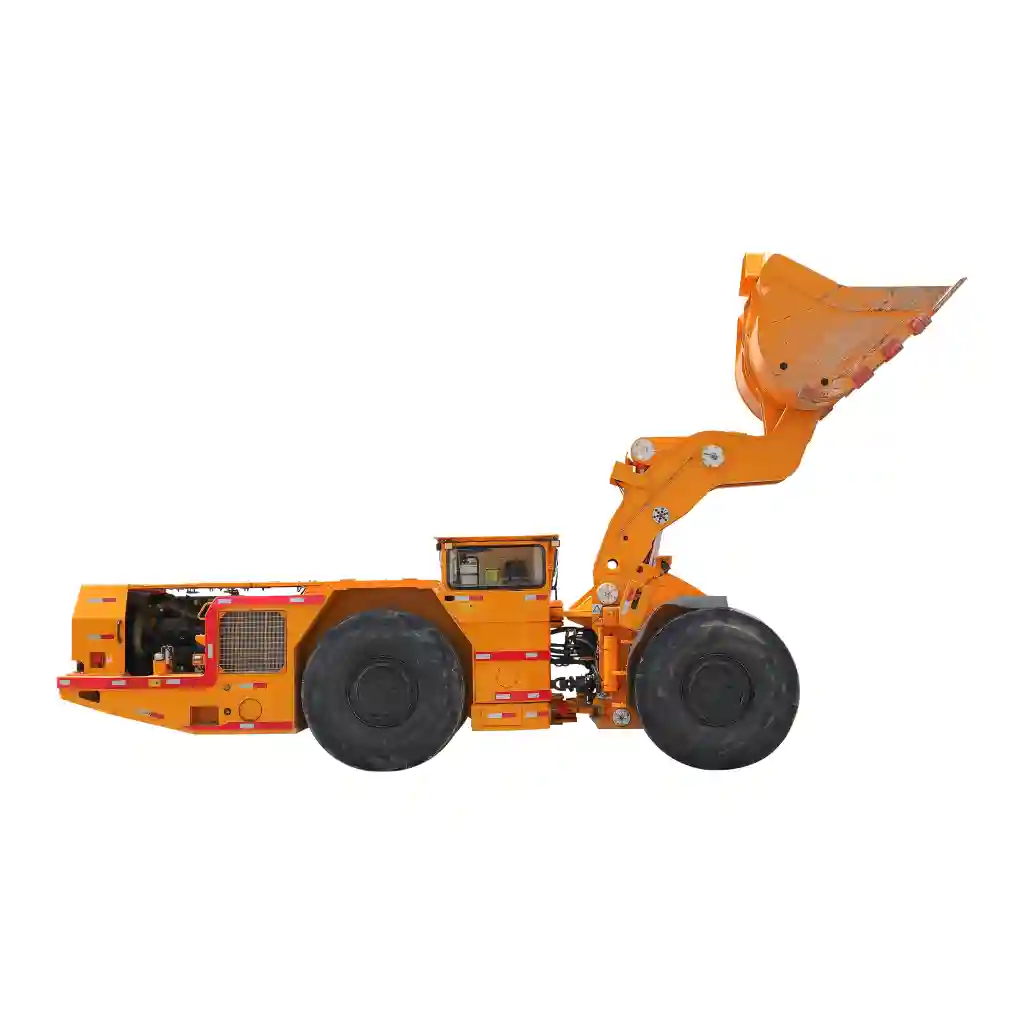
Production and support vehicles have different jobs. The ZDL307 is a trackless diesel loader with a 7 t rated load and a 3 m3 heaped bucket. Its documented role is loading and short-distance transport. A personnel carrier addresses crew movement. Treating these as interchangeable creates an unclear fleet plan and can lead to unsuitable payload, body, or access assumptions.
What Benefits Do Utility Vehicles Provide in Underground Mining Operations?
The benefits come from assigning a vehicle to a repeatable movement task. A mine can then define the required capacity, route, dimensions, and operating limits before it requests a quotation.
More Organized Personnel Movement
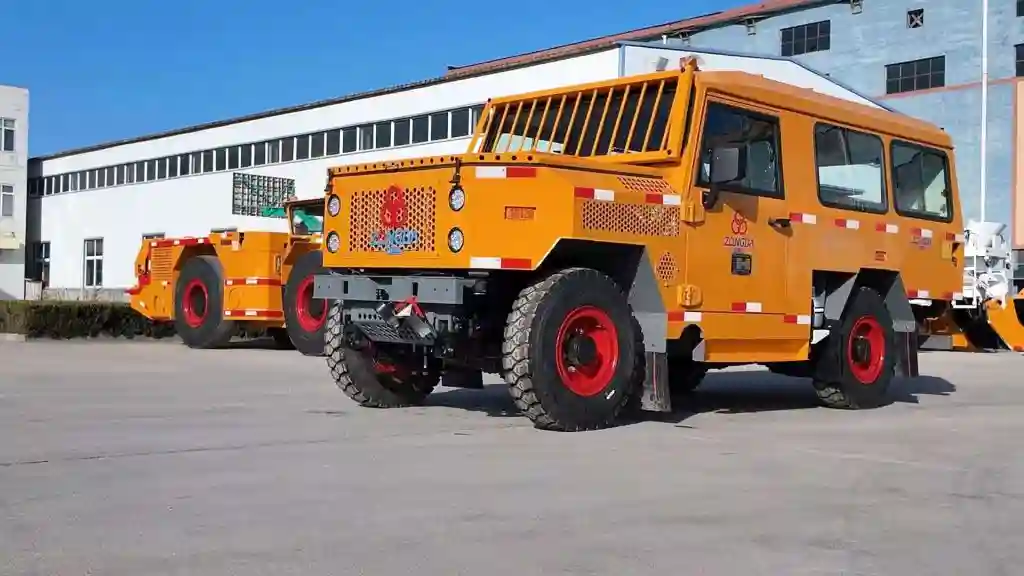
A dedicated personnel carrier gives supervisors a defined way to move crews between access points, headings, workshops, and service areas. Seating capacity, entry points, turning space, and travel route can be checked together. The ZDPC-22H technical data describes a diesel, trackless underground personnel carrier in a 22-person configuration. That figure belongs to the ZDPC-22H configuration and should not be treated as a universal capacity for underground utility vehicles.
Faster Access for Inspection and Maintenance Crews
Service access helps technicians reach pumps, drives, braking systems, electrical cabinets, or ventilation areas. A support vehicle can carry the people and inspection equipment required for a planned task. The result depends on route condition, vehicle availability, work-site preparation, and the maintenance method.
Better Movement of Tools and Consumables
Maintenance and development work often depends on moving tools, hoses, lubricants, fasteners, test instruments, and small components. A vehicle with a matched body and payload can keep these items together. Buyers should confirm payload, body dimensions, tie-down points, ground clearance, and access arrangements. A personnel carrier carries materials only when its approved configuration permits that use.
More Predictable Fleet Coordination
Separating personnel movement, ore loading, haulage, and service work gives dispatchers clearer assignments. The mine can create maintenance intervals for each role and identify which vehicle is available for a route. Replacement planning then uses a defined duty cycle, route, and body configuration.
Which Operating Conditions Affect the Benefits?
Utility vehicle benefits apply when the vehicle fits the mine’s physical and environmental conditions. Review each model’s technical data with the roadway survey and local safety requirements.
Tunnel Dimensions, Turning Radius, and Grade
The ZDPC-22H data specifies a minimum tunnel section of 3 m high by 3 m wide, a 6,610 mm turning radius, and a road grade of no greater than 14 degrees. These are model-specific conditions. Before purchase, measure the narrowest route, turning areas, ramps, and parking points.
Ventilation, Temperature, Humidity, and Altitude
Diesel equipment requires a review of ventilation and environmental conditions. The ZDPC-22H data gives an ambient range of -5 C to 40 C, maximum relative humidity of 85% at 25 C, and altitude up to 1,000 m, with power reduction above that altitude. The ZDL307 data also identifies ventilation, drainage, temperature, humidity, and altitude as operating considerations. Apply the selected model’s technical limits to the site review.
Metal-Mine and Coal-Mine Boundaries
The supplied ZDPC-22H and ZDL307 data prohibit operation in flammable or explosive gas and dust environments. The knowledge base positions these products for underground metal and other non-coal mines. Coal-mine equipment can require explosion-proof construction and coal-mine-specific compliance. A diesel utility vehicle for a metal mine must not be presented as suitable for a coal mine without confirmed model approval, protection design, and local requirements.
How Do You Select a Utility Vehicle for Your Mine?
Selection becomes clearer when the vehicle is matched to one primary task and then checked against the site.
Match the Vehicle to the Primary Task
| Primary task | Data to compare | Questions for the buyer |
| Personnel transport | Seats, access, dimensions, turning radius | How many people travel together, and what is the narrowest route? |
| Inspection and maintenance | Body layout, payload, tool access, service points | Which tools, fluids, and instruments travel to the work area? |
| Tools and small materials | Payload, body dimensions, tie-downs, clearance | What loads are carried, and how are they secured? |
| Mixed support work | Changeover method, duty cycle, route, operator training | Will the vehicle keep one role or change configuration? |
Confirm Dimensions and Site Conditions
Provide tunnel width and height, turning space, grade, ground conditions, ventilation, drainage, temperature, humidity, altitude, travel distance, mine type, and local safety requirements. These details determine whether a proposed vehicle can reach the work area.
Check Documentation and Compatibility
Ask for the exact model, serial range, engine, transmission, axle, seating or body configuration, drawings, operating limits, inspection records, and applicable approvals. When the task involves loading, compare it with the relevant приложение за подземен товарач so the fleet role remains clear. Documentation supports a purchasing decision; it does not replace a site review.
What Should You Compare Before Requesting a Quote?
Use comparable data in the RFQ. Compare passenger capacity or payload, dimensions, turning radius, grade capability, engine and emissions information, transmission, drive axle, brakes, electrical system, service access, and mine-environment limits. The ZDPC-22H lists a 24 V DC electrical system with model-specific engine and transmission options.
Information to Send the Supplier
Send the mine type, roadway survey, task, passenger count or payload, route, environmental conditions, destination market, required documents, and maintenance expectations. Include the existing гама от подземни минни товарачи и камиони when fleet roles need review. Confirm stock, delivery time, warranty, and certification for the requested model and market.
Conclusion: Build the Utility Role Around Your Operating Conditions
Utility vehicles support underground mining operations through organized personnel movement, service access, tool and consumable transport, and clearer fleet coordination. The useful specification comes from the task and route: passenger count or payload, roadway dimensions, turning space, grade, ventilation, environmental conditions, and mine safety rules.
ZONGDA | Qingdao Zongda Machinery Co., Ltd. focuses on trackless underground metal-mine equipment and specified replacement parts. Its documented range includes the ZDL307 underground loader and the ZDPC-22H underground personnel carrier, while the supplied technical files also identify selected FL04 differential and carrier assemblies. As an доставчик на оборудване за подземно добиване, ZONGDA can review a request using the machine model, site conditions, intended task, and required configuration. Send those details before selecting a vehicle or support assembly.
Често задавани въпроси
Q1: What is a utility vehicle in underground mining operations?
A utility vehicle is a support vehicle assigned to a defined underground task such as personnel transport, maintenance access, inspection, or movement of tools and consumables. The configuration should be matched to the task, roadway, and mine environment.
Q2: Is a personnel carrier the same as an underground service vehicle?
No. A personnel carrier is arranged around passenger movement. A service vehicle is arranged around tools, fluids, inspection equipment, or a maintenance body. Some fleets use separate vehicles so each configuration remains suited to its assigned work.
Q3: What are the main benefits of a utility vehicle underground?
The main benefits are organized crew movement, direct access for service work, controlled transport of tools and small materials, and clearer separation of support work from loading and haulage. Results depend on capacity, route, availability, and operating conditions.
Q4: Can a diesel utility vehicle be used in a coal mine?
Not automatically. The ZDPC-22H and ZDL307 data prohibit flammable or explosive gas and dust environments. Coal-mine use requires a model-specific review of explosion protection, approval, and local compliance requirements.
Q5: What information should you provide when selecting an underground utility vehicle?
Provide the mine type, trackless or rail-based layout, tunnel width and height, turning space, grade, ventilation, drainage, temperature, humidity, altitude, passenger count or payload, travel route, intended task, destination market, and required documents.