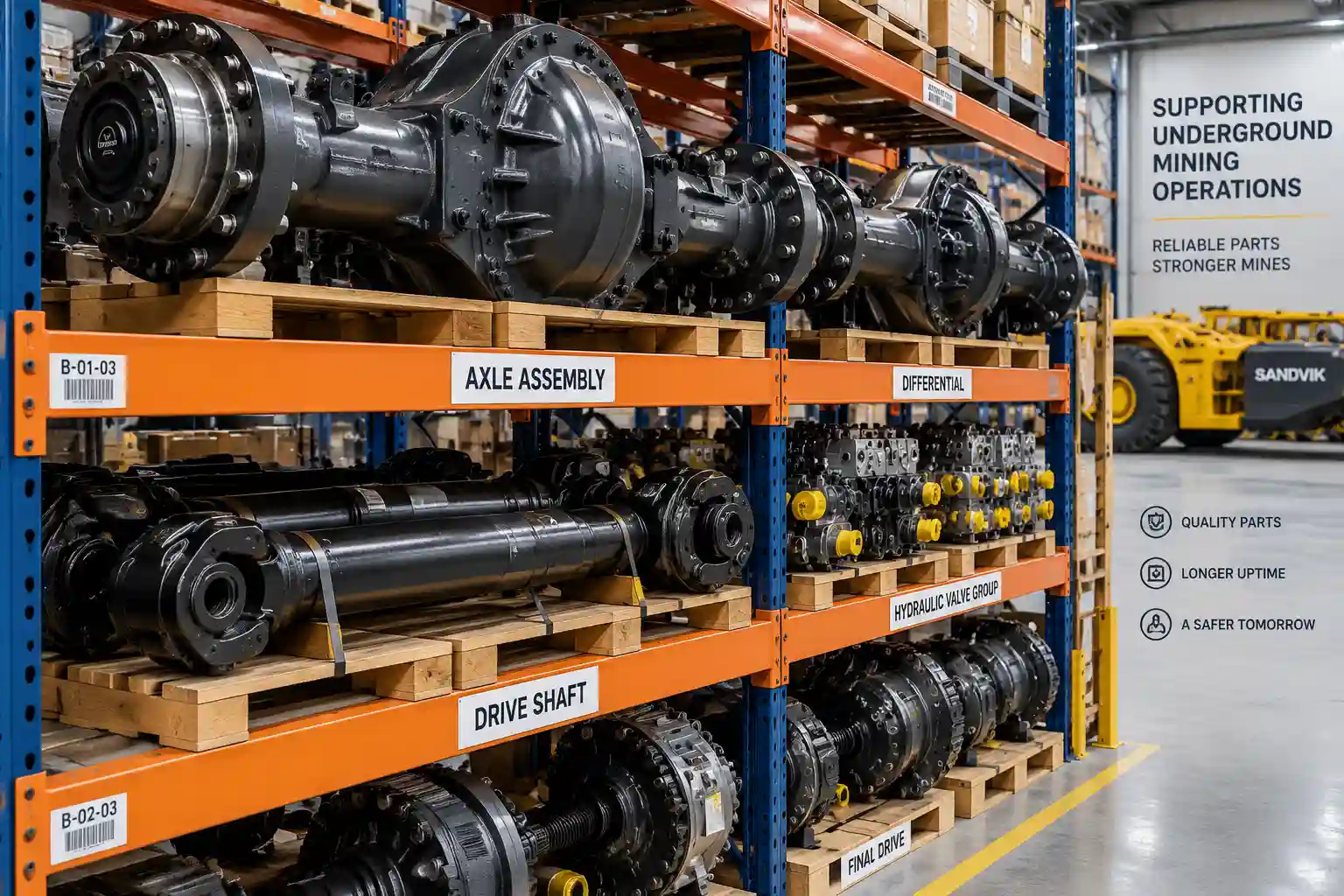
Maintaining underground mining equipment spare parts starts before installation. You need to identify each part, record its condition, protect it from moisture and contamination, inspect it at a documented interval, and verify compatibility before fitting it to a machine. This workflow suits trackless underground metal-mining equipment. Coal-mine or explosion-protected parts require separate safety and compliance requirements.
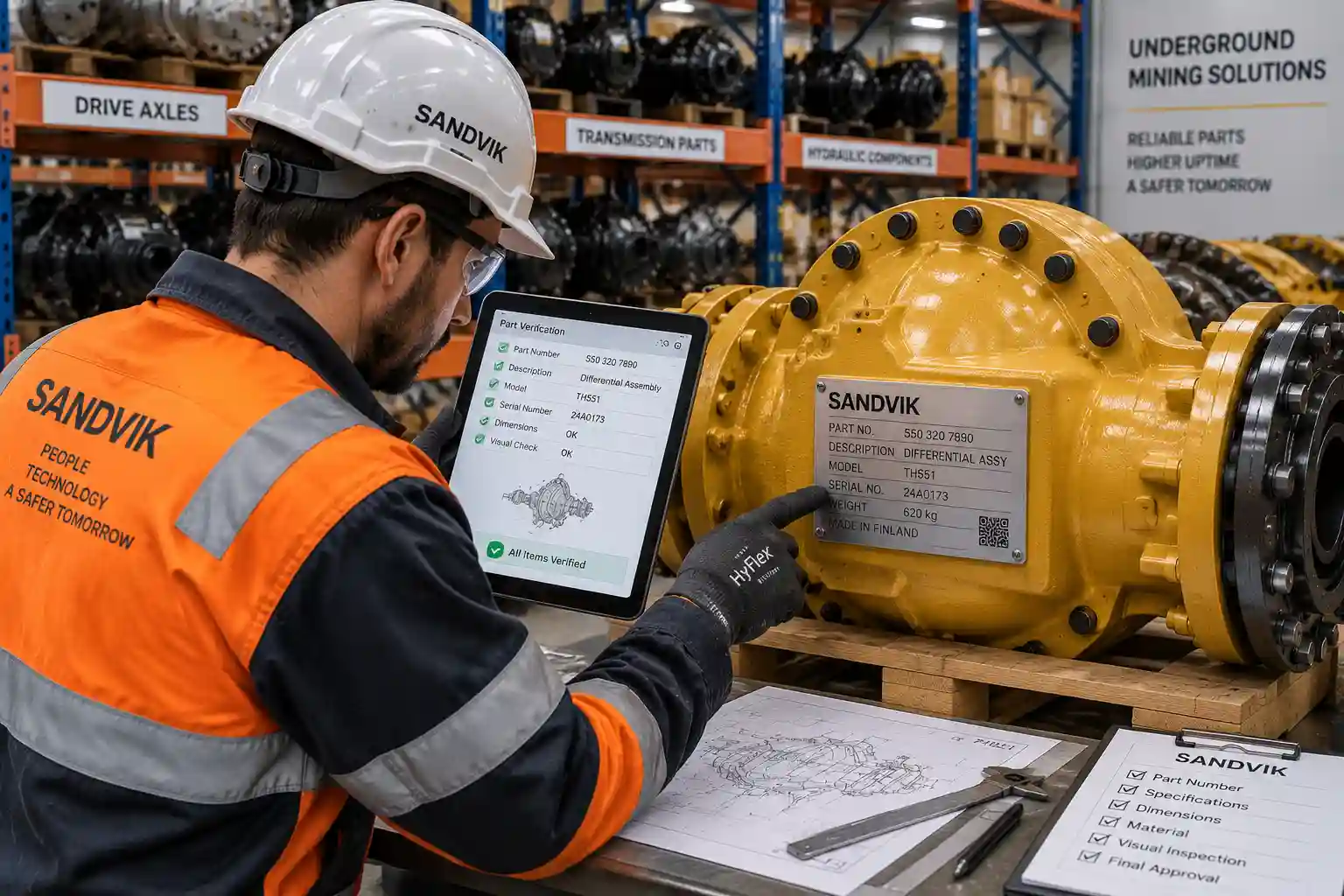
A clean component without a verified identity is not ready for installation. The equipment context is important: equipos de minería subterránea sin rieles uses model-specific axles, transmissions, hydraulic systems, and braking assemblies.
Record the Machine, Assembly, and Part Number
Create a record for the machine model, serial range, assembly position, axle or transmission model, part number, revision, quantity, photographs, and key dimensions. Keep the supplier drawing or specification with the record. These fields allow a warehouse team to distinguish a front-axle component from a rear-axle component and to identify a superseded revision.
Separate Critical Assemblies From Routine Stock
Use three practical groups:
| Grupo de partes | Examples | Maintenance control |
| Safety and fit-critical assemblies | Brake, axle, differential, steering, structural mounts | Identity, revision, condition, and installation records before release |
| Drivetrain and hydraulic components | Transmission, torque-converter, valve, pump, cylinder parts | Sealed storage, contamination control, and configuration matching |
| Routine wear and consumable items | Seals, filters, fasteners, hoses, wear pieces | Batch or package identification, quantity control, and condition checks |
Inspection depth should follow the part’s function and failure consequence. A differential carrier deserves a deeper record than a routine fastener pack.
How Should You Receive and Inspect Mining Spare Parts?
Receiving inspection creates the first condition record. Complete it before the part enters available stock.
Check Packaging, Labels, and Shipping Condition
Record package damage, moisture, broken seals, missing labels, quantity, and visible corrosion. Photograph discrepancies and keep the package identification with the receiving report. Do not remove protective covers from machined surfaces unless the inspection instruction requires access.
Verify the Part Against the Purchase Record
Match the delivered item with the purchase order, drawing, revision, material or batch record where required, and machine application. The supplied FL04 descriptions show why position matters: DIFF-0017 / 5541 5291 00 is listed for the rear axle, while DIFF-0018 / 5541 5290 00 is listed for the front axle with a NO SPIN unit. Treat these as separate applications until the axle configuration is confirmed.
Quarantine Unclear or Damaged Parts
Give a part a controlled quarantine status when its identity, condition, quantity, or compatibility is unclear. Keep it physically separated from released stock. Assign an owner and resolution date, then record the inspection result or supplier response before changing the status.
How Do You Store Underground Mining Equipment Spare Parts?
Storage controls depend on the part material, seals, coatings, packaging, and supplier instructions. Use the applicable manual as the authority for preservation chemicals and shelf-life limits.
Control Cleanliness, Moisture, and Corrosion Risk
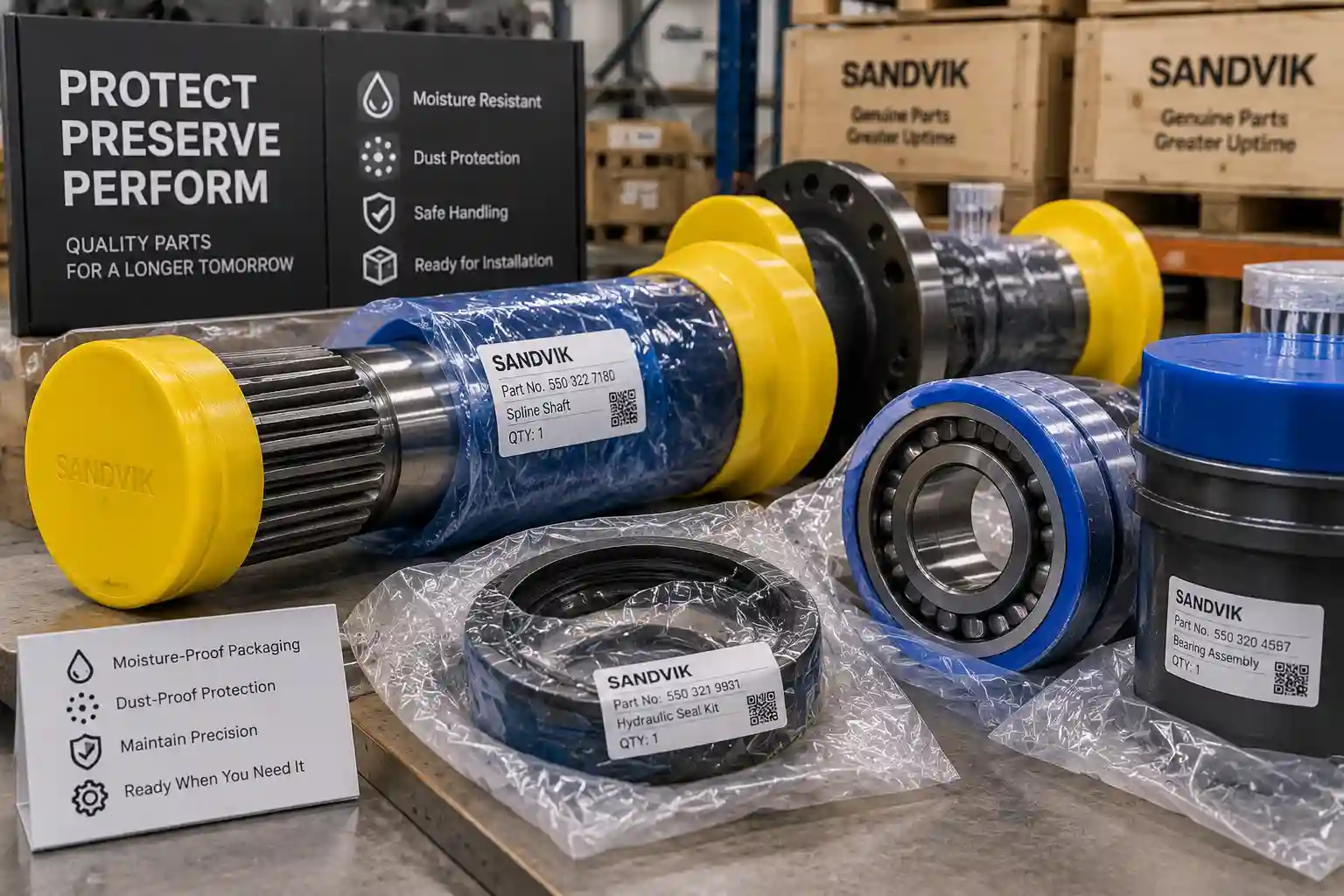
Keep components clean and dry, away from standing water, dust, chemical vapors, and direct contact with dirty floors. Maintain the original protective packaging when it remains intact. When packaging is opened, record the opening date and apply the preservation method specified for that component. Do not create a universal humidity or shelf-life value for every material.
Protect Seals, Bearings, Shafts, and Machined Surfaces
Use caps, covers, supports, and suitable lifting methods for exposed interfaces. Store shafts and housings so they cannot roll, bend, or strike other parts. Keep bearings, seals, electrical items, and hydraulic components in packaging that limits contamination and ultraviolet exposure where the supplier requires it.
Label Location and Condition Status
The stock label should show part number, description, machine or assembly, quantity, receipt date, condition, preservation action, inspection date, and storage location. Record every package opening, transfer, cleaning action, and change from preserved to ready-for-installation status.
How Often Should Spare Parts Be Inspected?
Inspection frequency should follow the applicable manual, supplier instruction, storage environment, and part criticality. A generic calendar interval can miss changes caused by humidity, package damage, or repeated handling.
Set an Inspection Interval by Risk
Review safety-critical assemblies and exposed machined parts at a tighter interval than sealed routine stock. Trigger an additional review when packaging is opened, the storage area changes, water enters the room, corrosion appears, or the part is moved several times. Document the reason for each interval in the maintenance plan.
Use a Repeatable Inspection Record
Check identity, packaging, corrosion, contamination, seal condition, visible damage, deformation, preservation status, and supporting documents. Record the inspector, date, result, photographs, and corrective action. Move any item that fails a check to quarantine before installation.
How Do You Prepare a Spare Part Before Installation?
Installation readiness combines condition checking with machine compatibility. Warehouse release and technician acceptance should be two recorded steps.
Clean and Examine the Part Under the Applicable Instructions
Confirm the approved cleaning agent, protective coating, lubrication, torque, and assembly requirements in the equipment manual or supplier instruction. Inspect contact surfaces, threads, splines, seals, bearing seats, and mounting faces. Do not substitute a chemical, lubricant, or torque value from an unrelated component.
Confirm Compatibility at the Machine
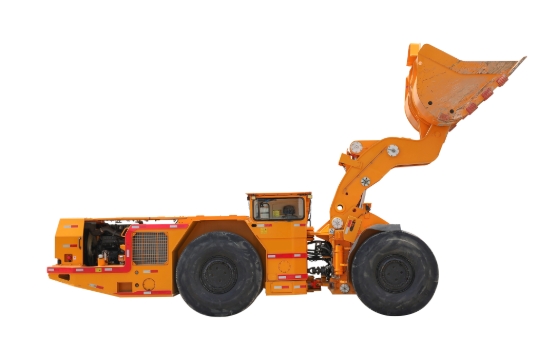
Match the machine model, serial range, axle or transmission, part number, revision, assembly position, dimensions, and photographs. When the part supports loading equipment, review the relevant Aplicación de cargadora subterránea so the component is tied to the correct machine role. Compatibility evidence belongs in the work order.
Document Installation and Removed-Part Findings
Record the installed part identity, condition at fitment, removed-part reason, inspection results, and follow-up action. For a differential assembly, note the axle position and configuration. For a hydraulic or drivetrain component, record the machine and assembly location. These records support later troubleshooting and purchasing decisions.
How Should You Build a Spare-Parts Maintenance Plan?
The plan should connect warehouse controls with maintenance work orders and fleet priorities.
Use a Critical-Spare Register
List the part identity, equipment role, failure consequence, available quantity, storage condition, inspection owner, and reorder trigger. Group the register by the Gama de cargadoras y camiones para minería subterránea operating at the site. Keep front- and rear-axle applications as separate lines when the part numbers differ.
Connect Warehouse and Maintenance Records
Link each stock movement to a work order, installation date, machine model, removed-part findings, and supplier documents. Record quantity issued, quantity returned, and the condition of unused remainder stock. The knowledge base does not define a universal replacement interval, so use the model manual and measured condition for that decision.
Review Environmental and Mine-Type Requirements
Record whether the equipment operates in a metal/non-coal or coal mine. Review ventilation, drainage, temperature, humidity, altitude, roadway conditions, and hazardous-area requirements. The supplied ZDL307 and ZDPC-22H data prohibits operation in flammable or explosive gas and dust environments for those models. A coal-mine application needs a separate review of explosion protection and local approval.
Conclusion: Keep Spare Parts Identifiable, Protected, and Compatible
The maintenance chain is straightforward: identify the part, inspect the shipment, preserve the component, review it at a risk-based interval, and verify compatibility before installation. The records should follow the part from receiving to the machine.
ZONGDA | Qingdao Zongda Machinery Co., Ltd. focuses on trackless underground metal-mine equipment and specified replacement parts. The documented scope includes the ZDL307 underground loader, the ZDPC-22H underground personnel carrier, and selected FL04 differential and carrier assemblies. As an proveedor de equipos para minería subterránea, ZONGDA can review a request using the machine model, axle or transmission, part number, serial range, photographs, dimensions, storage condition, and destination mine type.
Preguntas frecuentes
Q1: How should underground mining equipment spare parts be stored?
Store parts clean, dry, labeled, protected from impact and contamination, and preserved according to the applicable manual or supplier instruction. Record package openings, preservation actions, inspection dates, and condition status.
Q2: How often should mining spare parts be inspected?
Use an interval based on the part’s criticality, storage environment, packaging, and supplier instructions. Add an inspection after package damage, water exposure, storage relocation, repeated handling, or visible corrosion.
Q3: What information identifies an underground loader spare part?
Use the machine model, serial range, axle or transmission model, assembly position, part number, revision, photographs, and dimensions. DIFF-0017 and DIFF-0018 illustrate why front- and rear-axle applications need separate confirmation.
Q4: How do you prevent corrosion on mining spare parts?
Control moisture and contamination, keep protective packaging intact, cover exposed machined surfaces, and apply the preservation method specified for the material and component. Record any opened package or changed protection status.
Q5: Can a replacement part be installed without a compatibility check?
No. Verify the machine model, serial range, assembly position, part number, revision, dimensions, and configuration before installation. A certificate or supplier label without a matching machine application does not establish fit.