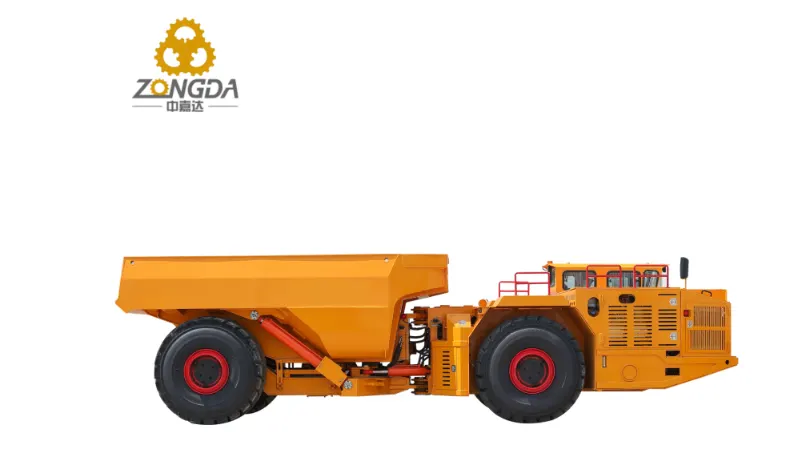
If you haul metal ore underground, you know trucks play a large role in your daily output. Blasting can go fast. Loaders can move quick. But if the ore sits in the stope or at the drawpoint, your shift gets slow. The underground mining truck is the part that turns broken rock into moved tons. It must fit your drifts. It has to handle your ramps. And it needs to stay strong in bumpy ground and sharp turns.
When you understand how these trucks get built, how they run in a cycle, and how to pick the right size, it becomes simple to set up a haul system that runs every day. You choose trucks that match your mine. In lots of hard rock jobs, a unit like a underground mining truck turns into the key carrier between load spots and ore passes.
Why Underground Mining Trucks Matter in Metal Ore Mines
In underground metal mines, space stays small. Air is short. And slopes are steep. Every trip from load spot to dump spot uses fuel, time, and ramp space. If the truck is too large for your drifts or too weak for your slope, the whole setup slows.
You also deal with tough safety rules. Brakes, steering, sight, and balance are not just small parts. They are tools for safety each day. So when you plan underground haulage, you do not just buy a machine. You add a moving piece to your mine. It has to be safe. It needs to produce well. And it must be easy to fix.
Typical Loading and Hauling Process in Underground Metal Mines
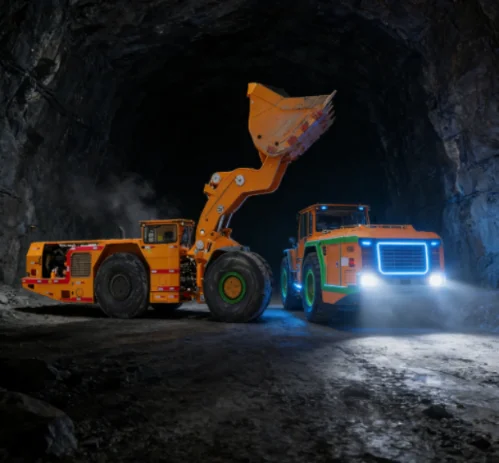
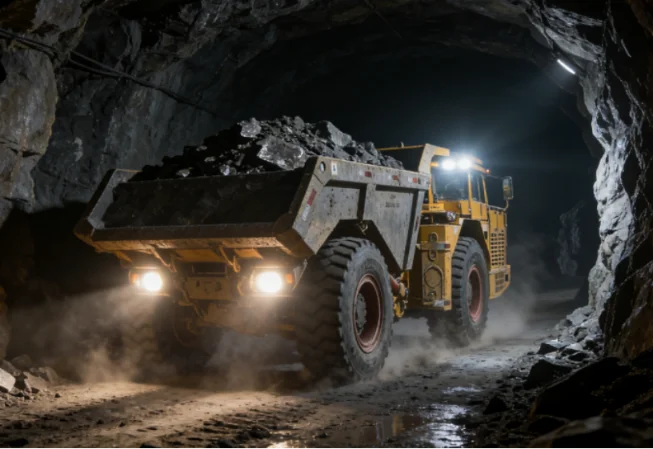
A normal cycle looks easy on paper. An underground loader fills the truck at the stope or drawpoint. The truck goes up or down the ramp to an ore pass, crusher, or pile. It dumps the ore. Then it heads back empty for the next load.
Each step takes minutes. If the truck cannot turn well, it needs many moves to line up. Or it climbs slow. The cycle gets long. Fewer loads reach the dump per shift. That is why you match truck size with loader power and ramp setup. Do not just go for a bigger load number.
Difference Between Underground and Surface Trucks
Surface trucks run on wide paths. They have lots of height and width. Underground mining trucks must go under low roofs and around tight crosses. The cab often sits lower. It gets built to guard the driver if the roof or wall is near.
Air flow is another big point. Engines in underground trucks get set for clean exhaust and less heat. All fumes and warmth go into the same air that people breathe. A surface truck used underground can make more heat and fumes than your fans can deal with.
Main Structure of an Underground Mining Truck
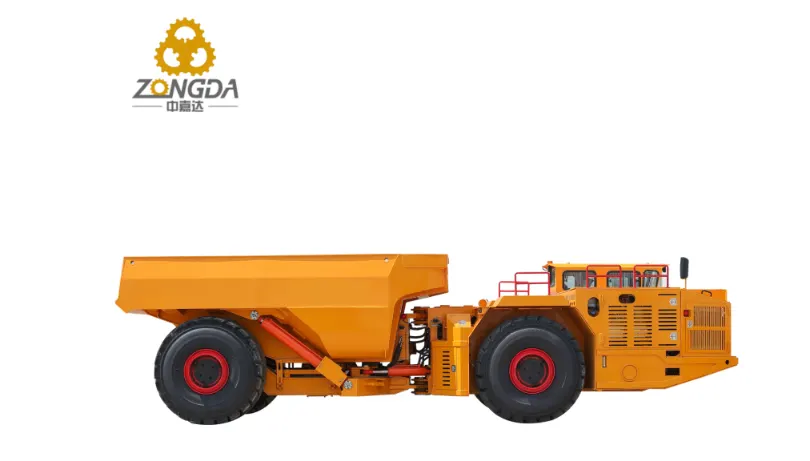
When you split a truck into main parts, it gets easy to see if it fits your mine. Most underground mining trucks share a like setup: frame, base, dump box, cab, drive parts, steering, and brakes.
The frame and base carry the load. They take hits from bumps and twists. The drive parts include engine, gears, and axles. They decide how well the truck climbs full and acts on ramps. The cab holds the driver and main controls. So its setup affects sight and tiredness.
Chassis, Box, and Key Components
The chassis must be low and tough. It needs to last years on rough paths without breaks. The dump box gets shaped for fast fill and clean dump. It has thick steel or wear plates in hit spots. For a 12 Ton Underground Mining Dump Truck, load and box size fit so a good loader can fill it in few passes without overload often.
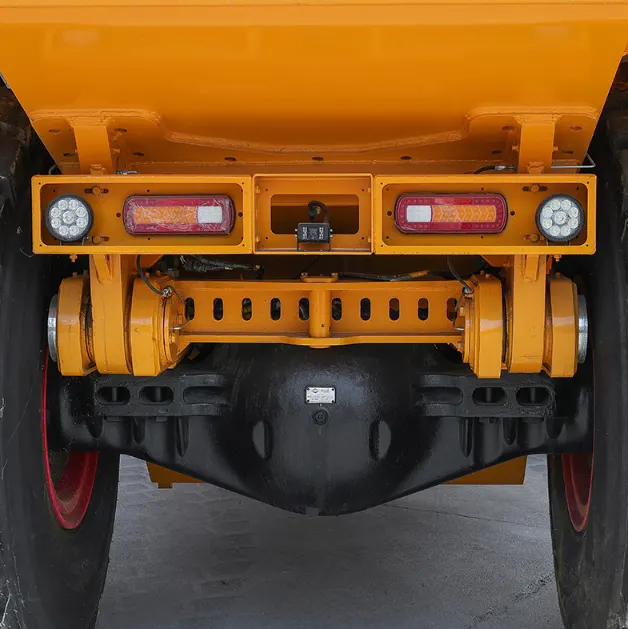
Brakes and steering matter a lot. Multi-line or safe-fail brake systems help keep control on long drops. Joint steering gives better turns in slim drifts. If steering setup is bad, trucks fight bends. They may harm walls and supports. That leads to fix costs and down time later.
Working Principle of Underground Mining Trucks
The basic work way is a repeat cycle: load, travel, dump, return. How good that cycle runs depends on your setup, traffic rules, and how well the truck fits your haul path.
As the driver goes, they control speed, gears, and brakes. They watch slope, traffic, and roof height. Panels show temps, pressures, and alert lights. But good ways and training often count more than any screen for real work and safety.
From Loading Point to Dump Point
At the load spot, the truck should stop, line up, and take a load from the underground loader with few moves. Then it travels along the ramp with full box. On steep slopes, right gear pick and engine brake help keep speed steady. They control brake heat.
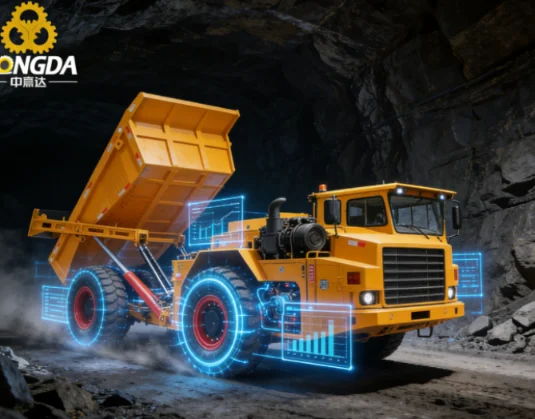
At the dump spot, the truck backs over the ore pass. Or it lines up with the crusher or pile. It lifts the box. Clean dump avoids sticks, blocks, and extra work with other tools. Once empty, the truck drops the box. It heads back for the next load. Often at faster speed because it is light.
How to Choose the Right Underground Mining Truck for Your Operation
Picking a truck starts with your mine plan. You look at how many tons you want to move each day. Check your drift size. And see your haul lengths. Then size the truck so it can do the work without push to the edge every shift.
You also think about how the truck fits your whole fleet. It must match loaders, traffic ways, and fix power. A well-picked truck may seem plain on paper. But it often beats a too-big one that is hard to drive and hard to fix.
Key Factors to Consider
First, match load and box size to the loader. If your loader grabs about 3 tons per bucket, a truck that fills in three or four passes keeps the cycle smooth. Second, check total truck height and width with your drift size after support and scale. A truck that hits the roof or walls is a long problem.
Third, look at your main ramps: slope, length, and bend count. The truck must climb the worst ramp in real ways with full load, not just in a book. Think about fuel use and heat on your air system. Last, see how easy it is to service the truck. A model made as an underground mining truck for metal ore mines, with parts supply and tech help, usually gives steady costs and fewer shocks over its life.
ZONGDA Focus on Underground Metal Ore Equipment
QINGDAO ZONGDA MACHINERY CO., LTD(ZONGDA), focuses on trackless gear for underground metal ore mines. The company makes underground loaders, mining trucks, and support units for hard rock spots, not for coal mines. The designs watch low heads, steep ramps, and slim drifts. There compact size and tough frames matter more than fast travel speed.
ZONGDA offers full load and haul answers. This helps when you want loaders and trucks that match in power and tunnel size. The team gives tech tips, setup ideas, and after-sale service. So you can pick models that fit your ore body and mine way. For drivers who want steady haul and known fix costs in metal mines, ZONGDA gives a real, job-focused choice rather than a single machine sale.
FAQ
Q1: What is an underground mining truck?
A: It is a low-profile haulage vehicle built to move broken metal ore in narrow tunnels, usually from stopes or drawpoints to ore passes, crushers, or main haulage levels.
Q2: How do you choose the right capacity for an underground mining truck?
A: Match payload to your loader size, drift dimensions, and daily tonnage target, then check that the truck can climb your steepest ramp safely with a full load.
Q3: What daily checks should operators do before using an underground mining truck?
A: Check fluid levels, brakes, steering, tires, lights, and look for leaks or damage on hoses, joints, and the box before the truck goes underground.
Q4: How do underground mining trucks and loaders work together in a metal mine?
A: The loader fills the truck at the face or drawpoint, and the truck hauls the ore to the next stage. Capacity and height should match so loading is quick, safe, and does not waste time on extra maneuvers.
Q5: Why not just convert a surface truck for underground haulage?
A: Surface trucks are usually too tall and wide, and not built for tight curves, low backs, and long declines. A purpose-built underground truck fits the space better, runs safer, and copes with the conditions for a longer time.