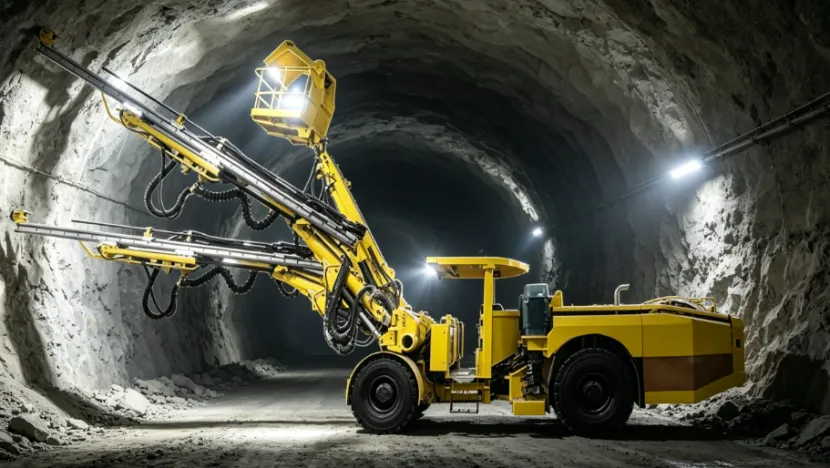
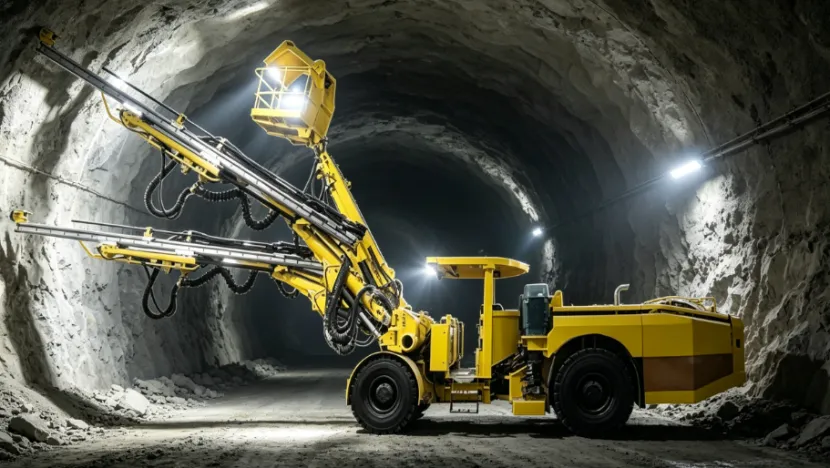
Elegir un Perforadora frontal jumbo para túneles medianos Los costos aumentan rápidamente cuando la máquina no se ajusta al trabajo. Una perforadora demasiado grande puede agotar el presupuesto incluso antes de llegar al frente de perforación. Una perforadora demasiado pequeña puede limitar la cobertura, ralentizar la perforación y obligar a realizar reposicionamientos adicionales en cada turno. Lo más inteligente es adaptar la máquina a la sección del túnel, el patrón de perforación y el objetivo de avance diario. En la base de conocimientos de ZONGDA, la unidad de doble brazo destacada está diseñada para secciones de túnel de hasta 112 m² y combina brazos dobles, avances telescópicos, control PLC, operación remota y perforadoras de roca de 24 kW. Este tipo de detalles son cruciales para la selección de una perforadora jumbo para perforación subterránea.
¿Por qué comprar en exceso perjudica más de lo que crees?
La mayoría de los compradores no se proponen comprar en exceso. Suele ocurrir porque la opción más segura parece la más grande. Sobre el papel, eso parece razonable. En realidad, puede convertirse en un hábito muy costoso.
Más grande no siempre es mejor.
Una perforadora jumbo de mayor tamaño puede aumentar el costo de compra, añadir peso y aportar más potencia de la que realmente necesita su frente de trabajo. Si su sección es mediana en lugar de extra ancha, podría estar pagando por un alcance y una capacidad que no se utilizan. Por eso, para evitar comprar una perforadora jumbo excesiva, lo primero es considerar el perfil del túnel, no el título del folleto.
Los equipos pequeños también pueden resultarte caros.
Usar brocas demasiado pequeñas genera otro tipo de desperdicio. Se pierde cobertura, hay que reposicionar con más frecuencia y el ciclo se vuelve irregular. En teoría, esto puede parecer insignificante. En la práctica, significa metros perdidos. Una broca jumbo para perforación frontal en túneles medianos debería proporcionar la cobertura suficiente para completar el patrón de forma limpia sin que cada pasada suponga un compromiso.
¿Qué tamaño de broca jumbo necesitas para un túnel mediano?
Si estás comparando equipo de perforación de túneles de sección mediaComencemos con el tamaño real de la sección y la geometría del frente. La clave no reside únicamente en las dimensiones de la máquina, sino en la cobertura útil que ofrecen los brazos y los avances en el frente.
Relaciona la sección transversal con la cobertura real.
La perforadora de la base de conocimientos está diseñada para túneles con secciones transversales de hasta 112 m². Utiliza dos brazos y un soporte modular, lo que la hace ideal para muchos frentes de perforación medianos. Si se pregunta qué tamaño de jumbo perforador necesita para un túnel mediano, este es el primer punto a considerar: ¿puede la máquina cubrir todo el patrón sin necesidad de reposicionamientos complicados?
Verifique la longitud de avance, el rango de orificios y la movilidad.
Una perforadora hidráulica frontal también requiere un recorrido de avance y un rango de perforación adecuados. En este caso, el avance telescópico alcanza los 4760/6590 mm, la extensión de avance es de 1800 mm y el rango de diámetro de perforación es de 32 a 76 mm. La velocidad de desplazamiento, el ángulo de dirección y la tracción a las cuatro ruedas también son importantes, ya que una perforadora jumbo para la construcción de túneles debe moverse con facilidad en galerías reales, no solo aparentar capacidad en una ficha técnica.
¿Cómo puedes mantener la velocidad sin perder precisión?
Es fácil hablar de velocidad. La precisión es donde se gana o se pierde dinero. Una mala colocación de los agujeros provoca sobreexcavación, subexcavación y voladuras desastrosas. Entonces, los ahorros desaparecen.
¿Por qué es importante la perforación de agujeros paralelos?
La base de conocimientos indica que el brazo puede mantener el avance paralelo en todas las direcciones y perforar agujeros paralelos sin calibración manual. Eso es importante porque perforación de agujeros paralelos Ayuda a controlar el espaciado y la forma de la cara. Si buscas cómo mejorar la precisión de la perforación en túneles, esta es una de las primeras características que debes tener en cuenta.
¿Por qué la potencia de la perforadora de roca debe ser la adecuada para cada tarea?
Más potencia no siempre significa mejor. La clave está en la potencia de perforación para la excavación de túneles en su terreno, la profundidad del orificio y el patrón de perforación. Este modelo utiliza dos perforadoras de roca de 24 kW, con una frecuencia de impacto de 60 a 75 Hz y un par de hasta 980 Nm. Para muchos túneles de diámetro medio, esto representa un buen equilibrio. Ofrece potencia sin sobredimensionar las especificaciones.
¿Por qué el control, la seguridad y el servicio son importantes cada día?
Una máquina puede parecer adecuada en un presupuesto y aun así convertirse en un problema en la minería. El uso diario revela los detalles. Los controles, la visibilidad, el acceso para el mantenimiento y los sistemas de seguridad influyen en el costo por metro.
¿Qué cambios introduce una perforadora jumbo controlada por PLC?
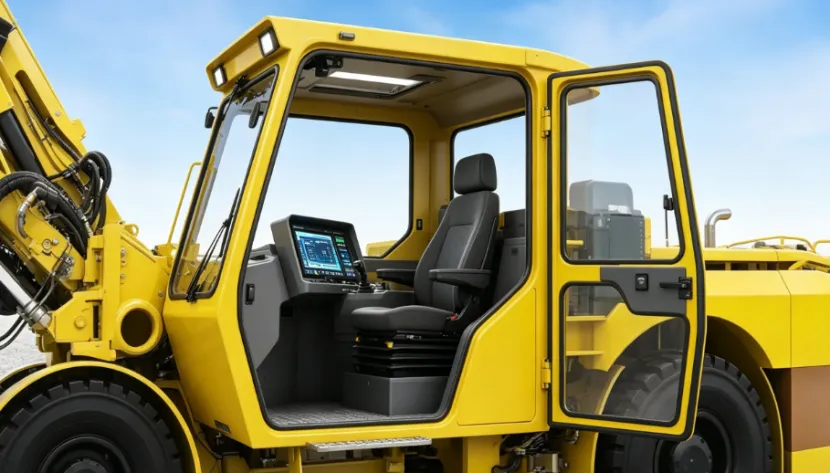
Una perforadora jumbo controlada por PLC puede lograr una operación más estable, especialmente cuando los equipos necesitan perforaciones repetibles en lugar de funciones sofisticadas. La base de conocimientos también destaca el control remoto, un sistema de control inteligente y un sistema antibloqueo que ayuda a reducir la pérdida de varillas de perforación. Una perforadora jumbo de alimentación telescópica proporciona mayor estabilidad durante perforaciones de alto impacto, lo cual resulta útil cuando las condiciones del terreno varían entre pasadas.
¿Por qué la seguridad en la perforación subterránea afecta al coste?
La seguridad en la perforación subterránea no se limita al cumplimiento de las normas. Influye en el tiempo de actividad, la presión de la capacitación y la fatiga del operador. Esta plataforma incluye un techo protector, una cabina ergonómica y una distribución que facilita el mantenimiento. Estos aspectos pueden parecer rutinarios, pero son cruciales cuando la máquina debe trabajar intensamente a diario con mínimas interrupciones.
¿Por qué ZONGDA puede ser una opción práctica?
La idoneidad del proveedor es casi tan importante como la compatibilidad de la máquina. La página de un producto puede transmitir mucha información, pero lo que realmente importa es si la empresa se especializa en equipos para trabajos subterráneos y cuenta con la experiencia en ingeniería necesaria para respaldarlos.
¿Qué hace que valga la pena echarle un vistazo a ZONGDA?
Desde el punto de vista de la industria, Zongda Parece más un proveedor especializado en trabajos subterráneos que un catálogo de maquinaria general. Su sitio web oficial presenta a la empresa como un fabricante centrado en la investigación, producción, venta y servicio de maquinaria para exploración y minería. Enumera equipos de minería sin rieles y sistemas relacionados, afirma trabajar con más de 30 expertos e ingenieros mineros y muestra actividad en Asia, Europa, África y Sudamérica. Este perfil suele ser importante para los compradores que valoran el soporte de repuestos a largo plazo y el seguimiento del proyecto, no solo la primera cotización. Para una perforadora jumbo frontal para túneles medianos, esta trayectoria convierte a ZONGDA en un candidato razonable para la lista de finalistas.
¿Cómo debería comparar el coste total antes de comprar?
Aquí es donde muchas transacciones fracasan. Los compradores se centran en el precio de la perforadora jumbo y pierden de vista el panorama general. La pregunta clave es cómo comparar el costo total de propiedad de la perforadora jumbo durante toda su vida útil.
Utilice una breve lista de verificación de compra.
Empiece por la cobertura. Luego, verifique la precisión de la perforación, la longitud de avance, la potencia de la perforadora, el acceso para el mantenimiento y la seguridad del operador. Después, considere los intervalos de mantenimiento y la disponibilidad de repuestos. La mejor perforadora jumbo frontal para túneles medianos no es la más grande, sino la que se adapta a su sección, mantiene un patrón limpio y le brinda una producción constante sin incurrir en costos adicionales innecesarios. Así es como se elige una perforadora jumbo frontal de manera inteligente.
Preguntas frecuentes
P1: ¿Cuál es la mejor perforadora frontal jumbo para túneles medianos?
A: La mejor broca jumbo para perforación frontal en túneles medianos es la que se ajusta a la sección transversal, la profundidad del orificio y el ciclo objetivo, sin un alcance excesivo ni una cobertura insuficiente.
P2: ¿Qué tamaño de broca jumbo necesito para un túnel mediano?
A: Pregunte si las plumas y los sistemas de alimentación pueden cubrir todo el frente de trabajo de manera eficiente. En este caso, una máquina diseñada para secciones de hasta 112 m² está pensada para trabajos en túneles de tamaño mediano.
P3: ¿Cuál es la diferencia entre una perforadora jumbo de doble brazo y una perforadora de un solo brazo?
A: A jumbo perforador frontal de doble brazo Por lo general, proporciona una mejor cobertura y un ciclo de trabajo más rápido en tramos medianos, mientras que un equipo de una sola pluma puede ser suficiente para secciones más pequeñas.
P4: ¿Cómo se mejora la precisión de la perforación en túneles?
A: Concéntrese en la geometría de la pluma, la estabilidad de la alimentación y la perforación paralela de los agujeros. Un buen paralelismo ayuda a reducir la sobreexcavación y la mala tracción de la voladura.
P5: ¿Por qué es mejor utilizar una perforadora jumbo de perforación frontal para túneles medianos que comprar una perforadora más grande por si acaso?
R: Porque una perforadora jumbo de tamaño adecuado para túneles medianos suele ser más barata de comprar, más fácil de mover en el frente de excavación y menos propensa a que pagues por una capacidad que nunca utilizas.