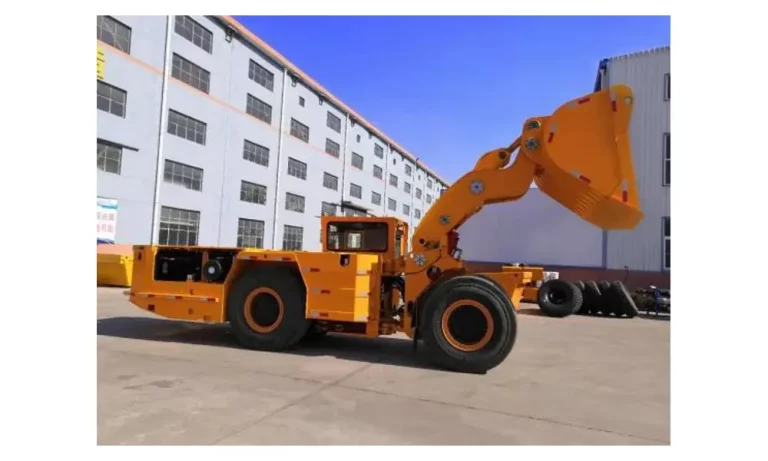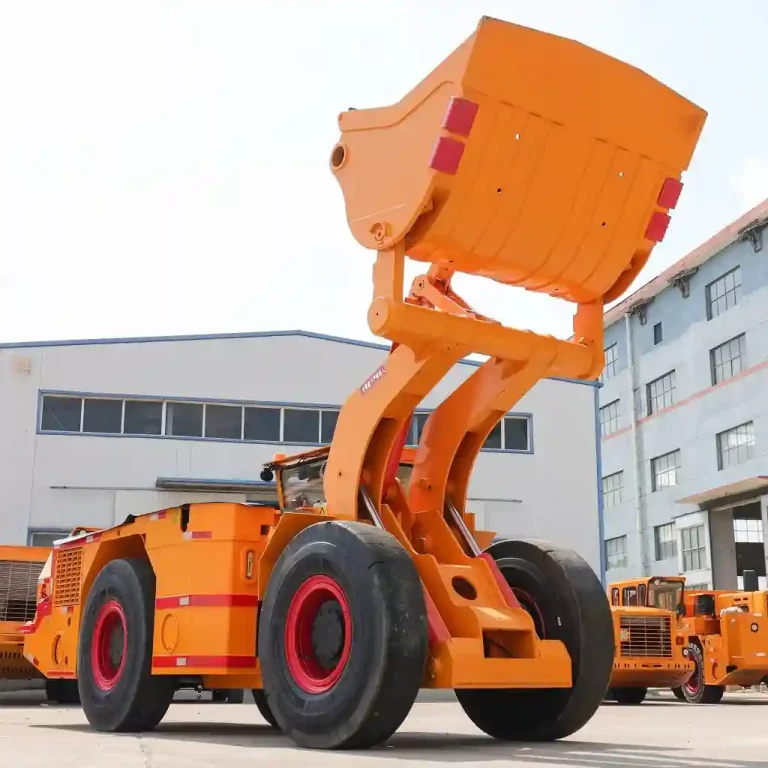
Choosing an underground mining loader for a metal mine is a fit-up decision, not a horsepower comparison. ZONGDA lists this type of machine in its беспроводное горнодобывающее оборудование range. The loader must enter the working area, break into the muck pile, fill consistently, maneuver in the roadway and place the load into a truck or dump point. Tunnel geometry, ore condition, bucket payload, braking, ventilation and parts support all matter.
This guide gives mine owners, project engineers and procurement teams a practical way to screen an underground loader before sending a request for quotation. It focuses on trackless equipment for underground metal mines. Coal-mining equipment and rail-bound vehicles require a different selection process.
Start with the loader’s actual job
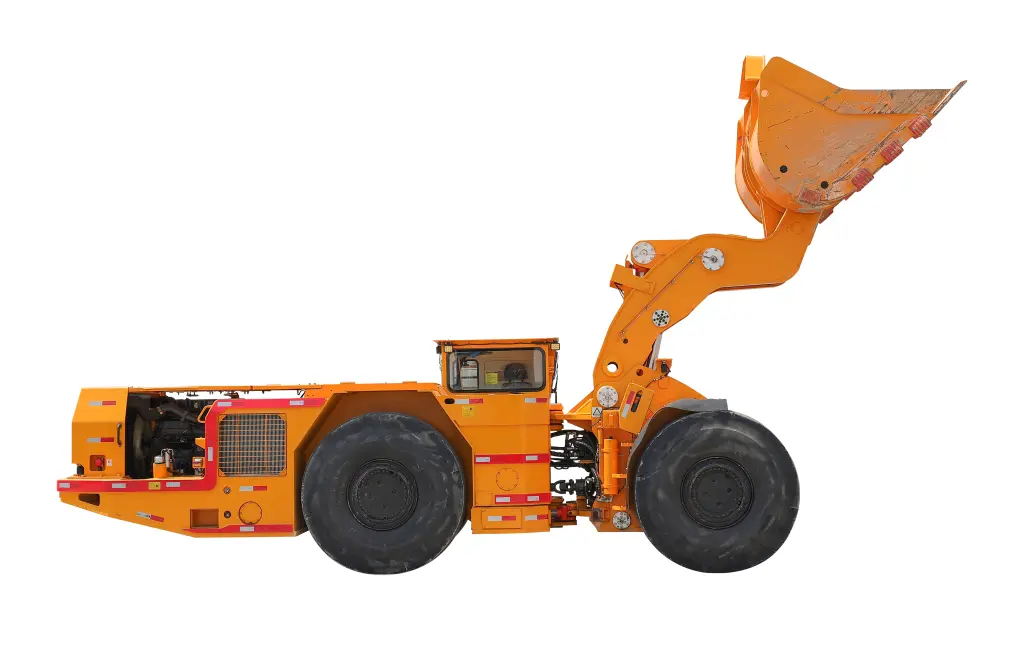
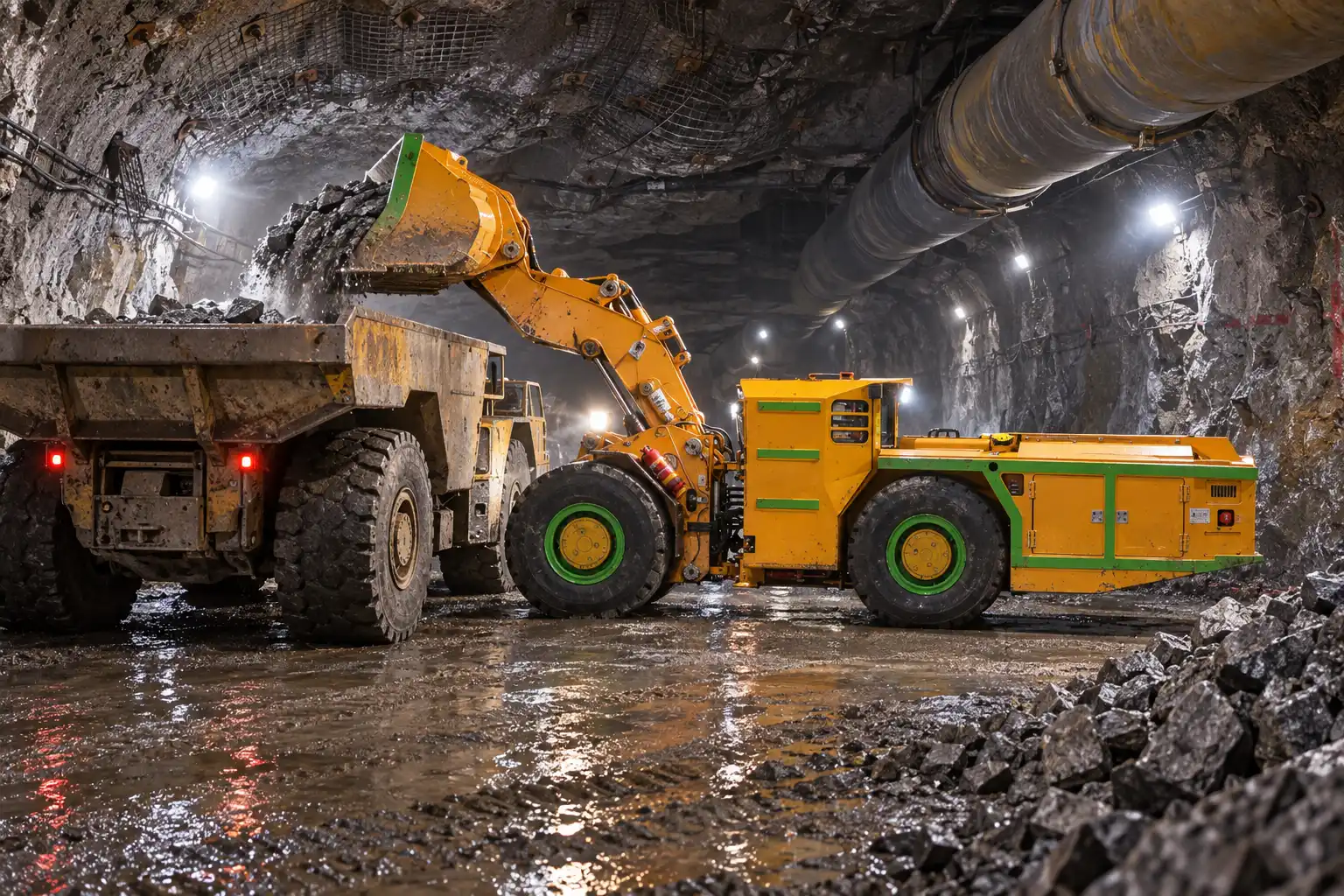
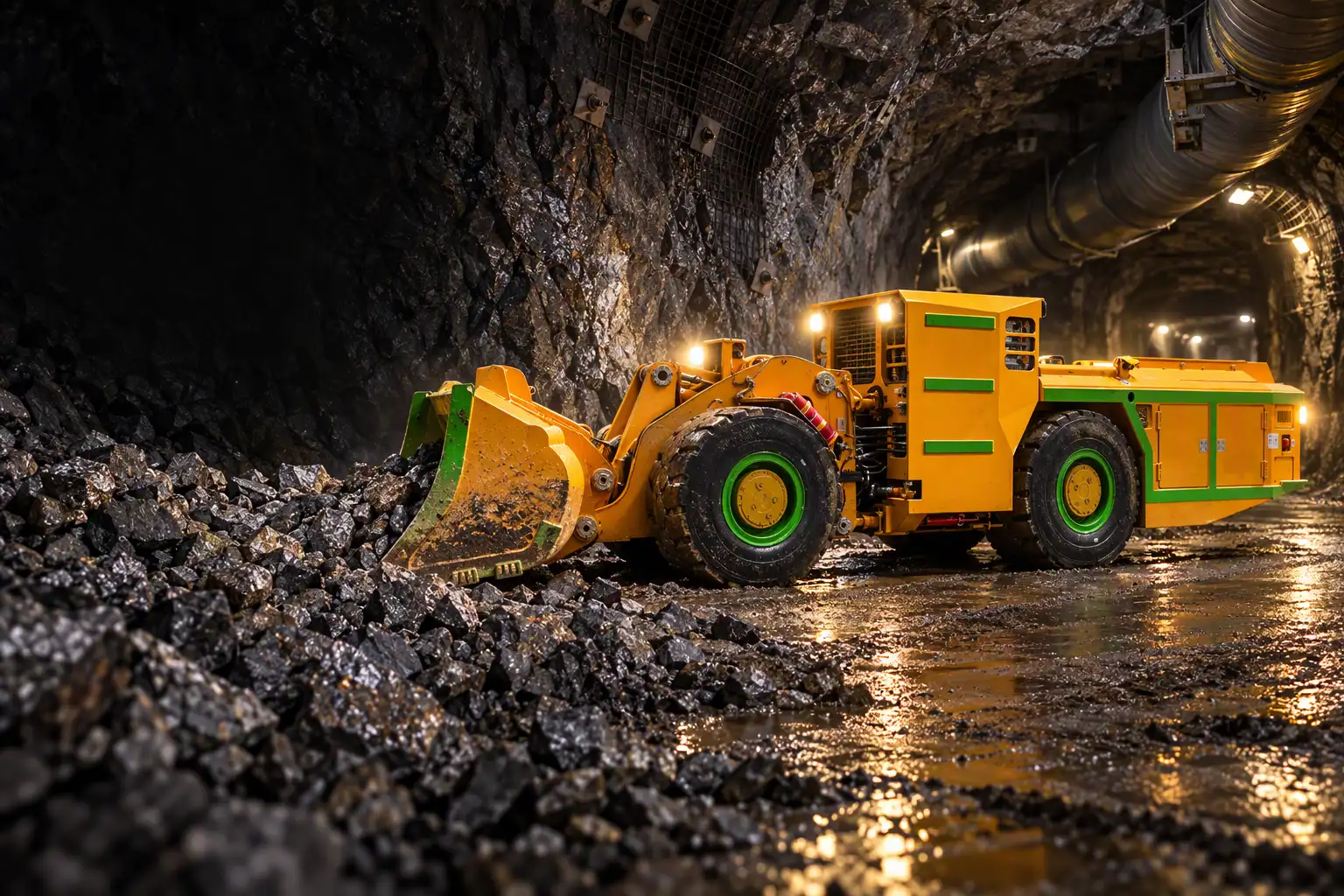
An underground loader, often called an LHD, is mainly a loading and short-distance material-handling machine. It works at the face, drawpoint or crosscut, fills its bucket with blasted ore or waste rock, reverses or travels to the truck, dumps, and returns for the next pass.
Define that job before comparing models. A loader used in a narrow development heading has different priorities from one loading at a large production drawpoint. The first application may need compact dimensions and tight turning performance. The second may justify a larger bucket and higher payload if the loading bay and haulage interface can accept it.
ZONGDA describes its 4T underground LHD loader for underground ore loading, mucking and short-distance transport. The published example lists a 4 t rated payload and a 2 m³ bucket. Treat those values as model-specific reference points, then test whether the mine’s geometry and material conditions support them.
Check tunnel geometry before capacity
The loader must fit the tightest location, not the average roadway. Record clear tunnel width and height, roof-support elements, ventilation lines, drainage channels, service pipes and the smallest turning bay. Include space for the bucket to approach the muck pile and align with the truck.
Width, height and swept path
Overall machine dimensions are only the starting point. During a turn, the bucket, front frame, rear frame, tires and counterweight occupy different paths. Compare the complete swept path with the mine drawing. A loader that fits when travelling straight may still contact the rib or roof while articulated.
Also check dump clearance. The loader may need to raise the bucket over a truck body or into a transfer point. The available roof height at that exact position can be lower than the nominal heading height because of support, ventilation or lighting installations.
Turning radius and articulation
Central articulation can help an LHD maneuver in underground intersections, but it does not replace a turning-radius review. Ask the supplier for inside and outside turning data, articulation angle and the recommended minimum roadway width. Then compare those values with the tightest bend, crosscut and loading pocket.
One documented ZDL307 loader specification uses a working-condition example of a tunnel section around 4 m by 4 m or above and an outside turning radius of at least 9 m. That is a model example, not a universal underground-loader rule. The mine should submit its own drawing and identify the actual limiting location.
Match bucket capacity to ore condition and payload
Bucket size should be evaluated with rated payload, not on its own. The amount of material the loader can carry depends on bulk density, fragmentation, moisture, bucket fill factor and the loading technique. Dense sulphide ore can reach a target payload before a nominal bucket volume is completely full. Loose, coarse muck may require a different pass strategy.
During quotation, provide:
- Expected bulk-density range for ore and waste rock
- Typical fragmentation and oversize condition
- Target payload per pass
- Bucket volume and bucket profile requirements
- Loading height and truck-body interface
- Expected number of passes per truck
The goal is a usable loading cycle. A bucket that is too small can create excess passes and waiting. A bucket that is too large can overload the loader or truck, increase spillage and make the machine difficult to position in a narrow bay.
Review breakout force, traction and travel behavior
The loader needs enough breakout and tractive performance to enter the muck pile, fill the bucket and climb away with a load. Compare the supplier’s force data with material condition, floor quality, tire selection and gradient. A headline force value is not a production guarantee without those inputs.
Travel behavior matters as much as digging. Ask how the machine performs when loaded and empty, how power is transmitted, and what speed range is practical on the mine’s route. The working cycle should include approach, penetration, bucket fill, reversing, travel, dumping and return. If the loader spends too much time repositioning, a larger bucket alone will not solve the bottleneck.
Confirm braking, steering and underground safety fit
Trackless equipment works close to the face, trucks and personnel. Braking and steering should therefore be reviewed against the actual road gradient, surface condition and traffic rules. Ask for the service-brake and parking-brake arrangement, emergency stopping expectations, articulation protection and visibility provisions.
ZONGDA’s published 4T loader page identifies central articulated steering and wet multi-disc braking as part of the model description. Those features may be relevant to underground operation, but the purchaser should still verify maintenance intervals, brake testing requirements, spare assemblies and local safety rules.
Ventilation is another selection input. Diesel equipment adds heat and exhaust load to the working area. Provide the available ventilation quantity, heading size, operating hours and any local emissions requirements. The correct loader is the one that can operate within the mine’s ventilation plan, not simply the one with the highest rated payload.
Check loading height and truck interface
An underground loader rarely works alone. It may dump into a truck, ore pass or transfer point. Confirm the dump height, bucket reach, truck-body opening and clearance above the body. The loader should place material centrally enough to reduce spillage and repositioning.
When a truck is part of the plan, provide its target payload and body volume during the loader review. The objective is not to make every loader and truck identical; it is to create a practical pass count and cycle. The final truck choice should be reviewed separately against haul distance, gradient, clearance and dumping conditions.
Use a model example without turning it into a universal rule
Technical documents are useful when they are read as evidence for a particular model. A ZDL307 specification, for example, describes trackless loading and short-distance transportation, a 7 t rated load and a 3 m³ bucket. It also gives example dimensions of approximately 9,250 × 2,600 × 2,250 mm and operating-condition notes such as a road slope up to about 14% under the stated conditions.
These figures show the information that belongs in an RFQ. They do not mean every mine should select a 7 t loader, use a 3 m³ bucket or operate at the same slope. Ask the supplier to confirm the exact configuration, payload assumptions, brake performance, tire specification and working conditions for the proposed model.
Build the RFQ around evidence
Send a supplier more than “please quote an underground loader.” A useful package includes:
- Mine type, ore or waste-rock application and production target
- Clear tunnel width and height at the tightest working location
- Turning-bay dimensions, maximum gradient and road-surface condition
- Material density, fragmentation, moisture and oversize information
- Required payload, bucket volume, dump height and loading arrangement
- One-way travel distance between the face and dump or truck position
- Ventilation, drainage, water ingress and underground temperature conditions
- Operating hours, operator arrangement and maintenance capability
- Required documentation, destination-country standards and delivery scope
- Initial spare-parts list, wear parts and recommended critical assemblies
For spare-parts planning, ask the supplier to link each part to the exact loader model and assembly. Include filters, braking components, hydraulic wear items, tires, bucket teeth or cutting edges, electrical items and other parts the supplier identifies as critical. This turns the purchase into an operating plan.
Final checklist for an underground loader shortlist
Before approving a loader for a metal-mine project, confirm that:
- The full machine clears the tightest roadway and turning path.
- Bucket volume and rated payload suit the material-density range.
- Breakout, traction and travel performance match the mine’s floor and gradient.
- Dump height and bucket reach work with the planned truck or transfer point.
- Braking, steering, visibility and ventilation fit the underground operating rules.
- The supplier has confirmed the exact model configuration and operating assumptions.
- The quotation includes a model-specific spare-parts and service recommendation.
An underground loader should be chosen as part of the mine’s material-flow plan. Once geometry, ore condition and the loading interface are defined, ЗОНГДА can review whether a compact loader, a higher-payload LHD or a broader trackless-equipment package fits the project.