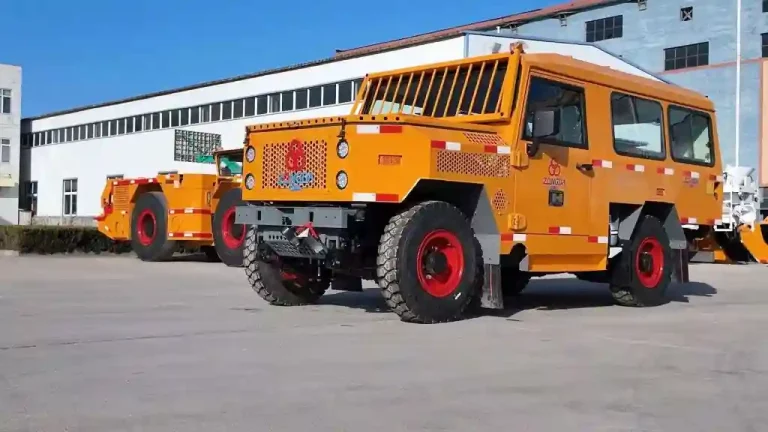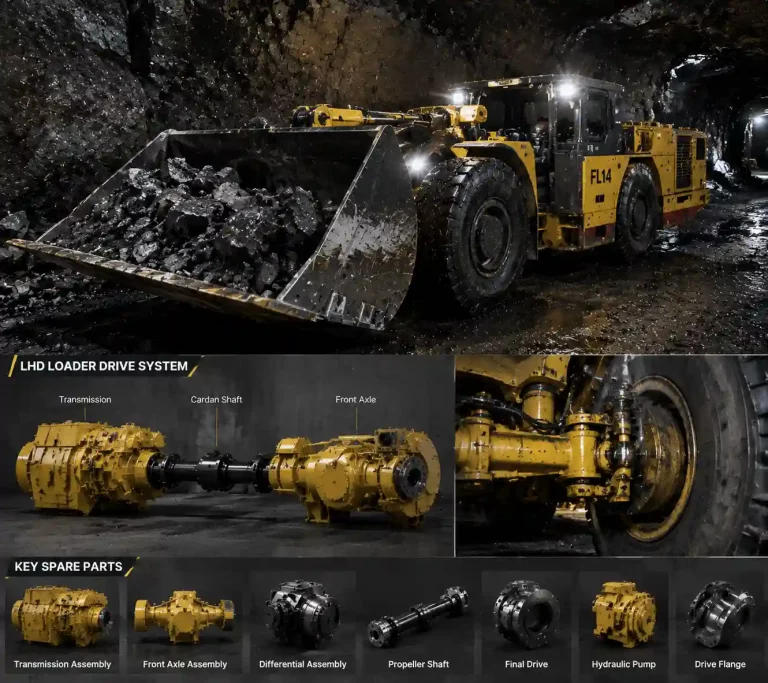
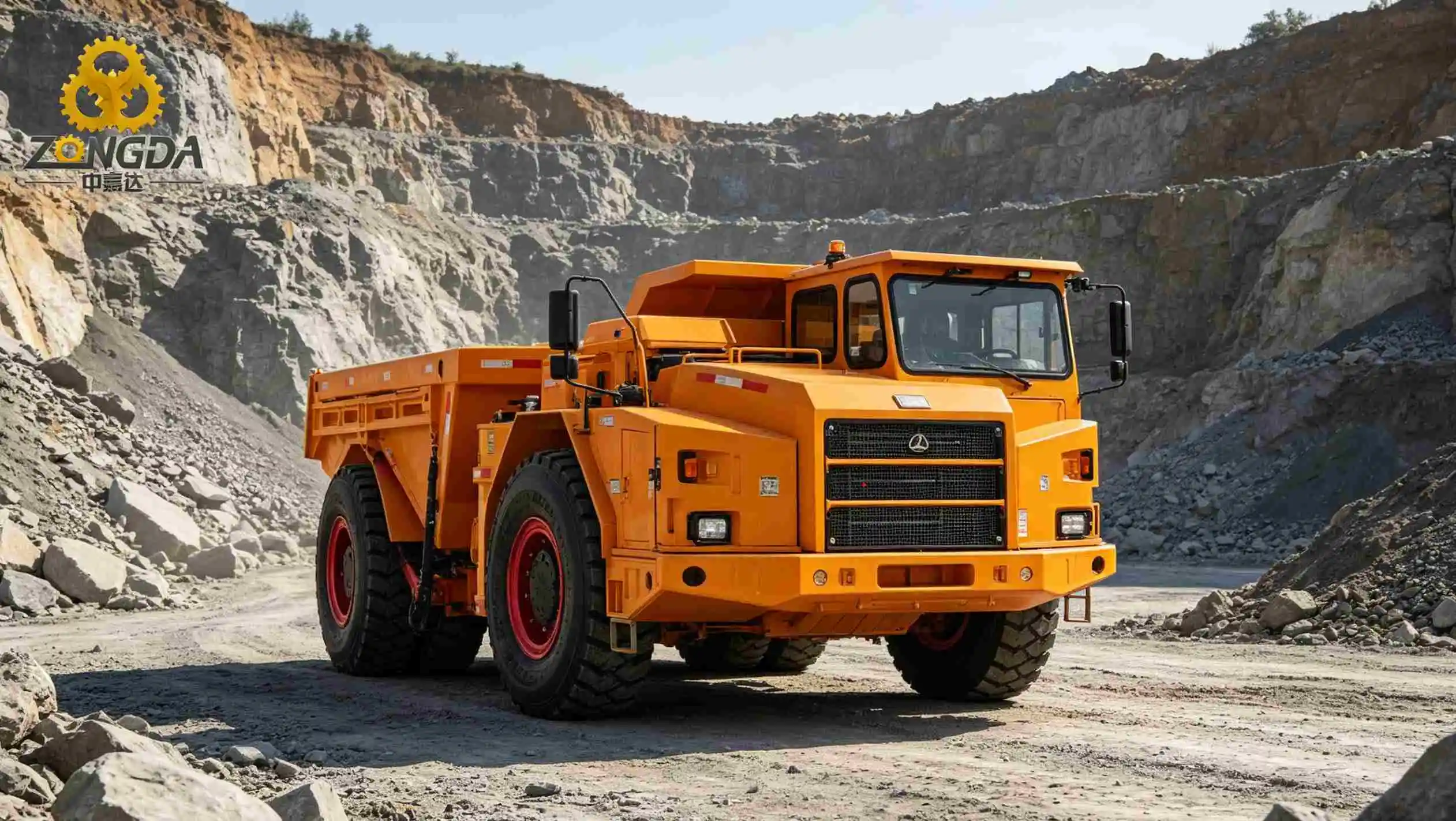
Many underground mining utility vehicles are used to transport people, tools and supplies, and to assist with maintenance of the underground workings. Traditionally many of these vehicles have been powered by diesel but with growing concern of the impact of emissions on the environment there is a move to battery-electric vehicles which do not produce any emissions and provide many other advantages such as reduced heat and noise.
This article looks at the latest battery-electric underground mining utility vehicles now available on the market and why more and more mines are taking an interest.
Why Battery-Electric Utility Vehicles Matter Underground
Diesel engines from underground vehicles generate a lot of exhaust, heat and noise. While normally this can be dealt with using good ventilation at the surface, this can become very expensive when you’re working hundreds of meters underground. Battery-electric vehicles form an ideal alternative. For starters, they have zero tailpipe emissions. What’s more, they are also much quieter than diesel engines. This enables the driver to remain focused during long shifts.
In regions where the environmental impact is strictly regulated, it is often the mines that take the lead in changing over. Reports have been received of ventilation power consumption being reduced by as much as 30-50% where required vehicles have been converted to electric.
Key Advancements in Battery Technology
Battery systems have improved significantly in recent years:
- Higher Energy Density: New lithium-iron-phosphate (LiFePO4) packs store more power in less space. This gives vehicles longer runtime between charges.
- Faster Charging: Many modern systems support opportunity charging during shift breaks. Some can reach 80% charge in under 30 minutes.
- Better Thermal Management: Advanced cooling systems keep batteries performing well even in hot underground conditions.
- Modular Designs: Batteries can now be swapped out quickly, reducing downtime.
A mid-sized Canadian mine is now operating its fleet of personnel carriers as battery-electric and seeing daily run time increase from 6 hours to almost 10 hours with strategic charging.
Improvements in Vehicle Design and Performance
The Battery-electric underground mining utility vehicles have come a long way since the prototype images shown above.
Enhanced Power Delivery: Modern electric motors produce great amounts of torque right from standstill. Even more than diesel engines, they have the power to draw on for steep hills and heavy loads. This results in smoother and even more dynamic acceleration.
Regenerative Braking: When driving down hill, the motors are reversed to act as generators and recharge the battery. This can extend range and reduce brake wear.
Design flexibility: Without the constraints of a large diesel engine, compact utility vehicles are being designed without sacrificing interior space. Many of the new models have lower floor profiles, which allow for tighter tunnel passages and optimal weight distribution.
Safety Features: The battery system of a vehicle for electric truck loading is equipped with a large number of safety features to prevent short circuits and to prevent thermal runaway. The vehicle is equipped with an advanced diagnostic system. Already in time problems can be signaled to the operator.
Latest Features in Battery-Electric Underground Mining Utility Vehicles
- Zero-emission operation with no diesel exhaust
- Significantly lower noise levels inside the cab
- Reduced heat generation in the working area
- Lower maintenance costs on powertrain components
- Opportunity charging capabilities during shifts
- Remote monitoring of battery health and performance
Real-World Performance Gains
Mines using these vehicles report several practical benefits:
- Lower Operating Costs: Electricity is cheaper than diesel, and electric drivetrains need less routine maintenance.
- Improved Air Quality: Better working conditions lead to fewer respiratory issues among crews.
- Higher Productivity: Less time spent refueling and fewer ventilation delays.
- Easier Compliance: Helps mines meet tightening emissions regulations.
A gold mine in South Africa replaced a selection of diesel powered utility vehicles with battery-electric equivalents, saving over 60% in monthly fuel cost in the areas supported by the new vehicles.
Challenges Still Facing Adoption
There are some aspects of battery-electric technology that have not yet been perfected yet. The initial cost of a battery-electric vehicle is typically higher than a comparable diesel powered vehicle, the charging infrastructure is still in need of large investment, and there are as yet issues with battery discharge in very cold underground locations that have yet to be addressed.
A lot of first forays into using electric vehicles for haulage start with converting over support units rather than going straight after haul trucks in production. It gives you a chance to get familiar with the electric solution before taking on the bigger trucks.
Comparison: Diesel vs Battery-Electric Utility Vehicles
| Aspect | Diesel Models | Battery-Electric Models |
|---|---|---|
| Emissions | High exhaust output | Zero tailpipe emissions |
| Noise Level | Loud | Much quieter |
| Heat Generation | Significant | Minimal |
| Maintenance Interval | More frequent | Extended on drivetrain |
| Operating Cost (long term) | Higher fuel & ventilation | Lower overall |
| Initial Investment | Lower | Higher |
The Road Ahead for Battery-Electric Utility Vehicles
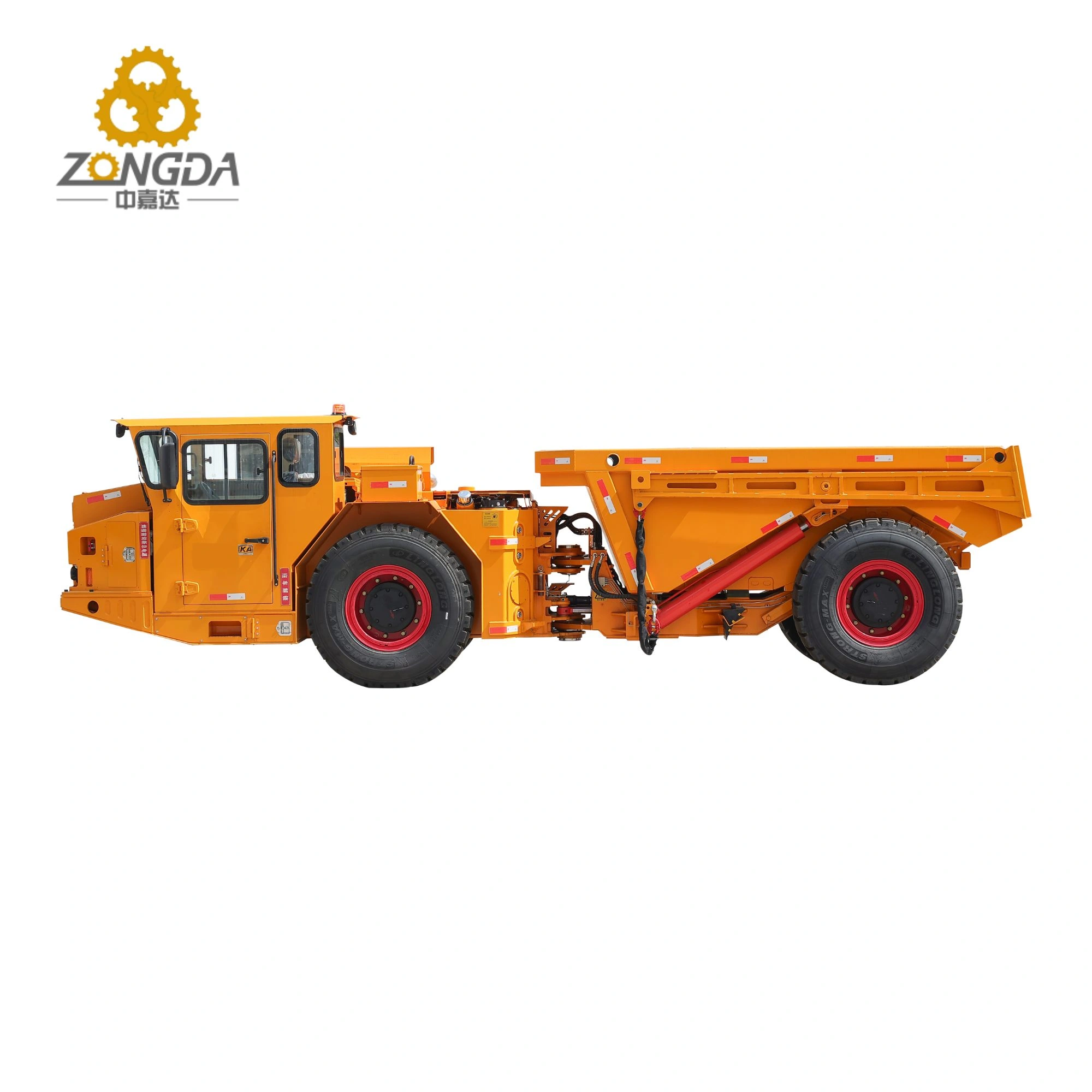
Future improvements on Utility Vehicles will include better integration with other digital systems used throughout the mine. Greater range, and also Hybrid variants of the vehicle for extreme applications. As battery cost reduces, and rapid charging technology improves, there will be more applications where the use of an electric Utility Vehicle makes commercial sense.
QINGDAO ZONGDA MACHINERY CO., LTD. has many years of practical experience especially in the field of underground mining equipment. Qingdao Zongda MACHINERY was founded approximately 10 years ago by a group of experts in the field of underground exploration and mining. These founders have always been looking for solutions for the on a daily basis needs of the mines.
They produce a range of trackless equipment, including underground mining utility vehicles. Their designs focus on reliability in medium-section tunnels, with features like strong power systems and comfortable operator areas. ZONGDA emphasizes building machines that perform consistently while keeping maintenance straightforward. As the industry moves toward electrification, companies like ZONGDA continue developing solutions that balance performance, safety, and environmental considerations for mining operations worldwide.
Conclusion
Battery-electric underground mining utility vehicles have come a long way in recent years. Advances in battery technology have enabled improved run-time and faster charging, along with enhancements to ergonomics and added safety features. In many cases these types of vehicles are providing value to underground operations, and as options are considered for inclusion in a mine’s fleet of vehicles, it is becoming increasingly clear that electrification is becoming an important part of mining fleets. As mines look at these options, they can find that there is more to explore than environmental compliance.
FAQs
What are the benefits of battery-electric underground mining utility vehicles?
Battery-electric underground mining utility vehicles offer a number of benefits including no exhaust emissions, less noise and less heat. This allows for improved air quality and working conditions as well as lower long-term operating costs.
How long will battery-electric underground mining utility vehicles last on one charge?
While the operation time on one charge depends on the model and the mode of operation in most cases a battery-electric underground mining utility vehicles can last for 6 up to 10 hours. The opportunity charging during the breaks can even extend the operation time.
Are battery-electric underground mining utility vehicles suitable for all mine types?
Battery-electric underground mining utility vehicles are best suited for application in small to medium size mines and in areas where ventilation restrictions exist. Large mines will initially utilize BEV’s for support activities.
What factors should one take into account when deciding to change to battery-electric driven underground mining utility vehicles?
Charging infrastructure, total cost of ownership, vehicle specification in relation to tunnel dimensions and operational profiles, supplier support and spare parts supply.
Will battery-electric underground mining utility vehicles replace diesel powered ones completely in the near future?
The answer is no. While diesel will still find application in heavy production work, battery-electric underground mining utility vehicles are becoming the preferred option for the majority of support roles.