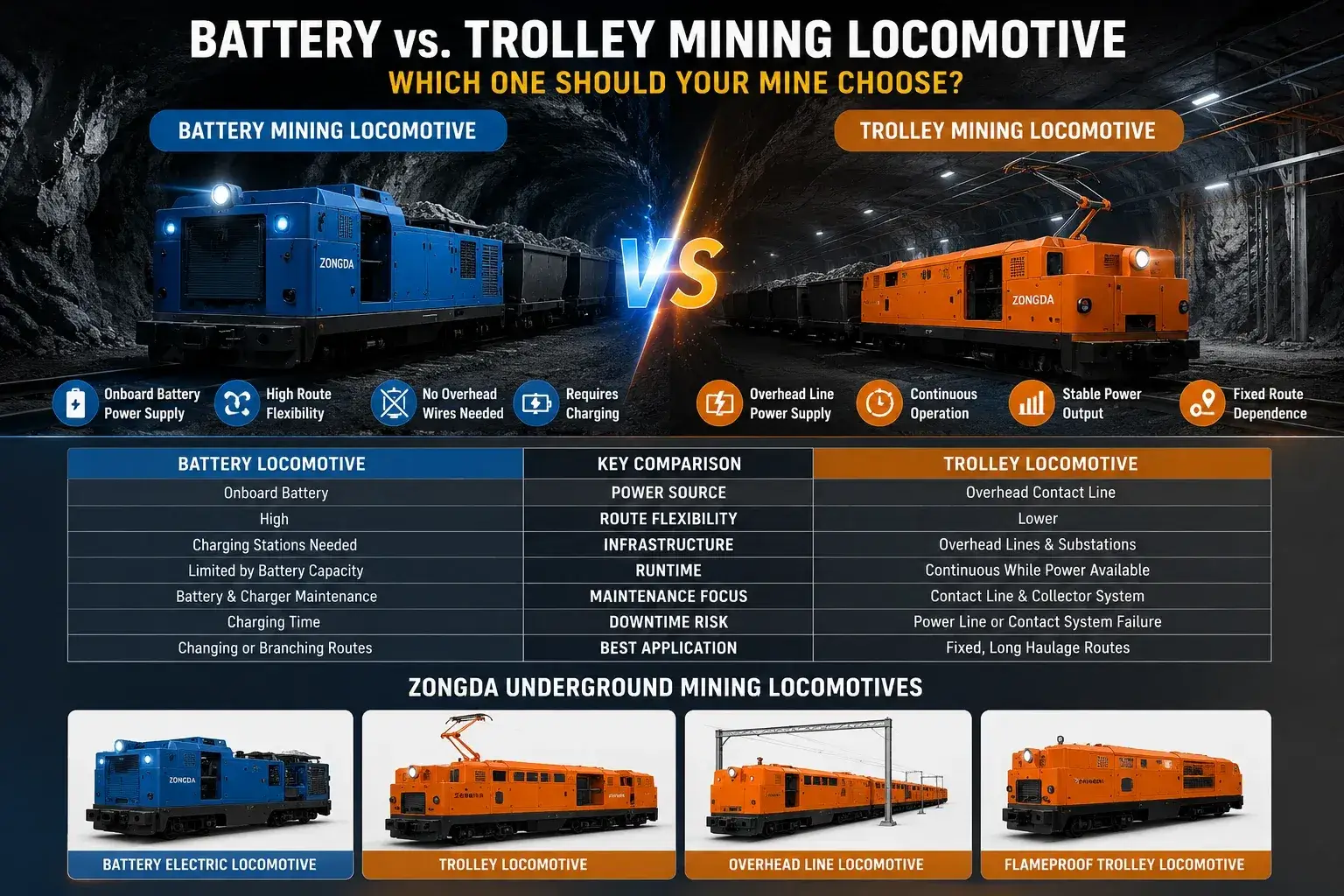
Избор између рударске локомотиве на батерије и тролејбусне локомотиве утиче на циклусе превоза, инфраструктуру, одржавање и време производње.
Батеријска локомотива носи свој извор напајања и може да путује изван надземних водова. Тролејбусна локомотива црпи енергију из контактне мреже и ради без планираних заустављања за пуњење. Међутим, стална рута може добити нове гране, док време рада батерије може опадати на стрмијим колосецима са тежим возом.
Боља опција је она која одговара вашој рути, радном циклусу, безбедносним правилима и плану проширења.
Који систем напајања одговара вашем руднику?
Почните са начином на који ваш рудник превози материјал. Промене руте, тежина воза, радни сати, нагиби, радијус кривине и расположива инфраструктура обликују резултат.
Како функционише рударска локомотива на батерије?
Рударска локомотива на батерије складишти енергију на возилу и напаја вучни мотор. Без континуиране контактне линије, може ући у гране и привремене радове.
Та слобода захтева план пуњења и довољан капацитет за потребна путовања. Локомотива на батерије за подземни превоз има смисла када је приступ рути важнији од непрекидног рада.
Време рада није фиксно. Оптерећење, нагиб, брзина, стање шина, температура и стање батерије утичу на њега. Затражите податке који одговарају вашем возу.
Како функционише рударска локомотива са тролејбусом?
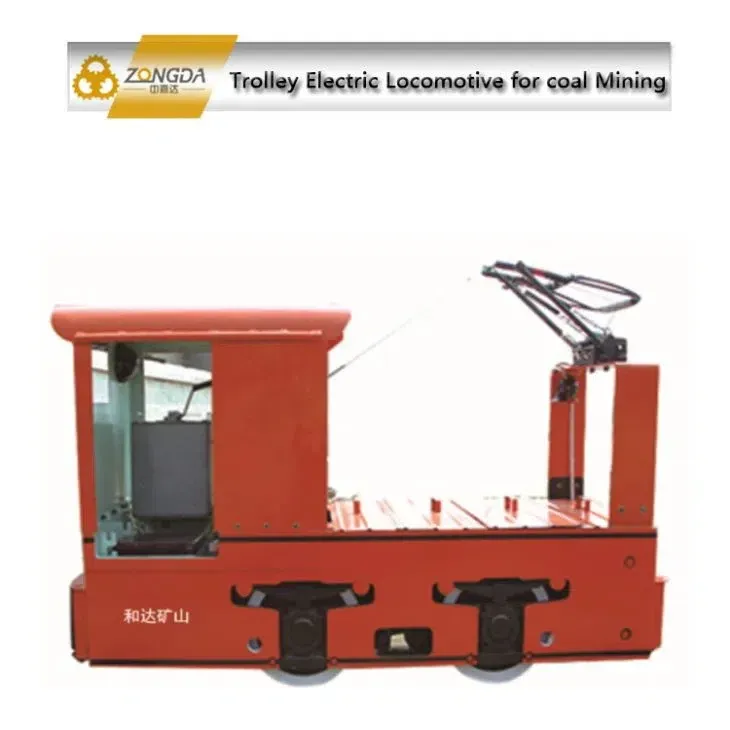
Тролејбусна локомотива прима струју из надземне жице преко струјног сакупљача. Може да ради дуже време без пуњења, што одговара утврђеним рутама и рудницима са више смена.
Компромис је зависност од трасе. Свака нова деоница може захтевати контактну жицу, носаче, прикључке за напајање и приступ за инспекцију. Надземна локомотива за фиксне пруге обично је боље решење када је рута стабилна и електрична мрежа већ постоји.
Квар на линији може утицати на више машина. Тај детаљ је лако превидети приликом куповине, али екипе за одржавање га брзо примећују.
Како се две локомотиве упоређују у свакодневном раду?
Разлике постају јасније током производне смене. Спецификациони лист даје снагу мотора и номиналну брзину, али не и путовања изгубљена због пуњења или поправки линије.
Флексибилност руте
Акумулаторне локомотиве су прилагођене променљивим рутама јер кретање није везано за надземне инсталације. Могу да раде у близини подручја где би изградња пруге прекинула производњу.
Тролејбусне локомотиве најбоље раде на стабилним рутама. Ако се ваш план рудника често мења, укључите трошкове и време продужења пруге.
Време рада и излаз у превозу
Напајање тролејбуса подржава континуирани рад док систем напајања и контакта остаје доступан, што је корисно на дугим рутама са честим циклусима.
Излаз батерије зависи од употребљивог капацитета и начина пуњења. Кашњење од 15 минута током шест циклуса превоза износи укупно 90 минута. То може бити важније од скромне разлике у куповној цени.
Прегледајте целу домет локомотива за подземно рударство тек након дефинисања једносмерне удаљености, колица по возу, тежине воза, максималног нагиба и путовања по смени.
Инфраструктура и проширење
Систему батерија су потребни пуњачи, безбедне процедуре и можда резервни пакети. Систему тролејбуса су потребни контактни каблови, развод енергије, носачи и инспекција линија.
Додавање батеријске локомотиве новој грани може бити прилично директно. Продужење услуге тролејбуса може захтевати електричне радове пре почетка првог вожње. Рудник са зрелом контактном мрежом може мало добити од њене замене.
Која опција кошта мање током свог радног века?
Куповна цена је само први ред. Укупни трошкови такође укључују инфраструктуру, енергију, одржавање, делове и застоје.
За локомотиву на батерије, испитајте тип батерије, век трајања, капацитет пуњача, трошкове замене и време пуњења.
За тролејбусну локомотиву, укључите контактну линију, напајање, продужетке трасе, хабање колектора, радове на кабловима и реакцију на квар. Постојећа инфраструктура може променити резултат у своју корист.
Покрените прорачун током очекиваног периода употребе. Машина која кошта мање првог дана може коштати више након три године прекида и поправки.
Која безбедносна питања треба да поставите?
Безбедност треба да обликује избор од самог почетка, посебно у рудницима угља или другим радовима где могу бити присутни гас и запаљива прашина.
Проверите електричну заштиту, кочнице, заустављања у случају нужде, кућиште батерије, заштиту каблова, контролу температуре и локалне сертификате. За опасне услове у руднику угља, ватроотпорна тролејбусна локомотива за руднике угља и даље мора бити проверено у складу са правилима на вашем сајту.
Такође, погледајте даље од система напајања. Кочење на низбрдици, стање точкова и шина, видљивост, комуникација и обука оператера могу бити подједнако важни као и мотор. Ниједан извор напајања не поправља лошу пругу или преоптерећен воз.
Који систем је лакши за одржавање?
Једноставнији систем је онај који ваш тим за одржавање може да подржи одговарајућим вештинама, деловима и рутинама.
Одржавање батерије обухвата стање батерије, конекторе за пуњење, каблове, контролере, моторе, кочнице и кућиште. Евиденција пуњења може рано открити пад перформанси.
Одржавање тролејбуса додаје контактну жицу, струјне одводнике, носаче и поравнање линије. Мањи проблем може оставити натоварене аутомобиле да чекају. Није драматично, можда, али скупо до петка.
Питајте које провере спадају у дневне, недељне и месечне распореде и које поправке захтевају подршку радионице.
Ко би требало да изабере сваки тип локомотиве?
Распоред вашег рудника и начин рада треба да воде до одлуке. Ови профили су почетне тачке, а не прорачун транспорта.
Изаберите батеријску локомотиву када
Изаберите напајање из батерије када се руте редовно мењају, приступ одвојеним водовима је важан или је континуирано надземно ожичење непрактично. Такође може одговарати руднику са природним временским интервалима пуњења између смена.
И даље вам је потребан довољан капацитет за тежину воза, нагибе, пређену удаљеност и услове околине.
Изаберите тролејбусну локомотиву када
Изаберите напајање тролејбусом када је рута фиксна, потребни су дуги радни сати и када надземна електрична енергија већ опслужује ниво превоза. Може да подржи рад у више смена без планираних заустављања за пуњење.
Може бити мање атрактивно тамо где чело брзо напредује или привремене гране захтевају сервисирање. Жица прати руту, а локомотива прати жицу.
Које информације треба да пошаљете пре него што затражите понуду?
Корисна понуда захтева више од тонаже. Пошаљите ширину колосека, дужину превоза, максимални нагиб, радијус кривине, капацитет колица, број колица, сате по смени и број смена.
Додајте тип рудника, потребну безбедносну сертификацију, расположиви напон, детаље контактне линије и жељени распоред батерија. Фотографије или цртеж руте могу помоћи тамо где кривине, прекидачи или делови са малим простором утичу на машину.
Ово смањује ризик од добијања модела који одговара ширини шине, али не и послу.
Практична перспектива добављача
Компанија Qingda Zongda Machinery Co., Ltd. третира подземни транспорт као део ширег рударског система, а не као изоловану продају машина. Њен званични асортиман производа укључује батеријске и тролејбусне локомотиве, заједно са опремом без колосека, вентилационим, дизаличарским и истражним машинама. Тај шири асортиман је користан када се снага, транспорт и услови на локацији морају посматрати заједно.
Компанија наводи да више од 30 рударских стручњака и инжењера подржава истраживање, производњу, контролу квалитета и постпродајне радове. Њен процес сервисирања обухвата избор модела, потврду спецификације, инспекцију пре испоруке, инсталацију, пуштање у рад, снабдевање резервним деловима и инжењерску подршку на лицу места. Ове могућности су важне јер коначна конфигурација зависи од оперативних података, а не од каталошке етикете.
ФАК
П1: Која је рударска локомотива боља за промену рута?
A: Акумулаторна локомотива је обично практичнија јер јој није потребно непрекидно надземно ожичење. Уверите се да њен капацитет може да покрије ваш терет, удаљеност и нагибе.
П2: Да ли је тролејбусна локомотива јефтинија за рад?
A: То може бити када ваш рудник већ има поуздан систем контактне линије и ради у дугим сменама. Ново ожичење и одржавање линије могу променити резултат.
П3: Колико дуго може да ради рударска локомотива на батерије?
A: Време рада зависи од капацитета батерије, тежине воза, нагиба, брзине, температуре и стања батерије. Затражите прорачун радног циклуса на основу ваше руте.
П4: Да ли оба типа локомотива могу да раде у рудницима угља?
A: Могуће је да су доступне одговарајуће конфигурације, али машина мора да испуњава прописе о електричној заштити и сертификацији који се захтевају у вашем руднику.
П5: Који је најважнији фактор при куповини?
A: Прилагодите локомотиву свом превозном задатку. Ширина колосека, тежина воза, нагиб, дужина руте, сати смене и инфраструктура су важнији од самог преференцијалног извора енергије.