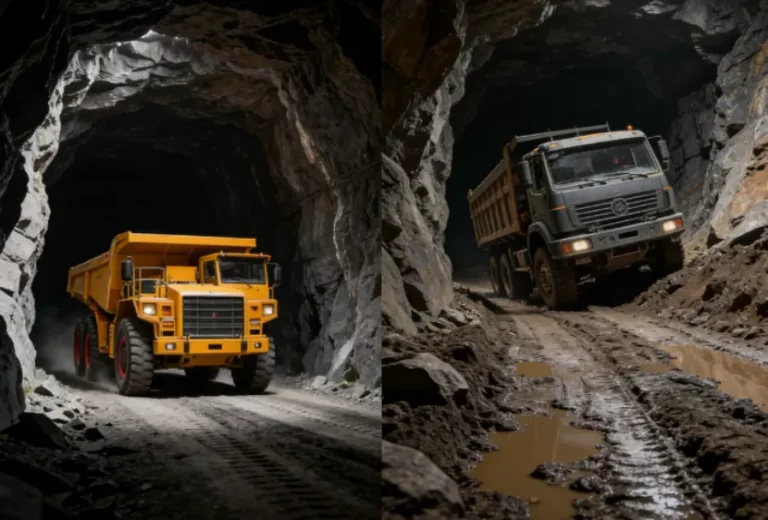
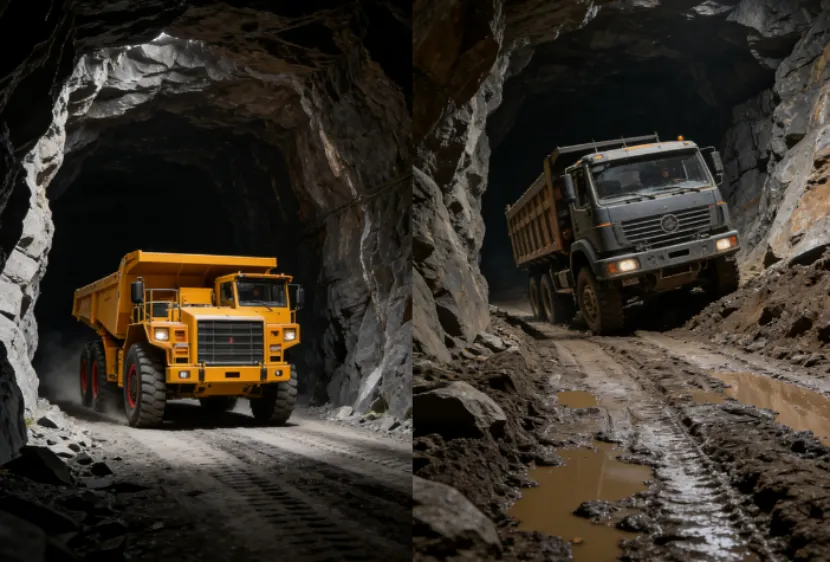
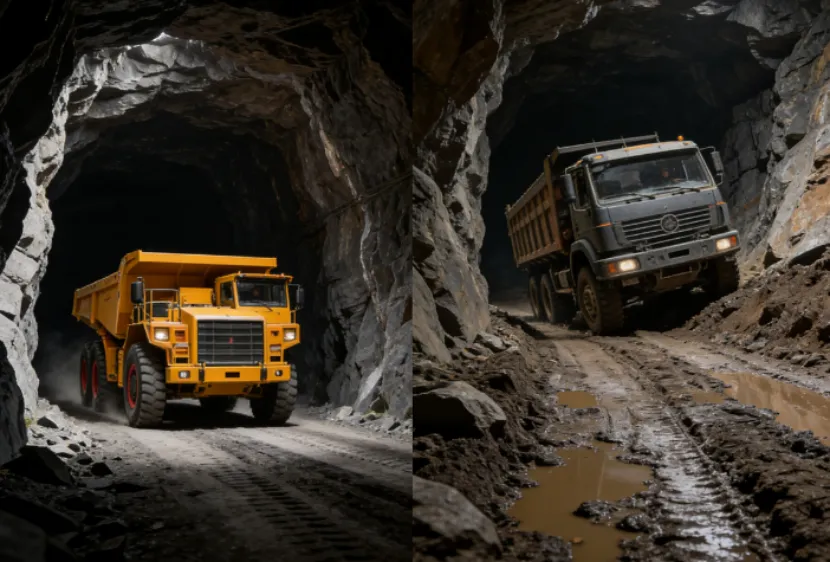
Lorsque vous comparez un underground mining truck vs road truck, the first number that grabs attention is usually purchase price. That is normal. A road truck can look like the cheaper choice on day one. But underground haulage is rarely that simple. In a mine, your real cost sits in payload, tunnel fit, tire wear, traffic flow, road condition, downtime, and how many trips you need to move the same tonnage. A purpose-built underground truck is designed for that messier reality. For example, the ZDT210 is built for medium-section tunnels of about 3 m by 3.5 m and above, carries 10 tons, uses central articulated hydraulic steering, and has a 25% loaded climbing capacity with an inner turning radius of 4500 mm. Those details are not decoration. They change the math of cost per ton in daily work.
What Does Cost per Ton Really Mean?
Before you decide which machine is cheaper, you need to define what “cheaper” means in actual hauling. A low invoice price can still turn into a high cost per ton once the truck starts running every shift in wet ramps, sharp bends, and rough headings. That part gets missed in real buying meetings more often than it should.
Purchase Price Is Only One Number
Your cost per ton includes the truck price, but it also includes service life, tire replacement, fuel use, operator count, road work, and lost production during repairs. If a lower-price road truck carries less in the same tunnel, you may need more units and more drivers to hit the target. At that point, the cheaper truck is not really cheaper.
Tunnel Fit Changes the Math
Tunnel size matters more underground than many buyers expect. If the truck is too wide, too long, or poor at tight turns, you end up paying for slower cycles, awkward passing, and sometimes extra excavation. An articulated underground truck can move through tighter curves with less widening work. That helps lower the cost per ton in a very direct way. Reference material on underground haulage also notes that road trucks usually carry less within the same drift size, which raises purchase cost per ton transported and often calls for more trucks and operators.
Why Does a Road Truck Often Cost More Underground?
This is the uncomfortable part of the comparison. A road truck can work in some underground settings, especially where roads are very good and production stays stable in one area for a long time. Still, many mines find that the hidden costs show up fast once the truck leaves the brochure and enters a real heading.
Tire Wear and Structural Stress Show Up Fast
Underground roads are rough. Water, loose rock, potholes, and loaded uphill travel are common. In those conditions, road truck tires wear faster, and the chassis takes more punishment. Even when a road truck is reinforced, the extra changes add cost, while productivity may still lag behind a mine truck of similar size. That is one reason a road truck in underground mines can end up with a worse total cost of ownership than expected.
More Trucks Can Mean More Delay
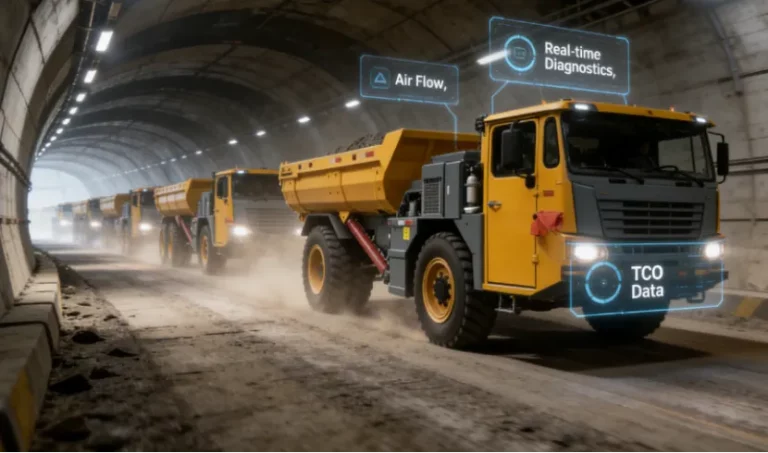
Another issue is traffic. If one truck carries less, you need more haul cycles or more machines. In a narrow underground network, that can create queueing at loading points, waste time on ramps, and raise the chance of contact damage. Reference guidance on underground haulage points out that traffic congestion is common, and adding more trucks can reduce overall productivity after a certain point. So the question is not only “Can this truck move ore?” It is “How many trucks will you need to move the ore without creating a bottleneck?”
When Does a Purpose-Built Underground Truck Make More Sense?
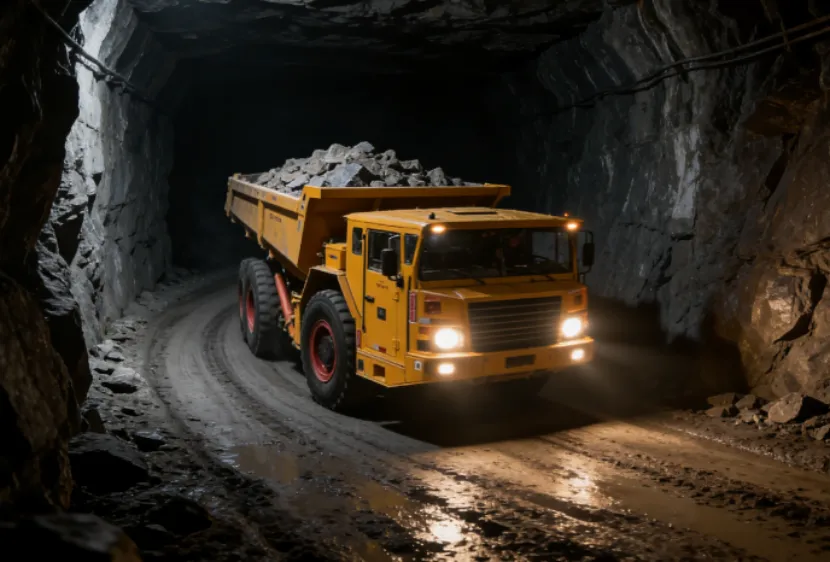
If your mine has tight curves, variable drift sizes, rough road conditions, or a strong output target, a purpose-built underground truck usually makes more sense. This is where supplier background also matters. You want a builder that stays close to actual mine work rather than selling a generic machine with a mining label stuck on top.
Why ZONGDA Fits This Conversation
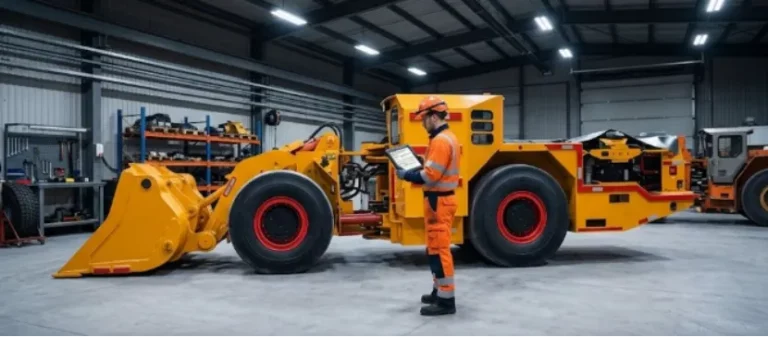
ZONGDA is a specialist in underground mining machinery rather than a general equipment seller. According to its company and product pages, the company focuses on research, production, sales, and service for underground mining equipment, offers trackless mining equipment and related systems, and has more than 30 mining experts and engineers supporting R&D, production, QC, and after-sales technical work. The company also presents itself as a solution supplier and mining project contractor, which matters if you care about equipment fit, not just equipment price. In plain terms, that usually means a better grasp of the details that shape cost per ton underground.
A Practical Example for Medium-Section Mines
Take a medium-section mine that needs a 10-ton truck. A machine such as the ZDT210 is built for tunnels of 3 m by 3.5 m and above, has a compact body width of 1900 mm, central articulated steering, and wet multi-disc spring braking. Those features speak to a simple point. The best truck for underground mining is often the one that fits the tunnel, turns cleanly, climbs under load, and keeps moving without asking for constant road upgrades. In that situation, an underground mining truck vs road truck comparison usually favors the machine built for underground work, because it brings a lower cost per ton over time, not just a lower line on the quotation sheet.
FAQ (questions fréquentes)
Q1: Are road trucks cheaper than camions miniers souterrains?
A: Usually at purchase stage, yes. But a lower purchase price does not always mean a lower cost per ton once you add tire wear, downtime, extra operators, and lower payload in underground conditions.
Q2: Why does an underground mining truck often deliver a lower cost per ton?
A: Because it is built for tight tunnels, rough roads, loaded ramps, and frequent turning. That often means better payload use, fewer trucks, and less wasted time.
Q3: Can a road truck be used in underground mines?
A: Yes, in some cases. It fits better where roads are high quality, traffic is light, and production stays stable in one zone for a long period. It is usually a weaker fit in rough or tight headings.
Q4: What matters most in an underground mining truck vs road truck comparison?
A: Look at payload, turning radius, tunnel fit, climbing ability, service life, road quality, and total fleet size. Those factors shape the real cost per ton.
Q5: What makes the ZDT210 relevant for this comparison?
A: Its 10-ton payload, articulated steering, 25% loaded climbing capacity, and suitability for 3 m by 3.5 m tunnels and above make it a practical example of how a purpose-built underground truck addresses common mine haulage concerns.