
Downtime underground is never just a repair issue. It usually means a delayed truck, a broken loading rhythm, and a shift that never quite gets back on track. That is why an underground loader maintenance checklist matters so much. If you want real mining loader downtime reduction, you need a routine your team can follow every shift, not a stack of service notes that only come out after something goes wrong. Good underground loader preventive maintenance also answers the bigger question of how to extend underground loader life without letting repair costs creep up month by month.
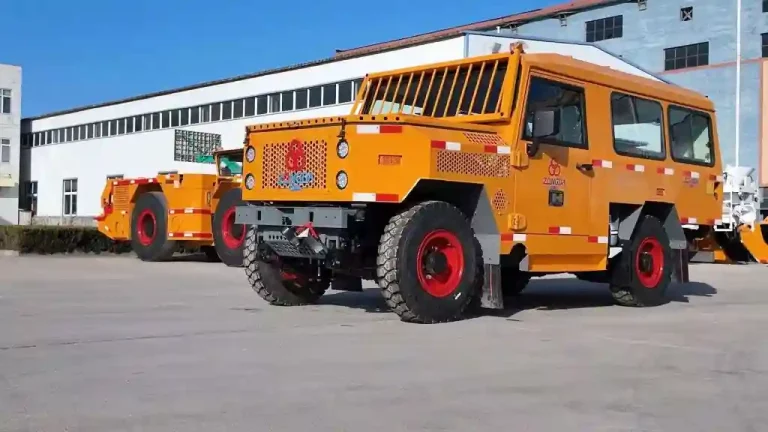
A useful example comes from ZONGDA, a Qingdao-based underground mining equipment maker that says it has focused on underground mining for 13 years and has more than 30 mining experts and engineers supporting R&D, production, quality control, and after-sales work. Its public materials also show a product range that covers trackless mining equipment, locomotives, and ventilation systems, with markets across Asia, Europe, Africa, and South America. That background matters because a loader supplier should know more than bucket size and engine power. You need someone who also understands tunnel limits, ventilation, service access, and parts support when the machine is deep underground, not parked nicely in a yard.
Why Does an Underground Loader Maintenance Checklist Matter?
Before getting into the checks themselves, it helps to be blunt about the problem. Underground loaders work in dust, moisture, vibration, heat, and tight headings. In that setting, small faults rarely stay small. A loose hose clamp can turn into lost hydraulic pressure. A dirty cooler pack can turn into heat stress. You know how that story ends.
Cost Starts Rising Before the Loader Stops
A solid underground loader maintenance checklist catches wear before the machine quits. Internal knowledge-base material on underground loaders points to the same pattern. Daily and routine checks on oil, filters, hydraulics, and brakes cost far less than an unplanned stoppage in the middle of production. It also notes that tunnel dimensions, ventilation capacity, ore density, and maintenance support should all be considered when matching a loader to a site.
The Machine Has to Match the Mine
That point is easy to miss. The loader itself may be fine, but the mine may be making maintenance harder than it needs to be. The ZONGDA unit discussed here is built for tunnels from 2.5 m by 2.5 m and above, with an outside turning radius of about 5.3 m, road slope up to 14 degrees, and a stated need for good ventilation and drainage. Those are not minor details. They affect heat, access, cycle time, and how hard every component has to work.
Underground Loader Daily Inspection Checklist for Every Shift?
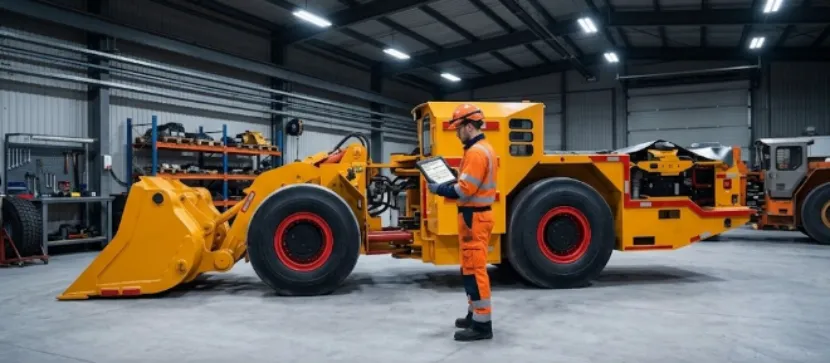
A good underground loader daily inspection checklist should be simple enough to use at the start of a shift and serious enough to stop the obvious failures. This is where your underground LHD service checklist earns its keep. No fancy language needed.
Walk-Around Checks Before Every Shift
Start with leaks, loose bolts, damaged hoses, cracked guards, and visible wear around the articulation area. Check lights, alarms, and anything that affects sight in narrow headings. The unit on ZONGDA’s product page uses a central articulated frame and hydraulic steering, so that center section deserves close attention. The site also states clearly that no maintenance should be done while the machine is running and that hydraulic pressure must be relieved before repairs.
Fluids, Tires, and Brakes
Then move to engine oil, coolant, hydraulic oil, brake response, tire condition, and dust buildup around cooling areas. This particular loader has a 130 L fuel tank, a 160 L hydraulic oil tank, wet multi-disc service brakes, and spring-applied parking braking. If you ignore fluid levels or brake feel on a machine with those loads, you are asking for trouble a few hours later. Not every failure announces itself politely.
What Should You Watch in Underground Loader Hydraulic Maintenance?
This is usually where downtime gets expensive. Proper underground loader hydraulic maintenance is not just about oil level. You are looking for hose abrasion, slow cylinder response, seal leaks, hot oil, and small changes in lift and dump behavior that operators tend to “work around” until they cannot.
Hydraulics and Transmission Need Trend Checks
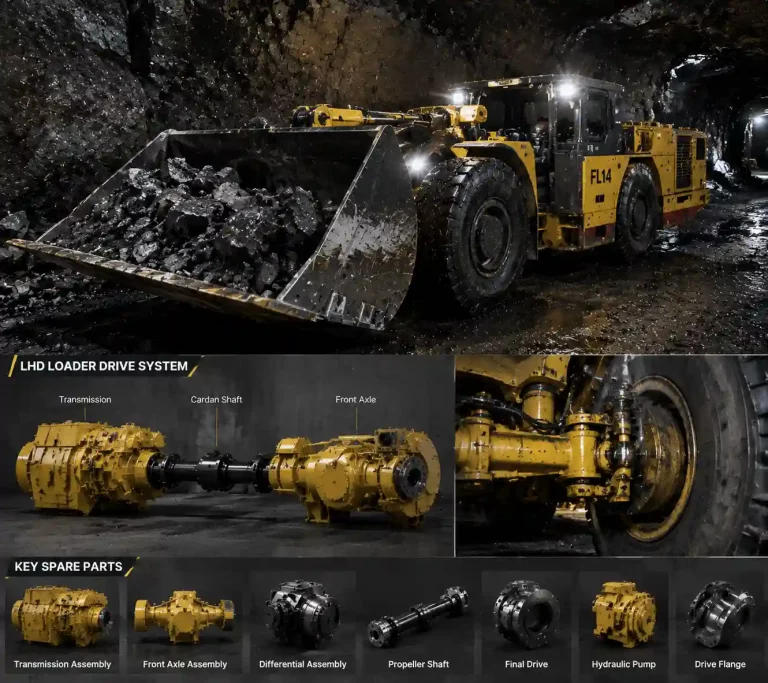
The ZONGDA loader uses power-shift transmission, hydraulic steering, and a hydraulic release brake setup, so changes in response speed or pressure matter. Internal material in the knowledge base also stresses that underground loaders in dusty, wet, high-vibration conditions need routine hydraulic checks and brake tests because those systems wear fast when site conditions are rough.

How Can Underground Loader Cooling System Maintenance Cut Downtime?
Anyone who has dealt with a blocked cooler underground knows this one is never a small issue. Underground loader cooling system maintenance often decides whether the machine finishes the shift or limps back early.
Dust, Heat, and Air Flow Work Against You
A diesel underground loader depends on clean cooling paths and decent site ventilation. ZONGDA’s application notes call for adequate ventilation and drainage, and the internal materials in the knowledge base also highlight that dust control and air flow directly affect loader reliability underground. Keep radiators and air passages clean, watch temperature trends, and do not wait for obvious overheating. By then, the damage may already be underway.
What Should You Ask a Supplier About Support and Service?
This is where many buyers stop talking about price and start talking about risk. A machine spec sheet looks good on day one. Support is what matters six months later.
Support Questions That Actually Matter
When you review a ZDL204DH underground loader, ask for recommended underground loader service intervals, parts availability, operator training, and response time for technical issues. ZONGDA’s public pages say it offers after-sales technical support, customization, warranty policy details, and shipping support. That is the right direction. Your goal is not just to buy iron. Your goal is to keep loading ore with fewer interruptions. That is what real underground loader maintenance best practices look like in the field.
In short, the best LHD maintenance checklist is the one your team will actually use, every shift and every week. If you want longer service life, steadier output, and fewer ugly surprises, build your routine around daily inspection, hydraulic checks, cooling care, and supplier support. That is the practical value of an underground loader maintenance checklist. It keeps the loader moving, and it keeps your production plan from falling apart halfway through the week.
FAQ
Q1: What is included in an underground loader maintenance checklist?
A: It should cover walk-around inspection, leaks, fluid levels, tires, brakes, lights, alarms, hydraulic hoses, cooling cleanliness, and basic service records.
Q2: How often should an underground loader daily inspection checklist be completed?
A: Before every shift. In hard underground conditions, once per day is usually not enough if the machine runs across multiple shifts.
Q3: Why is underground loader hydraulic maintenance so important?
A: Because small hydraulic faults can quickly become lost lifting force, brake problems, steering issues, or long repair stops underground.
Q4: What are the right underground loader service intervals?
A: Follow the supplier’s service plan, then adjust it for dust, moisture, haul distance, slope, and operating hours. Tougher sites usually need shorter intervals.
Q5: What should you ask a loader supplier before buying?
A: Ask about maintenance access, parts stock, training, warranty terms, technical support, and whether the machine truly fits your tunnel size, ventilation, and haul cycle.